
The brutal conflict between Sudan’s army and the RSF has plunged the country into chaos, leaving thousands dead, millions displaced, and sparking warnings of genocide in Darfur.
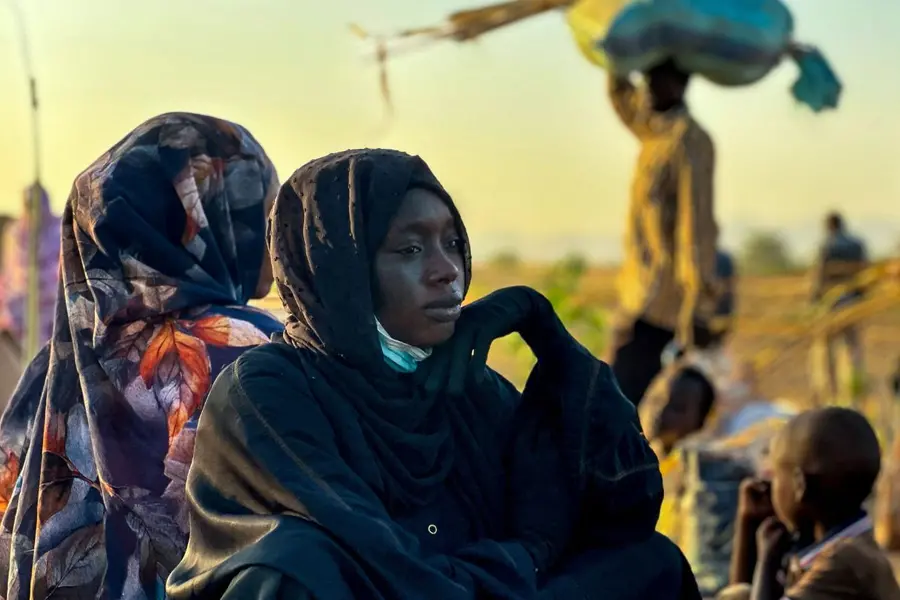
Sudan has been gripped by a brutal civil war since April 2023, following a violent power struggle between the country’s army and a powerful paramilitary group known as the Rapid Support Forces (RSF). The conflict has plunged the nation into chaos, triggering famine, displacement, and allegations of genocide, particularly in the western Darfur region.
The humanitarian toll has been staggering – over 150,000 people have been killed, while an estimated 12 million have fled their homes, according to the United Nations, which describes the situation as the world’s largest humanitarian crisis. The recent fall of the city of el-Fasher to the RSF has deepened global concern about Sudan’s future.
How the conflict started?
The ongoing war stems from unresolved tensions that began after the overthrow of long-time ruler Omar al-Bashir in 2019. Bashir, who seized power in a 1989 coup, was ousted following mass protests demanding an end to his decades-long authoritarian rule.
Following his removal, a transitional government combining military and civilian leaders was formed to steer Sudan toward democracy. However, this fragile arrangement collapsed in October 2021 when another coup toppled the government – this time led by Gen Abdel Fattah al-Burhan, head of the Sudanese Armed Forces (SAF), and his deputy, Gen Mohamed Hamdan Dagalo, widely known as “Hemedti,” who commands the RSF.
Disagreements soon erupted between the two generals over plans for a transition to civilian rule. The key dispute involved merging the RSF’s 100,000 fighters into the regular army and deciding who would command the unified force. Both men were accused of clinging to power, driven by personal wealth and influence.
Tensions turned to violence on April 15, 2023, after the RSF redeployed troops across Sudan – a move the army saw as a direct threat. Within days, heavy fighting engulfed the capital, Khartoum, and other regions. The RSF initially seized much of the city, but by March 2025, the army had regained control after months of devastating urban warfare.
Origins and role of the RSF
The Rapid Support Forces were officially established in 2013 but trace their roots to the Janjaweed militias – groups accused of genocide and ethnic cleansing during the Darfur conflict in the early 2000s. Led by Gen Dagalo, the RSF evolved into a formidable power with operations extending to Yemen and Libya.
Dagalo has been accused of controlling lucrative gold mines and smuggling the metal to the United Arab Emirates (UAE). The Sudanese army alleges that the UAE provided military backing to the RSF, including drone strikes, though the Gulf state has denied the claims.
The army has also accused Libyan commander Gen Khalifa Haftar of aiding the RSF by smuggling weapons and sending fighters. By June 2025, the RSF had captured territory along Sudan’s borders with Libya and Egypt, followed by its takeover of el-Fasher in October – giving it near-total control of Darfur and much of Kordofan.
With the RSF now announcing a rival administration, analysts warn Sudan could face another split, similar to the 2011 secession of South Sudan, which took most of the nation’s oil reserves.
Areas under military control
The Sudanese Armed Forces maintain dominance in the north and east, with Egypt as their key ally due to shared geographic and economic interests tied to the Nile.
Gen Burhan has made Port Sudan, located on the Red Sea, his operational base and the seat of the UN-recognised government. However, the city has also been under attack – in March, the RSF launched a deadly drone strike there, following its loss of Khartoum earlier that month.
“Khartoum is free, it’s done,” Gen Burhan declared when his troops retook the capital. Yet, the victory came at a tremendous cost. The city was left in ruins – its government buildings, banks, and hospitals reduced to ashes. The international airport reopened in October for limited domestic flights, though a nearby RSF drone strike delayed the ceremony by a day.
The army also reclaimed control over the crucial state of Gezira after losing it to the RSF in 2023, which had displaced hundreds of thousands. However, el-Fasher’s fall in late October 2025 marked a significant setback for the army. The RSF had besieged the city for 18 months, cutting off food supplies and destroying the nearby Zamzam displacement camp.
Is there a genocide?
Darfur has again become the epicentre of atrocities reminiscent of the early 2000s. Survivors and rights groups accuse the RSF and allied militias of ethnically targeted violence against non-Arab communities, particularly the Massalit people.
In March 2024, Unicef reported horrific accounts of children as young as one being raped and assaulted by armed men. Human Rights Watch said the violence “raised the possibility that the RSF and their allies had the intent to destroy in whole or in part the Massalit people,” warning that it could amount to genocide.
A subsequent UN investigation found evidence of war crimes by both the RSF and the army but stopped short of labelling it genocide. However, in January 2025, the United States formally declared that a genocide had occurred.
“The RSF and allied militias have systematically murdered men and boys - even infants - on an ethnic basis, and deliberately targeted women and girls from certain ethnic groups for rape and other forms of brutal sexual violence,” then-Secretary of State Anthony Blinken said.
This led to US sanctions on both Gen Dagalo and Gen Burhan. Sudan’s government later filed a case against the UAE at the International Court of Justice (ICJ), accusing it of complicity in the genocide, but the court dismissed it for lack of jurisdiction. The UAE welcomed the decision, insisting it “bears no responsibility for the conflict.”
UN investigators have meanwhile documented testimonies suggesting RSF fighters used racist slurs during assaults, telling victims they would bear “Arab babies.” Recent satellite images and reports from el-Fasher show clusters of bodies, reinforcing fears of ethnically targeted mass killings.
Where are el-Fasher and el-Obeid, and why are they important?
El-Fasher, the capital of North Darfur, and el-Obeid, the capital of North Kordofan, are both strategically vital cities in western Sudan.
Until late October, el-Fasher was the last major urban centre in Darfur under army control. Its capture by the RSF effectively divided Sudan between an RSF-controlled west and an SAF-controlled east. The RSF has since declared a parallel government in Darfur.
El-Obeid, rich in oil and strategically located between Darfur and Khartoum, remains under army control but faces growing pressure from the RSF. Analysts warn that if el-Obeid falls, the army could lose its crucial buffer protecting the capital from RSF advances.
On October 25, the RSF said it had recaptured Bara, a town just 59km (37 miles) from el-Obeid, allowing it to tighten its siege. The humanitarian toll has been dire, with at least 137,000 people taking shelter in the area by mid-2025.
What attempts to end the conflict have been made?
Despite multiple peace talks held in Saudi Arabia and Bahrain, efforts to end the war have failed. Observers say both sides – particularly the army – have shown little appetite for a ceasefire.
UN health chief Tedros Adhanom Ghebreyesus criticised the world’s muted response, telling the BBC in September 2024, “I think race is in the play here.”
Groups like the International Crisis Group and Amnesty International have slammed global diplomacy as “lacklustre” and “woefully inadequate.” Humanitarian agencies, meanwhile, are struggling to cope. The World Food Programme says more than 24 million people face acute food insecurity, with around 80% of emergency kitchens forced to shut.
Sudan, one of Africa’s largest nations by area, was already among the world’s poorest countries before the conflict, with most of its 46 million people surviving on an annual income of just $750. The war has since decimated the economy, with the finance minister admitting last year that government revenues had fallen by 80%.
(With inputs from agencies)
Published: 03 Nov 2025, 03:38 pm IST
Disclaimer: Kindly avoid objectionable, derogatory, unlawful and lewd comments, while responding to reports. Such comments are punishable under cyber laws. Please keep away from personal attacks. The opinions expressed here are the personal opinions of readers and not that of Mathrubhumi.
