
Explore the devastating Sudan crisis, the world`s worst humanitarian disaster since April 2023. Learn about the civil war, its massive impact, and why urgent action is vital. Click to understand.
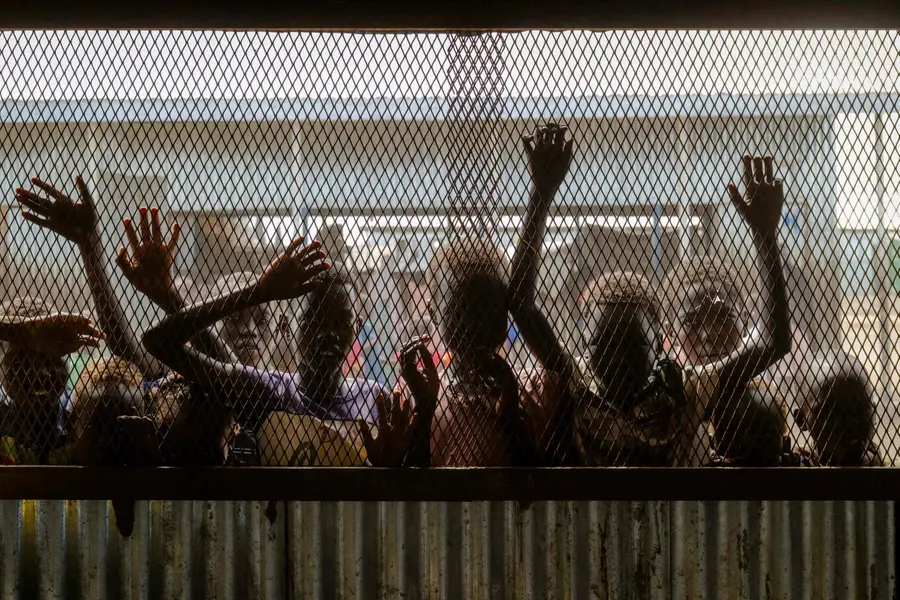
Sudan, a country in north-east Africa, once known for its ancient pyramids and rich culture, has now become the world’s biggest humanitarian crisis. Since April 2023, the nation has been torn apart by a civil war between its army and a powerful paramilitary group called the Rapid Support Forces (RSF). What started as a power struggle between two generals has turned into a nightmare for ordinary people.
The numbers are horrifying. More than 1.5 lakh people have died, nearly 1.2 crore have been forced from their homes, and millions are starving. Children are dying of hunger, hospitals have collapsed, and entire towns have been wiped out. The United Nations calls it today’s worst humanitarian disaster — even worse than Gaza or Ukraine.
The roots of this bloody conflict go back to 2019, when long-time dictator Omar al-Bashir was removed after massive protests. Sudanese people demanded democracy, but things did not go as planned. The army and the RSF, who together forced Bashir out, soon turned against each other. General Abdel Fattah al-Burhan, head of the army, and General Mohamed Hamdan Dagalo (known as Hemedti), the RSF leader, could not agree on how to merge their forces or share power. Each wanted control — and neither was ready to give up the throne.
On 15 April 2023, fighting broke out in the capital, Khartoum. Within hours, Sudan turned into a battlefield. The RSF took control of large parts of the city, while the army struck back with air raids. Homes, banks, and hospitals were destroyed. Even patients were killed as bombs fell on clinics. The once-bustling capital became a city of ashes.
The RSF is not a regular army unit. It was born in 2013 from the Janjaweed militia — a group accused of mass killings and ethnic cleansing in Darfur during the early 2000s. The world still remembers the Darfur genocide, where villages were burnt, and thousands from Black African communities were killed by Arab militias. Many of those same fighters now battle under the RSF.
Under Hemedti, the RSF has grown powerful and wealthy, fighting in other countries like Yemen and Libya. It owns gold mines in Sudan and sells gold abroad. But accusations have grown that the United Arab Emirates (UAE) secretly supports the RSF — sending weapons and even drones — something both deny. On the other hand, Sudan’s army reportedly gets help from Iran. In short, this war is no longer just Sudan’s problem; it has now drawn in many foreign powers.
In October 2025, the RSF captured El-Fasher, the main city of western Darfur. This was a major turning point — and a tragedy. Thousands were killed, famine grew worse, and reports of genocide surfaced again. Human Rights Watch and the United States say the RSF and its allied militias have been carrying out ethnic killings, especially against the Massalit community, a Black African group. The UN says there have been rapes, massacres, and starvation used as weapons. People trapped in El-Fasher are surrounded, cut off from food and medicine.
So, what is being done to stop this horror? Sadly, not enough. Peace talks have been held in Saudi Arabia and Bahrain, but both sides keep breaking ceasefire deals. Aid workers say the world has ignored Sudan because it is an African country. Even Tedros Ghebreyesus, head of the World Health Organization, openly said that racism plays a role in how global media and governments react. Wars in Europe get more attention; African lives, he said sadly, are often treated as less important.
Food agencies say that 2.4 crore Sudanese people face hunger. About 80 percent of emergency kitchens have shut down. The conflict has also crushed the economy — Sudan’s national income has fallen by 80 percent. Once one of Africa’s largest countries, Sudan is now a broken land of famine, fear, and silence.
But now, attention has suddenly returned — because of a familiar face: Donald Trump. The former US President recently called Sudan “the world’s worst humanitarian crisis.” He said the atrocities are “tremendous” and promised that the US will work with Saudi Arabia, the UAE, Egypt, and other Middle Eastern countries to stop the killings. Trump claimed Arab leaders, especially Saudi Crown Prince Mohammed bin Salman, urged him to step in. He said Sudan was once “a great civilisation” and that it can rise again if nations act together.
So why is Trump suddenly interested? There are several reasons. First, the crisis has reached shocking levels — millions are on the verge of starvation, and the situation risks spreading across Africa. Second, Trump may want to rebuild America’s leadership image in the region, working alongside wealthy Arab allies. Third, the presence of Iran and alleged UAE involvement also makes Sudan a geopolitical flashpoint. The US does not want another Middle East-style proxy war in Africa.
However, critics say global powers, including the US, ignored Sudan for too long. Their delayed reaction allowed the RSF and the army to destroy a nation. Now they are trying to fix what could have been prevented years ago.
Sudan’s tragedy is not just about two generals fighting. It is a powerful reminder of what happens when leaders chase power instead of peace, and when the world turns away until it is too late. Behind every statistic is a family that has lost everything — their loved ones, homes, and hope.
The world owes Sudan more than sympathy. It needs action — honest, urgent, united action. As Trump himself said, Sudan can recover if countries work together. But every day of delay means more children starve and more lives are lost. The real question is: will the world finally care enough to stop it?
The author is a defence, aerospace & geopolitical analyst.
Published: 21 Nov 2025, 08:21 am IST
Related Topics
Disclaimer: Kindly avoid objectionable, derogatory, unlawful and lewd comments, while responding to reports. Such comments are punishable under cyber laws. Please keep away from personal attacks. The opinions expressed here are the personal opinions of readers and not that of Mathrubhumi.
