
The announcement came after Saudi Arabia moved to counter advances by Emirati-backed southern separatists, deepening a rift between the two Gulf allies who have long fought together in Yemen’s civil war against Iran-backed Houthi rebels.
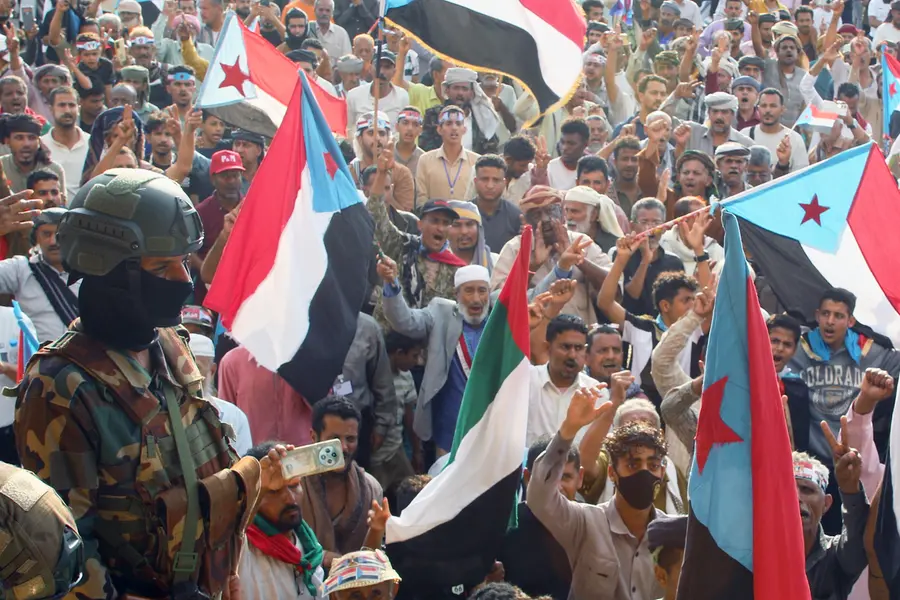
Aden, Yemen: The United Arab Emirates (UAE) said early on Saturday that it had withdrawn all of its troops from Yemen, following days of military airlifts and amid growing tensions with Saudi Arabia over the conflict in the south of the country.
In a statement, the UAE’s Ministry of Defence said the withdrawal was part of a previously announced decision to conclude the remaining missions of its counter-terrorism units. It said the process had been carried out safely and in coordination with partners on the ground.
The announcement came after Saudi Arabia moved to counter advances by Emirati-backed southern separatists, deepening a rift between the two Gulf allies who have long fought together in Yemen’s civil war against Iran-backed Houthi rebels.
Yemen calls for independent southern state
On Friday, Yemen’s main separatist group, the Southern Transitional Council (STC), announced a provisional constitution for an independent state in the south and called on other factions to accept the move. The STC described the declaration as the establishment of an independent southern state, though it was unclear whether it would have any immediate practical effect or remain largely symbolic.
Last month, STC-linked fighters seized control of two southern governorates from Saudi-backed forces and took over the presidential palace in Aden, the main city in the south. Members of Yemen’s internationally recognised government, which had been operating from Aden, fled to the Saudi capital, Riyadh.
Fighting intensified on Friday when Saudi warplanes struck camps and military positions held by STC forces in Hadramout province, according to separatist officials. The strikes came as Saudi-backed fighters attempted to retake the facilities. It marked the latest direct Saudi intervention against the STC, following earlier air strikes on separatist positions and an alleged attack on a shipment of Emirati weapons bound for the group.
Growing rift within Gulf alliance
Saudi Arabia and the UAE are both members of the Saudi-led coalition that has been fighting the Houthis for nearly a decade, with the stated aim of restoring Yemen’s internationally recognised government. However, competing interests and mounting tensions between coalition partners now threaten to unravel the alliance and further fragment the country.
In a video address on Friday, the head of the STC, Aidarous al-Zubaidi, said the newly issued constitution would be in force for two years, after which a referendum would be held on the “right to self-determination for the people of the South”. During that period, he called for dialogue between northern and southern factions to agree a framework guaranteeing southern rights.
He warned that if other parties rejected the proposal or resorted to military action, “all options remain open”.
The 30-article document proclaims the creation of the “State of South Arabia”, covering territory that once formed the People’s Democratic Republic of Yemen, an independent southern state that existed between 1967 and 1990. Analysts said it represented the most explicit step yet by the STC towards its long-stated goal of independence, though its immediate impact remained uncertain.
UAE promises commitment to stability
The UAE’s Ministry of Foreign Affairs said on Friday that Abu Dhabi was handling the situation with restraint and coordination, stressing a commitment to de-escalation and regional stability.
As part of de-escalation efforts, the Saudi-led coalition has demanded that STC-linked Southern Shield forces withdraw from Hadramout and Mahra, the two governorates seized by the separatists. The STC has so far refused to relinquish its weapons or vacate its camps.
Ahmed bin Breik, a senior STC official and former governor of Hadramout, said Saudi-backed National Shield Forces had advanced on two STC camps in the province. When separatist fighters refused to withdraw, Saudi aircraft struck the positions, he said.
Mohamed al-Nakib, a spokesperson for STC-backed forces, said the air strikes caused casualties, though he did not give details. The Associated Press (AP) was unable to independently verify the claim. Al-Nakib later said intense clashes had broken out between the two sides across several areas of Hadramout, and it remained unclear whether Saudi-backed forces had regained control of the camps.
In a post on X, the Saudi ambassador to Yemen, Mohammed al-Jaber, said Riyadh had spent weeks urging the STC to halt its advance and withdraw from Hadramout and Mahra, but had been met with what he described as continued intransigence from al-Zubaidi. He also claimed the STC had prevented a Saudi delegation from landing in Aden, despite prior agreements aimed at finding a negotiated solution.
Saudi Arabia imposes flight restrictions
Meanwhile, Yemen’s transport ministry, aligned with the STC, said Saudi Arabia had imposed new requirements for flights to and from Aden International Airport, including inspections in Jeddah. The ministry criticised the reported measures, which Saudi authorities have not confirmed.
A ministry spokesperson said late on Thursday that all flights between Aden and the UAE had been suspended until the restrictions were lifted.
AP
Published: 03 Jan 2026, 08:36 am IST
Disclaimer: Kindly avoid objectionable, derogatory, unlawful and lewd comments, while responding to reports. Such comments are punishable under cyber laws. Please keep away from personal attacks. The opinions expressed here are the personal opinions of readers and not that of Mathrubhumi.
