
Netanyahu continues to face criticism over the security failures surrounding the 7 October attacks, an issue that remains central to public debate
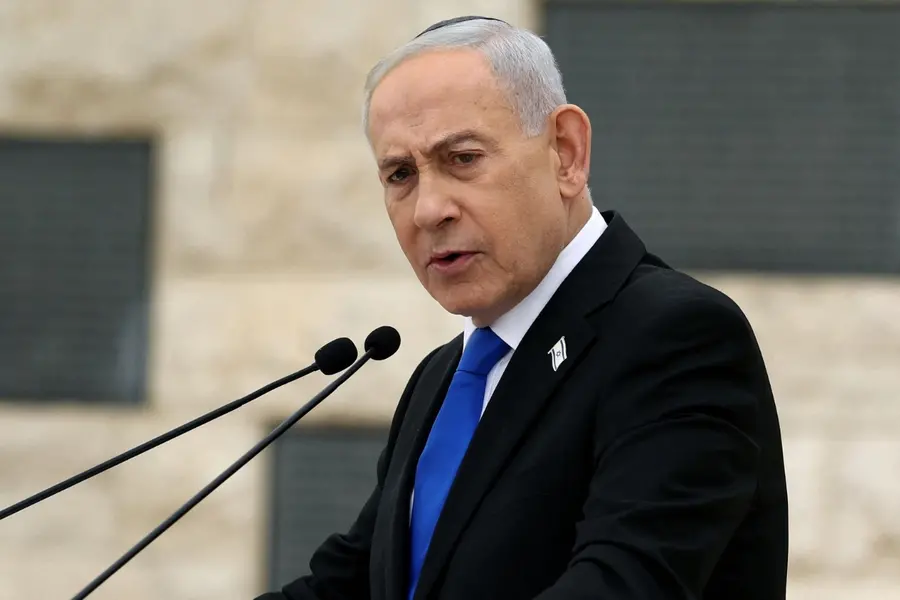
Jerusalem: Israel will hold its next general election on 27 October, the latest date permitted under the country's laws, with the vote expected to serve as a major test of Prime Minister Benjamin Netanyahu's leadership in the aftermath of the Gaza war.
The Israeli parliament, the Knesset, confirmed on Sunday that the current legislature will complete its full four-year term before ending on 17 July, marking the first time in decades that a governing coalition has served a full term.
Also Read

In a statement, the Knesset said there was no need to pass a dissolution law as the election date had already been fixed by law and there was no intention to dissolve parliament early.
Netanyahu, 76, Israel's longest-serving prime minister, has confirmed that he will seek another term in office.
"I intend to win," Netanyahu has said, setting the stage for what is widely viewed as one of the most significant elections of his political career.
In recent weeks, his right-wing coalition government has accelerated efforts to pass a series of legislative measures aimed at strengthening the alliance ahead of the polls.
Last month, Netanyahu said he hoped to form a "broad national government" after the election rather than one based solely on ideological alliances.
He said he wanted to build a government that would not depend on Arab political parties but instead bring together a wider national coalition.
Despite those ambitions, recent opinion polls suggest growing public dissatisfaction with his leadership. Former military chief Gadi Eisenkot has emerged as one of the leading challengers, while surveys indicate a majority of Israelis would prefer a change in government.
A recent poll conducted by the Hebrew University of Jerusalem found that support for Netanyahu's premiership fell from 40.5 per cent in March to 29.4 per cent in June. The survey also found that more than 92 per cent of respondents believed Iran had emerged as the winner in the recent regional conflict.
The ceasefire that ended the war between Israel, the United States and Iran has also drawn criticism, with many Israelis viewing the agreement reached between Tehran and Washington as unfavourable to Israel.
Netanyahu continues to face criticism over the security failures surrounding the 7 October attacks, an issue that remains central to public debate.
Another major election issue is the long-running dispute over compulsory military service for ultra-Orthodox Jewish men. Several of Netanyahu's coalition partners have demanded exemptions for their communities, while military leaders and much of the public argue that broader conscription is essential after years of conflict have placed increasing pressure on Israel's armed forces.
Judicial reforms proposed by Netanyahu before the Gaza war, his ongoing corruption trials and uncertainty over Gaza's future governance are also expected to feature prominently during the campaign.
Netanyahu has argued that a broader coalition government would allow Israel to build on its regional security achievements following military operations against Iran and Hezbollah, while pursuing new political agreements in the region.
The October election is expected to determine not only Netanyahu's political future but also the direction of Israel's domestic and foreign policy amid continuing regional tensions.
Published: 12 Jul 2026, 11:03 pm IST
Related Topics
Disclaimer: Kindly avoid objectionable, derogatory, unlawful and lewd comments, while responding to reports. Such comments are punishable under cyber laws. Please keep away from personal attacks. The opinions expressed here are the personal opinions of readers and not that of Mathrubhumi.