
Iran mocks Donald Trump's proposal to charge ships using the Strait of Hormuz, insisting Tehran will remain the region's "guardian".
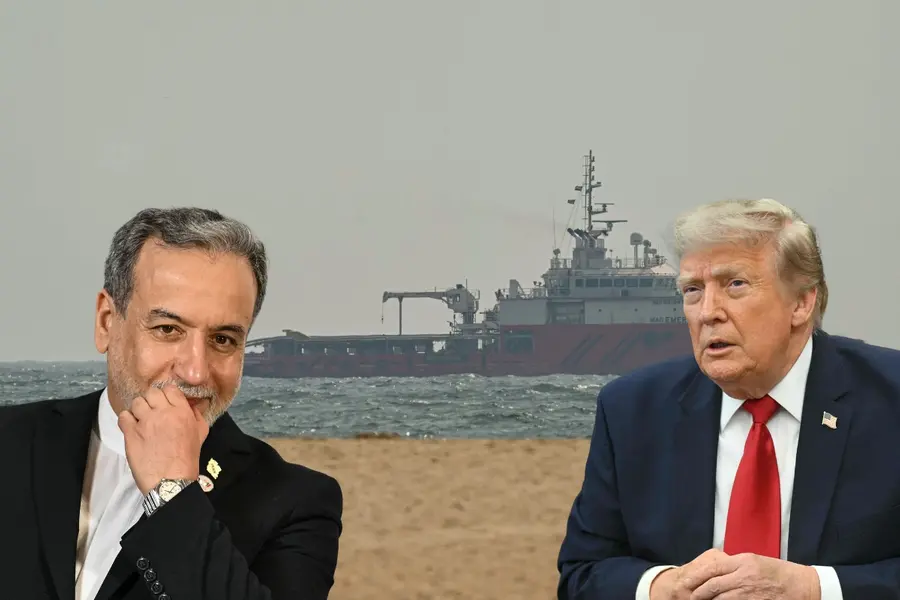
Tehran: Iranian Foreign Minister Seyed Abbas Araghchi has ridiculed US President Donald Trump's proposal to charge a 20% fee on cargo passing through the Strait of Hormuz, saying Iran has always been the "guardian" of the strategic waterway and would be "fair" if compensation were ever required.
Fresh tensions have emerged between the United States and Iran after US President Donald Trump proposed imposing a 20% charge on cargo transiting the Strait of Hormuz, prompting a sarcastic response from Tehran.
In a post on X, Iranian Foreign Minister Seyed Abbas Araghchi mocked Trump's remarks, saying the US President was correct that those ensuring safe passage through the strategic waterway should be compensated.
However, Araghchi asserted that Iran—not the United States—has always been the "guardian" of the Strait of Hormuz.
"POTUS is absolutely right. Whoever provides secure and safe passage of commercial vessels through the Strait of Hormuz should be compensated for this service. Iran has always been the GUARDIAN of the Strait and will remain so FOREVER. 20% is of course too much. We will be fair," he wrote.
What did Trump announce?
Earlier, Trump declared that the United States was "reinstating the Iranian blockade" and would become the "Guardian of the Hormuz Strait."
He claimed that while Iran and its customers would face restrictions, commercial traffic from other countries would continue to move freely through the waterway.
Trump also proposed a 20% reimbursement on cargo transported through the Strait of Hormuz, arguing that the fee would cover the cost of providing security in one of the world's most strategically important maritime corridors.
He said the new system would be implemented immediately.
Why is the Strait of Hormuz important?
The Strait of Hormuz is one of the world's most critical shipping routes, connecting the Persian Gulf with the Gulf of Oman and the Arabian Sea.
Around one-fifth of global oil consumption and significant volumes of liquefied natural gas (LNG) pass through the narrow waterway, making it vital for global energy supplies. Any disruption in the Strait can affect international oil prices, shipping costs and global trade.
Because of its strategic importance, the Strait has frequently been at the centre of tensions involving Iran, the United States and Gulf nations.
Iran rejects US role
Iran also rejected Trump's proposal through military officials.
According to Iranian state media, Brigadier General Ebrahim Zolfaghari, spokesperson for the Khatam al-Anbiya Central Headquarters, said Iran would not allow the United States to interfere in managing the Strait of Hormuz under any circumstances.
The latest exchange comes amid renewed friction between Washington and Tehran, with both sides trading strong public statements over regional security and maritime control.
Published: 14 Jul 2026, 08:13 am IST
Disclaimer: Kindly avoid objectionable, derogatory, unlawful and lewd comments, while responding to reports. Such comments are punishable under cyber laws. Please keep away from personal attacks. The opinions expressed here are the personal opinions of readers and not that of Mathrubhumi.
