
An Iranian cruise missile attack kills an Indian sailor and injures eight crew members on two UAE oil tankers in the Strait of Hormuz, prompting the U.S. to reinstate its naval blockade and enact transit fees.
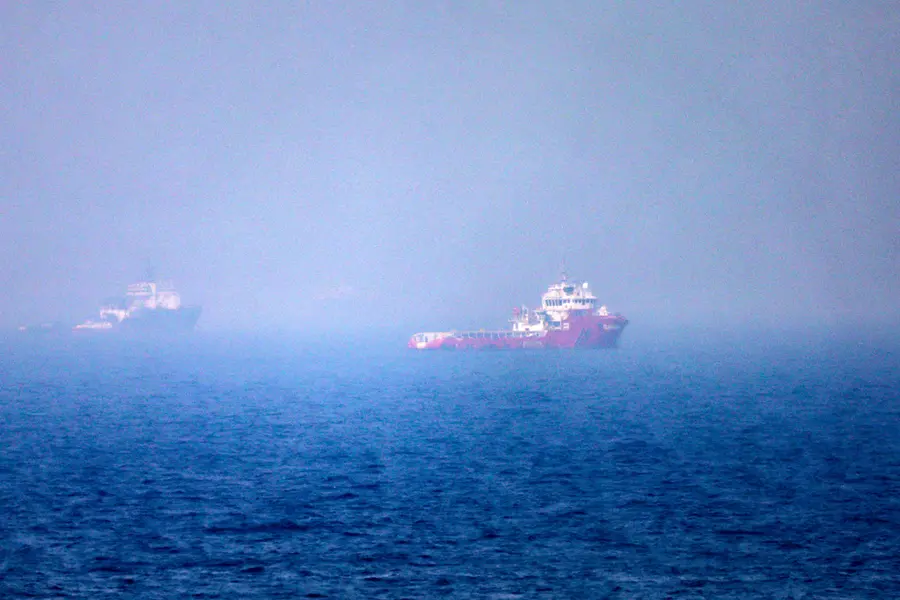
Dubai: The ongoing conflict in the Middle East has escalated sharply into a major maritime crisis following a deadly missile assault in the Strait of Hormuz. The United Arab Emirates’ Defence Ministry confirmed early Tuesday that Iranian forces fired two cruise missiles at its commercial oil tankers, the Mombasa and the Al Bahiyah, killing one Indian mariner and injuring eight other crew members.
The targeted strike occurred while the vessels were transiting the southern lane of the strategic chokepoint within Omani territorial waters. The deceased crewman was stationed aboard the *Mombasa*. Among the eight wounded, four remain in critical condition. The casualties include six Indian nationals and two Ukrainians. While the cruise missiles triggered significant blazes on both vessels, crews managed to bring the fires under control.
Condemning the incident as an act of piracy and economic blackmail, Abu Dhabi issued a stern warning. “The UAE reserves its full right to respond to this escalation and to take all necessary measures to protect its territory, its citizens and residents,” the Defence Ministry stated. In the hours following the announcement, military fighter jets could be heard flying over Dubai.
The catalysts: A falters ceasefire, US strikes and shipping tolls
The attack on the UAE tankers unfolded rapidly after a massive shift in American policy and a fresh barrage of US military operations. On Monday, US Central Command launched a heavy wave of airstrikes against Iranian radar networks, air defences, drone facilities and naval vessels to degrade Tehran’s ability to disrupt commercial shipping.
From the Oval Office, US President Donald Trump declared that a brief ceasefire negotiated last month was officially "over”, stating the truce was merely "built to test" Iran. "They didn't honor the test," Trump remarked, adding, "We’re knocking out all of their offensive capability and we’re controlling the straits. We’re putting the blockade back."
In an unprecedented disruption to international maritime norms, the Trump administration announced that the U.S. military would enforce a total blockade on Iranian ports and begin charging international merchant vessels a mandatory **20% cargo toll** to guarantee safe passage through the strait. “We’re protecting a very rich portion of the world,” Trump told reporters. “We’re spending money. And so, what we’ve done is, we are going to be reimbursed for protection.”
Global backlash and geopolitical fallout
The US toll proposal sent shockwaves through global markets, driving international standard Brent crude oil up 7.8% to $81.92 a barrel. The move drew immediate condemnation from the United Nations’ International Maritime Organization (IMO), which declared that "there is no legal basis through which to introduce mandatory tolls simply to transit through a strait."
Meanwhile, Iranian Foreign Minister Abbas Araghchi used the US announcement to mock President Trump and justify Iran’s own claims of authority over the waterway. Writing on social media, Araghchi stated: “POTUS is absolutely right. Whoever provides secure and safe passage of commercial vessels through the Strait of Hormuz should be compensated for this service. Iran has always been the GUARDIAN of the Strait and will remain so FOREVER. 20% is of course too much. We will be fair.”
Regional spillover
As the US blockade loomed, severe military exchanges rippled across the broader Middle East.
Bahrain: Home to the US Navy’s 5th Fleet, the kingdom activated its missile alert sirens multiple times, forcing residents to seek shelter as Iran threatened swift retaliation.
Kuwait: The state's Foreign Ministry reported an attack on its consulate in Iraq and fiercely condemned Iran-aligned militias for launching strikes against Kuwaiti border outposts and a maritime oil drilling platform.
Jordan: Jordanian air defences successfully intercepted and shot down four Iranian missiles flying through its airspace, reporting zero casualties or property damage.
Iran: Domestic state media confirmed at least two fatalities following U.S. strikes across several coastal provinces, prompting Tehran to announce it would bar International Atomic Energy Agency (IAEA) inspectors from entering nuclear facilities previously damaged in bombing campaigns.
While heavy combat continues to disrupt one-fifth of the world’s seaborne energy supply, international mediators from Qatar, Egypt, and Pakistan are working frantically to preserve diplomatic channels before the expiration of a critical 60-day negotiation window.
(With AP inputs)
Published: 14 Jul 2026, 06:28 am IST
Related Topics
Disclaimer: Kindly avoid objectionable, derogatory, unlawful and lewd comments, while responding to reports. Such comments are punishable under cyber laws. Please keep away from personal attacks. The opinions expressed here are the personal opinions of readers and not that of Mathrubhumi.
