
Iran warns the US against interference in the Strait of Hormuz after President Donald Trump declares America the "Guardian" of the strategic waterway, escalating tensions across the Gulf.
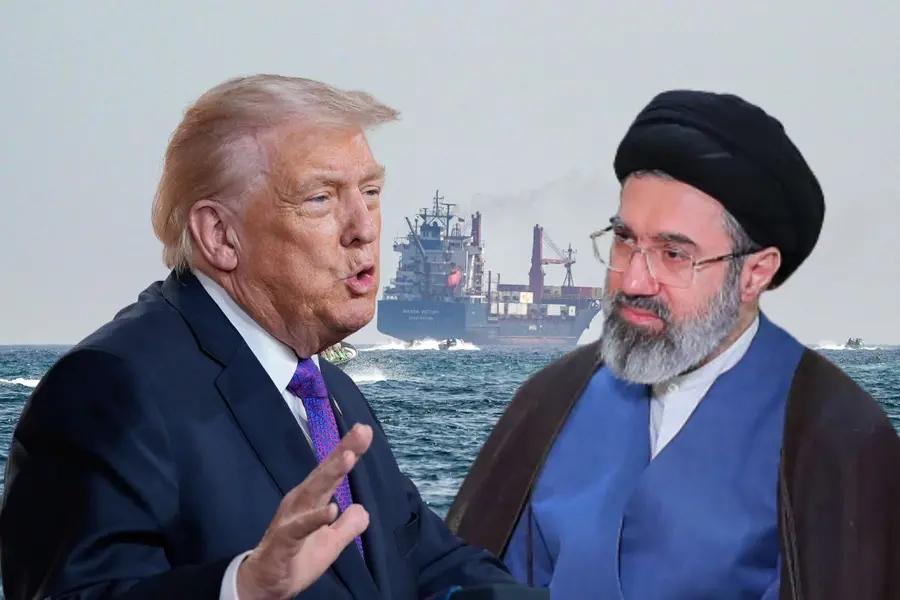
Iran has rejected US claims over the Strait of Hormuz, warning that any attempt by American forces to interfere in the strategic waterway or receive logistical support from Gulf nations would be met with a strong response. The warning came after US President Donald Trump announced a new American role in the Strait of Hormuz and announced measures targeting Iranian shipping, further intensifying an already volatile confrontation between Washington and Tehran.
The latest exchange has pushed tensions in the Gulf to a new level, with both countries issuing competing claims over one of the world's most strategically important maritime routes. The Strait of Hormuz serves as the primary transit point for nearly one-fifth of global oil shipments, making any escalation there closely watched by governments and energy markets worldwide.
Iranian military officials insisted that control of the waterway remains a matter of national sovereignty.
Brigadier General Ebrahim Zolfaghari, spokesperson for Iran's Khatam al-Anbiya Central Headquarters, said Tehran would not allow the United States to interfere in the management of the strait. He warned that Iranian forces would respond if American military vessels escorted commercial ships or oil tankers through routes that Iran considers outside its authorised shipping channels.
He also warned neighbouring Gulf countries against providing military or logistical assistance to US operations, saying such cooperation would be viewed by Tehran as participation in hostilities against Iran. According to the commander, any expansion of the conflict would have consequences beyond Iran and the United States and could draw other countries in the region into the crisis.
Iran's Islamic Revolutionary Guard Corps (IRGC) echoed the warning.
IRGC spokesperson Brigadier General Mohebi accused Washington of increasing instability in one of the world's busiest maritime corridors and argued that the growing US military presence threatened international energy security. He maintained that Iran would continue exercising what it described as its authority over the Strait of Hormuz and dismissed American claims that recent military operations had weakened Iran's ability to respond.
What is Trump’s new US maritime policy
The Iranian response followed a series of announcements by Trump, who declared that the United States would assume what he called the role of the "Guardian of the Hormuz Strait."
In posts on Truth Social, Trump said the Strait of Hormuz would remain open for international shipping and announced a maritime blockade aimed exclusively at Iranian vessels and customers. He also proposed a 20 per cent levy on cargo transiting the waterway, saying the revenue would offset the cost of maintaining security in the region.
Trump said implementation of the new security arrangement would begin immediately.
Earlier, during an interview with Fox News, the US president accused Iran of reversing commitments made during ceasefire discussions and claimed Tehran had attempted to regain control over the strategic shipping lane despite previous understandings.
The sharp exchange of statements comes against the backdrop of fresh military operations.
US Central Command (CENTCOM) said American forces struck a submarine and ship maintenance facility at Iran's Bandar Abbas Naval Base. The command also said unmanned surface vessels were used in combat during the operation, describing it as the first operational deployment of sea drones by US forces.
CENTCOM later announced additional strikes targeting Iranian air-defence systems, radar installations, missile and drone infrastructure, and fast-attack naval craft.
Iran condemned the attacks, accusing Washington of violating international law and undermining regional security.
In a statement, Iran's Foreign Ministry said the strikes targeted infrastructure linked to transportation and maritime activity and argued that they posed a threat to international shipping and regional stability. The ministry also accused the United States of escalating the conflict despite previous ceasefire efforts.
According to regional reports, Iran later launched retaliatory attacks targeting Bahrain, Kuwait and Oman.
Bahrain said its air-defence systems intercepted incoming aerial threats and reaffirmed its readiness to protect the kingdom. Kuwait's armed forces also confirmed that they had engaged hostile aerial targets within the country's airspace, while authorities urged residents to follow official safety instructions during the interceptions.
Jordan's military separately said it intercepted four missiles after they entered Jordanian airspace from Iranian territory.
With agency inputs
Published: 13 Jul 2026, 11:40 pm IST
Disclaimer: Kindly avoid objectionable, derogatory, unlawful and lewd comments, while responding to reports. Such comments are punishable under cyber laws. Please keep away from personal attacks. The opinions expressed here are the personal opinions of readers and not that of Mathrubhumi.
