
Iran rejects Trump’s claim over Hormuz as the strategic waterway becomes a flashpoint over control and global energy security.
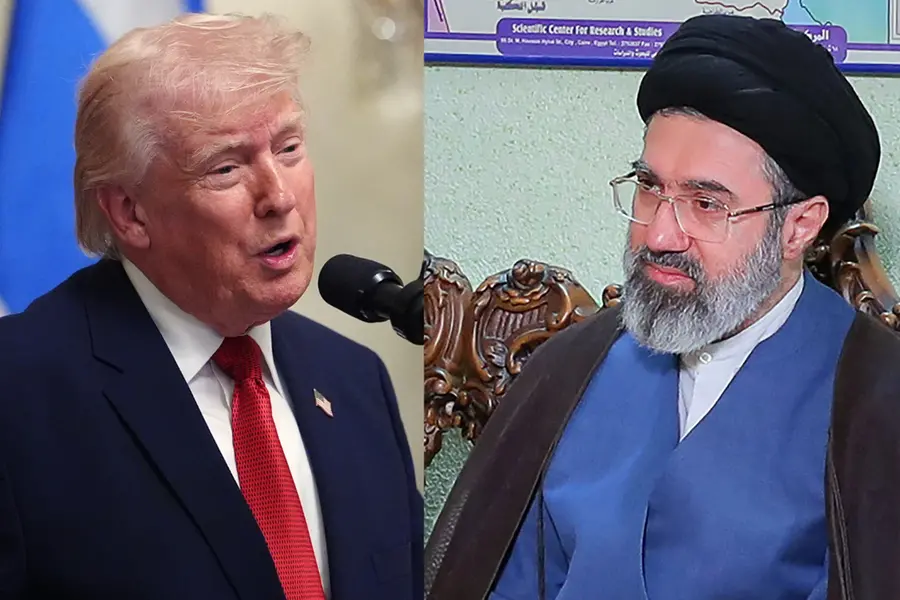
Tehran: Iran has pushed back strongly against US President Donald Trump’s claim that he could soon declare the Strait of Hormuz a US territory, saying the strategic waterway remains under Iranian control.
Iranian Deputy Foreign Minister Kazem Gharibabadi said on Saturday that the strait “has been Iranian, is Iranian, and will remain Iranian”, escalating the war of words between Washington and Tehran over one of the world’s most important energy routes.
Also Read

Gharibabadi also dismissed Trump’s claim that the United States could take control of the waterway through military power or a political declaration.
“The Strait of Hormuz cannot be seized by tweet, nor by aircraft carrier,” he said in a post on X, adding that the waterway would be opened or closed only under Iran’s command.
Trump says US will take control
Trump made the claim at a political rally in New York state on Friday, saying that after the US defeats Iran, he would “pretty soon” declare the Strait of Hormuz a US territory.
He also said Americans may have to pay slightly more for gasoline as part of the cost of preventing Iran from obtaining a nuclear weapon.
An unnamed White House official later told the Wall Street Journal that Trump's remark about declaring the strait US territory was a joke.
The comments came after Trump had earlier claimed that the US had “total control” over the Strait of Hormuz. Iran has repeatedly rejected that assertion.
Iran insists on control
Iranian military officials have also disputed Washington's claims about shipping through the strait.
In a video that was aired in state television, Ebrahim Zolfaghari, spokesperson for Iran's central military command, said the claims that ships were passing normally through the waterway were false. He said commercial vessels and tankers could only pass with the permission and supervision of Iranian forces.
In a post on X, Iranian Foreign Minister Abbas Araghchi accused Washington of making another major miscalculation over the strait, following what he described as intelligence failures surrounding the war.
The dispute comes as Iran continues to restrict traffic through Hormuz, which Tehran says it effectively closed after the conflict began in late February.
Shipping risks remain
The confrontation has also raised concerns over the safety of commercial vessels.
UAE state-owned oil company ADNOC said on Saturday that one of its vessels had come under attack the previous night. The UAE had also blamed Iran for attacks on two ADNOC-linked vessels a day earlier while they were travelling through the strait.
Iran has demanded several conditions before reopening the waterway, including an end to the war and what it describes as aggression against Iran and its allies. Tehran has also called for sanctions to be lifted, frozen assets to be released and compensation to be paid for wartime damage.
Meanwhile, Iran's Houthi allies in Yemen have imposed a parallel maritime blockade affecting Saudi ports in the Red Sea.
Why Hormuz matters to the world
The Strait of Hormuz is a critical global energy corridor. Before the war, around one-fifth of the world's oil and liquefied natural gas exports passed through the narrow waterway.
Disruptions have pushed energy prices higher, increasing economic pressure on countries dependent on oil and gas imports. The issue is particularly sensitive for the Trump administration as the US heads towards the November midterm elections.
US Vice President JD Vance said this week that keeping energy prices low for Americans was Washington's top priority in the conflict, while preventing Iran from developing a nuclear weapon was its second priority.
Iran has also indicated that it wants greater control over the strait and could seek to charge vessels transit fees- a move Washington would strongly oppose.
A battle over who controls the gateway
The United States has imposed its own blockade of Iranian ports, with Trump saying no ships would pass unless Washington allowed them to.
At the same time, Tehran has signalled that it reached an understanding with Oman on a route for ships to transit Hormuz and that arrangements to jointly manage the waterway were being finalised.
A June agreement between Washington and Tehran had envisaged Iran and Oman discussing the future of the strait with other Gulf countries in accordance with international law.
With diplomacy stalled and shipping attacks continuing, the latest exchange between Trump and Tehran shows that control of Hormuz has become not just a military issue, but a major test of influence, energy security and sovereignty in the region.
Published: 15 Aug 2026, 03:29 pm IST
ABOUT THE AUTHOR
Related Topics
Disclaimer: Kindly avoid objectionable, derogatory, unlawful and lewd comments, while responding to reports. Such comments are punishable under cyber laws. Please keep away from personal attacks. The opinions expressed here are the personal opinions of readers and not that of Mathrubhumi.