
Trump says he will declare the Strait of Hormuz US territory after defeating Iran, as the strategic waterway remains at the centre of the escalating US-Iran standoff.
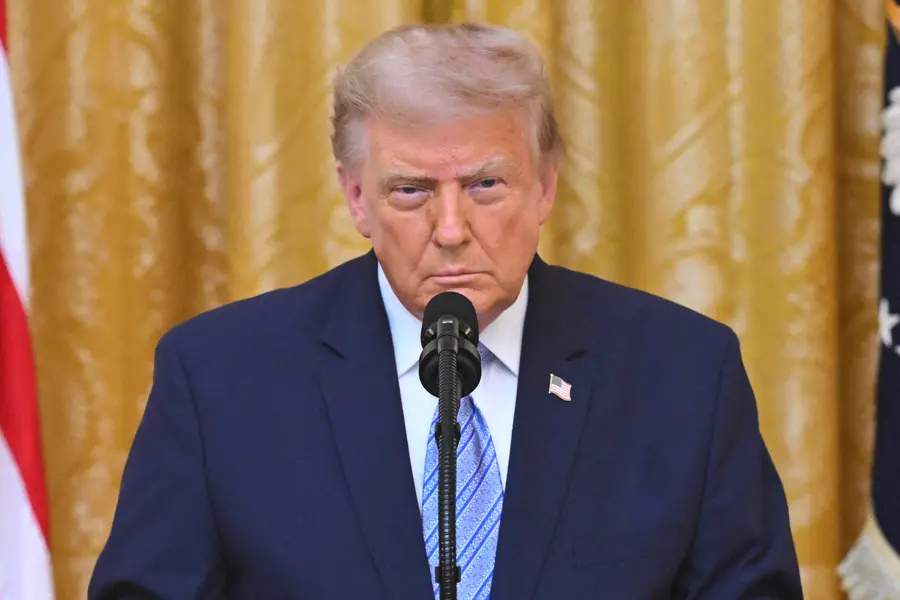
Washington DC: US President Donald Trump has said he plans to declare the Strait of Hormuz a US territory after what he described as the defeat of Iran, adding to tensions surrounding the strategically important waterway.
Speaking at a political rally in New York on August 14, Trump said: “After we finish defeating Iran ... pretty soon I'll be declaring the Hormuz Strait a territory of the United States.” He made the remark with a chuckle before adding that he was serious.
Also Read

The statement came amid a prolonged confrontation between Washington and Tehran over control of the Strait of Hormuz. Trump has previously claimed that the US has “total control” of the waterway and has pointed to the American naval blockade around Iranian ports.
Iran has rejected the US claims. Iranian Deputy Foreign Minister Kazem Gharibabadi said the strategic waterway could not be taken through military force or political declarations, while Tehran continues to insist that control of the strait remains with Iran.
Hormuz disruption hits oil markets
The Strait of Hormuz is a major route for global energy shipments, with roughly one-fifth of global oil flows normally passing through the waterway. Shipping traffic has fallen sharply amid the conflict and competing US and Iranian claims over control.
Oil prices rose on August 14 as tanker attacks and the lack of progress in peace negotiations added to concerns over supplies. Brent crude rose $1.45 to $88.52 a barrel, while US West Texas Intermediate increased $1.15 to $82.40.
Trump defends higher fuel prices
Trump has also urged Americans to accept higher gasoline prices as part of the cost of preventing Iran from obtaining a nuclear weapon. Rising fuel prices could create domestic political pressure as the US approaches its November midterm elections.
The administration has separately signalled tougher economic measures against Tehran, while the Pentagon has said the US Navy can maintain its blockade of Iranian ports indefinitely.
Analysis
Trump's statement represents a significant escalation in rhetoric because the Strait of Hormuz is an international maritime chokepoint rather than an area whose territorial status can simply be changed by a US presidential declaration. Any attempt to establish US sovereignty would raise major questions involving international law, regional states and freedom of navigation.
The immediate issue, however, remains control and access. Shipping data shows that traffic through the strait is far below pre-war levels, despite Trump's assertion that the US has control. Reuters reported that nine commodity vessels transited the strait on August 13, compared with an August average of 12 per day, while most vessels continued to use routes overseen by Iran.
The standoff therefore has consequences beyond US-Iran relations. Continued disruption threatens energy supplies, raises shipping and insurance costs and can feed into inflation through higher crude and fuel prices. With negotiations stalled, the Strait of Hormuz remains a central pressure point in the wider conflict.
Published: 15 Aug 2026, 07:44 am IST
ABOUT THE AUTHOR
Disclaimer: Kindly avoid objectionable, derogatory, unlawful and lewd comments, while responding to reports. Such comments are punishable under cyber laws. Please keep away from personal attacks. The opinions expressed here are the personal opinions of readers and not that of Mathrubhumi.