
The reported Qeshm strike comes just ahead of the US midterm elections, in which voters are set to decide control of Congress for the next two years of Trump's presidency.
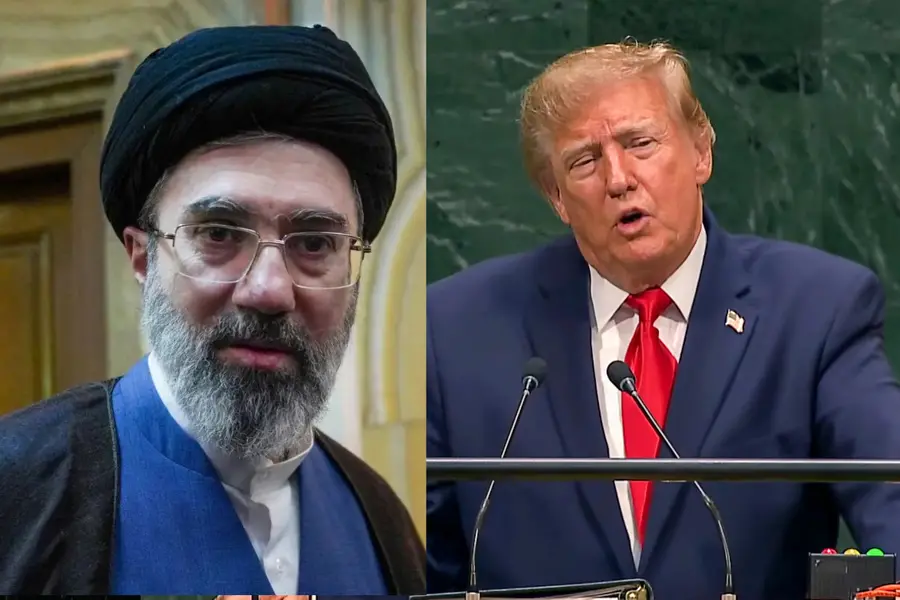
Tehran: Multiple explosions were heard on Iran’s Qeshm Island and in the coastal city of Bandar Lengeh on Tuesday, hours after a report said the United States had carried out a fresh, limited strike on the strategically located island. Iran, meanwhile, claimed its forces had brought down three US drones near the Strait of Hormuz, including an MQ-9 military drone, as tensions between Washington and Tehran continued despite signals of a possible diplomatic settlement.
Iran’s state news agency IRNA reported that five explosions were heard on Qeshm Island, with further blasts reported in Bandar Lengeh in southern Iran. Residents also reported seeing two aircraft flying over the island, according to IRNA.
The reports followed a Wall Street Journal account that the US had struck Qeshm Island on Monday, citing American officials. The newspaper said the attack was part of a series of limited US military operations against Iran in recent weeks.
According to the report, Washington had deliberately kept the strikes small in scale and secret to avoid signalling that it intended to resume its wider military campaign against Tehran.
Iran claims three US drones brought down
The latest explosions came amid competing claims over drone activity around the Strait of Hormuz.
Iran’s Islamic Revolutionary Guard Corps (IRGC) Aerospace Force claimed that it had brought down three US drones in the region. According to Iranian state broadcaster Press TV, two MQM-170 reconnaissance drones were brought down south of Qeshm Island using electronic warfare systems.
In a separate statement, the IRGC Aerospace Force said it had tracked and destroyed a US MQ-9 drone east of the Strait of Hormuz using a newly developed air defence system. It described the aircraft as the 55th advanced MQ-9 drone to have been intercepted.
The IRGC said the MQM-170 drones had been brought down without being physically destroyed, with their control systems taken over through electronic warfare. The force claimed the drones were being used to identify Iran’s air defence systems along the Persian Gulf coast and over Qeshm Island.
Separately, Iran’s IRGC Navy claimed it had captured a fourth US MQM-170 reconnaissance and decoy drone intact west of the Strait of Hormuz. IRNA reported that the Navy’s electronic warfare unit had detected the drone and taken control of its guidance and control systems before bringing it down.
The MQM-170 Outlaw, manufactured by US-based Griffon Aerospace, is designed to simulate aerial threats and help test air defence systems and train military personnel.
Also read | Iran offers to reopen Strait of Hormuz in two days if US meets demands
Trump says deal with Tehran 'could happen'
The military developments came as US President Donald Trump indicated that a negotiated settlement with Iran remained possible, even as questions persisted over whether Washington would resume military action.
In a post on Truth Social on Monday, Trump claimed oil prices had fallen by nearly $10 a barrel, describing the drop as a record and attributing it to expectations that a wider war with Iran could be avoided.
“Iran wants a settlement, as soon as possible. It could happen!” he wrote.
Trump also played down the prospect of fresh military action. Asked by reporters whether he was considering strikes against Iran after Tuesday’s US midterm elections, he replied, “No.”
US Vice President JD Vance also expressed optimism about the prospects of negotiations. Speaking to Fox News in Minnesota, he said the administration believed progress had been made towards a possible agreement.
“The President and I both feel pretty good about the prospects for potentially coming to a negotiated settlement. We're going to keep on working at it... We've certainly made some progress. We'll see if we can make some more,” Vance said.
Iranian Foreign Minister Abbas Araghchi, however, maintained that Tehran was prepared for both diplomacy and military confrontation. He warned that any renewed military action against the country would invite a stronger response.
Araghchi said Iran had presented its conditions and a proposed diplomatic plan, adding that the next move depended on Washington’s willingness to negotiate. Iranian Foreign Ministry spokesperson Esmail Baghaei also said responsibility for advancing negotiations rested with the US and reiterated Tehran’s demand for an end to the American naval blockade.
Also read | Iran will defend itself if US launches fresh attacks, says Supreme Leader's representative in India
Qeshm Island was previously targeted in June
Qeshm Island, located in the Strait of Hormuz, was previously struck by the US on June 2, 2026. Washington had then targeted what it described as an Iranian military ground control station used to direct drone operations.
The US Central Command had said its forces intercepted three one-way attack drones launched towards civilian vessels transiting regional waters, along with multiple Iranian drones and ballistic missiles launched across the Middle East. The US military subsequently described its attack on the island’s drone control facility as a self-defence operation.
The latest reported strike comes as Washington and Tehran remain at war, a conflict that began on February 28, even as both sides have indicated that a negotiated settlement could still be possible.
The developments are unfolding as Americans vote in the US midterm elections on Tuesday. All 435 seats in the House of Representatives, 35 Senate seats and 36 governorships are being contested. The results will determine whether Republicans retain control of Congress for the remaining two years of Trump’s term.
Published: 03 Nov 2026, 07:58 am IST


ABOUT THE AUTHOR

Related Topics
Disclaimer: Kindly avoid objectionable, derogatory, unlawful and lewd comments, while responding to reports. Such comments are punishable under cyber laws. Please keep away from personal attacks. The opinions expressed here are the personal opinions of readers and not that of Mathrubhumi.