
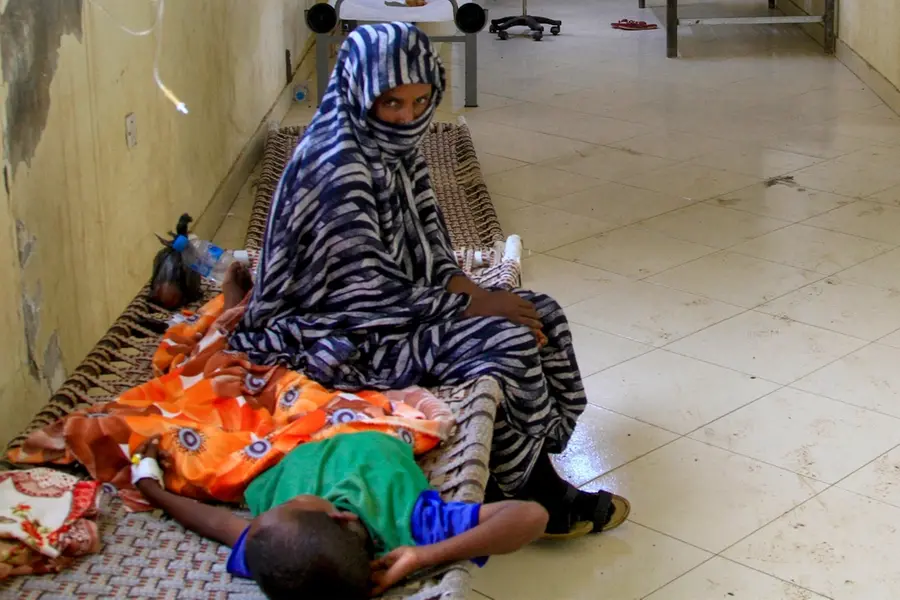
Kassala: Aisha Mohammed, lying in a hospital bed, described her struggle with cholera symptoms in Sudan, where the ongoing conflict has devastated the healthcare system. Cholera, a disease caused by contaminated water or food, has become more prevalent in Sudan, particularly during the rainy season, even before the war between rival generals began in April 2023.
After over 16 months of intense fighting, most hospitals in Sudan have been forced to close. This has left the country of 48 million people grappling with the spread of cholera, a treatable but sometimes deadly disease.
Also Read

In the southeastern town of Wad al-Hulaywah, 40-year-old Mohammed is receiving intravenous treatment to manage her severe symptoms. "I'm suffering from acute diarrhoea," she whispered.
Recent heavy rains and flooding have worsened the cholera situation, displacing thousands and increasing the spread of the waterborne disease, which can cause severe dehydration and be fatal if not promptly treated.
The Sudanese health ministry declared a cholera epidemic on Monday, reporting 556 cases and 27 deaths, primarily in Kassala state, where Wad al-Hulaywah is located. The nearby Gedaref state has also been significantly affected. The World Health Organization has recorded at least 11,327 cholera cases in Sudan since June 2023, with 316 resulting in death.
Health Minister Haitham Ibrahim attributed the epidemic to "climatic conditions and water contamination." In Wad al-Hulaywah alone, "we've counted 150 cases so far, among them seven dead" since late July, local health official Adam Ali told AFP.
Even before the war, about 40 percent of Sudanese lacked access to clean water, and the situation has deteriorated. "Our problem is drinking water," said Ali. Most residents of Wad al-Hulaywah "drink water directly from the river -- polluted water", he said. The rainy season has brought increased pollution to the Setit River, which starts in Ethiopia, exacerbating the water crisis.
Near the local hospital, workers are spraying insecticide to combat flies, a sign of poor sanitation. Construction of a dam on the Setit River in 2015 displaced entire villages, and makeshift latrines in these areas are poorly maintained, attracting more flies. Dam construction in 2015 on the Setit river had displaced "entire villages", he said, and their inhabitants "dug makeshift latrines, which attract flies because they are not maintained".
Access to clean water is limited across Sudan, whether in areas controlled by the army or the paramilitary Rapid Support Forces, both of which are fighting for control. The paramilitaries have blocked fuel supplies needed for water pumps, and bureaucratic delays and ongoing fighting have hindered aid efforts, leaving key water stations inoperable.
The war has resulted in tens of thousands of deaths, displaced more than 10 million people, and closed over 70 percent of the country’s healthcare facilities, according to the UN. Both sides in the conflict have been accused of war crimes, including attacks on civilians and obstruction of humanitarian aid.
With Sudan facing what the UN calls "one of the worst humanitarian crises in recent memory," and aid organisations struggling to provide assistance, many people are left to fend for themselves.
Sitting outside a hospital in Kassala, 49-year-old Hassan al-Junaid said he has been displaced by the war, and now "we are living in very bad conditions, which caused my sister to get cholera."
"I am the only one with her, but I can't go with her inside because she has been placed in quarantine," he said.
"So I'm staying here, worried for her and afraid that I might be infected myself," added Junaid.
"If that happens, I will have no one to buy me the medicine I would need."
Agencies
Published: 21 Aug 2024, 07:58 am IST
Disclaimer: Kindly avoid objectionable, derogatory, unlawful and lewd comments, while responding to reports. Such comments are punishable under cyber laws. Please keep away from personal attacks. The opinions expressed here are the personal opinions of readers and not that of Mathrubhumi.