
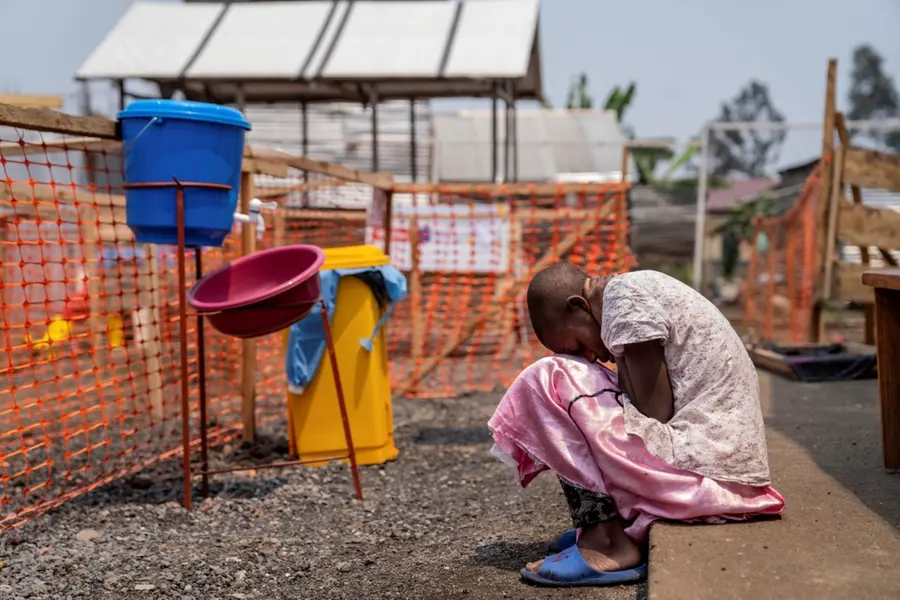
Paris: This week, the World Health Organization (WHO) declared the ongoing mpox outbreak in Africa an international emergency. The European Centre for Disease Prevention and Control (ECDC) warned on Friday that Europe is "highly likely" to see more imported cases of the virus.
The Africa Centres for Disease Control and Prevention (Africa CDC) has issued its first-ever Public Health Emergency of Continental Security (PHECS) for the disease, formerly known as monkeypox. This is the second time the WHO has issued a public health emergency since the epidemic began spreading globally in 2022.
Also Read

The virus, which originated in the Democratic Republic of Congo (DRC), has now spread to other African countries and was recently detected for the first time in Sweden and Pakistan. Mpox was first identified in humans in the DRC in 1970.
There are two main types of the virus: clade 1 and clade 2. Clade 1, which is more severe, has been endemic in central Africa for decades, while clade 2, which is less severe, is common in parts of West Africa.
Mpox spreads through close physical or sexual contact and symptoms include fever, muscle aches, and large skin lesions. The disease gained global attention in May 2022 when the less deadly clade 2b spread internationally, mainly affecting gay and bisexual men.
From January 2022 to June 2024, there have been over 99,000 mpox cases and 208 deaths across 116 countries, according to the WHO. The current surge involves the more dangerous clade 1, including a new variant known as clade 1b, first detected among sex workers in the DRC in September 2023.
Sweden and Pakistan have recently reported cases of this new variant, with the ECDC urging increased preparedness across Europe. Pakistan's case marks the first mpox detection in Asia.
"It is not surprising... that travel between continents has brought this case to Europe," said Brian Ferguson, an Associate Professor of Immunology, University of Cambridge.
He added that cases were likely to spike in Europe and elsewhere as "there are currently no mechanisms in place to stop imported cases of mpox".
Francois Balloux from the University College of London Genetics Institute stressed the need for "rapid international cooperation" to manage the outbreak, although there is currently no evidence of widespread transmission in Europe.
Clade 1 mpox is known to cause more severe illness in young children, pregnant women, and those with weakened immune systems. The clade 1b variant, primarily spread through sexual contact, also poses risks through non-sexual contact, such as children playing together.
The death rate for clade 1b is around 3.6 percent, with infants and children at higher risk. This year has seen more mpox cases reported in the first half than all of 2023, with the majority of recent cases in the DRC, where 548 people have died so far.
New outbreaks have been reported in countries previously unaffected, including Burundi, Kenya, Rwanda, and Uganda. No deaths have been reported from these outbreaks.
Vaccines were used in Europe and North America during the 2022 global outbreak to help control the spread. However, vaccines are still not widely available in the most affected African countries.
In response, the US Department of Health has announced it will donate 50,000 doses of mpox vaccine to the DRC. Additionally, Africa CDC and the European Union have arranged to distribute 200,000 doses across Africa, with hopes to secure an additional 10 million vaccines.
Bavarian Nordic, the vaccine manufacturer, is seeking European approval to extend the vaccine’s use to children aged 12 to 17.
Agencies
Published: 17 Aug 2024, 10:53 am IST
Disclaimer: Kindly avoid objectionable, derogatory, unlawful and lewd comments, while responding to reports. Such comments are punishable under cyber laws. Please keep away from personal attacks. The opinions expressed here are the personal opinions of readers and not that of Mathrubhumi.