
India’s participation also reflects its growing role in multilateral platforms such as the G20, BRICS, and other global forums.
The French town of Évian-les-Bains is gearing up for its upcoming 52nd edition of the G7 summit, where President Emmanuel Macron will welcome the leaders of G7 countries. Leaders from developing countries who are not part of the G7 committee are also expected to attend as invited guests. The three days of crucial discussions will run from June 15 to 17.
The annual meeting will feature major discussions on US-Iran framework agreement, the ongoing Russia-Ukraine war, global trade tensions, artificial intelligence and global security concerns.
Also Read

The international conference is getting underway amid a positive development, as the United States and Iran have finalised a deal to end their 107-day conflict and reopen the Strait of Hormuz, a key maritime route for global trade.
What is G7?
The Group of Seven or G7 is an intergovernmental, political and economic forum comprising Canada, France, Germany, Italy, Japan, the United Kingdom and the United States. The European Union is a non-enumerated member of the organisation.
The G7 was formed in 1975 to address global macroeconomic challenges like the oil crisis and recessions in the 1970s.
Without being based on an official treaty and having no permanent secretariat or headquarters, these developed countries play a crucial role as they represent roughly 40–50 percent of worldwide nominal GDP and about 10 percent of the world's population.
What's happening inside G7 today?
Apart from the developed nations holding strong positions in the G7, the committee is actively encouraging emerging powers to take part in its meetings. This includes regularly inviting influential Global South democracies such as India, Brazil, and South Africa to its annual summit as guest nations, thereby expanding its policy reach across the wider world.
The G7 nations are advanced economies facing similar domestic challenges such as ageing populations, high labour costs, and advanced technology regulations.
Who's attending the 2026 G7 Summit?
Besides the major leaders of the G7 nations and the European Union represented at the summit, French President Emmanuel Macron has invited several heads of state from non-G7 countries as guests.
Leaders from non-G7 nations include Prime Minister Narendra Modi, Ukraine President Volodymyr Zelenskyy, Egyptian President Abdel Fattah el Sisi, Saudi Crown Prince Mohammed bin Salman and Qatari Emir Sheikh Tamim bin Hamad Al Thani. Leaders of Australia, Brazil, Kenya and South Korea are also taking part in the meeting.
South Africa has announced that it has been disinvited from this year's summit after initially being invited. The decision came amid tensions in ties between South Africa and the United States — one of its major trading partners — over differences on the Israel-Gaza conflict and concerns raised by Washington regarding the treatment of the white minority in the country.
The issue has been repeatedly highlighted by US President Donald Trump after his meeting with South African President Cyril Ramaphosa at the White House in May last year.
Officials, who are drafting an agenda aimed at discussing global crises and broad economic challenges, have invited AI executives from Anthropic, OpenAI, Google, and Mistral AI, and they are expected to attend the meeting.
What is the agenda of the G7 summit?
The agenda of this year's G7 summit is expected to focus on some of the most pressing global challenges, including the ongoing Russia-Ukraine war, tensions in the Middle East, global trade discussions and rising economic disruptions.
As Russia's war on Ukraine continues, discussions on bringing Moscow and Kyiv to the negotiating table have been encouraged by the main officials in the upcoming meeting.
US President Donald Trump is expected to hold talks with Ukrainian President Volodymyr Zelenskyy and other G7 leaders, while European diplomats are expected to push for a firmer stance on Russia through tighter sanctions and continued military support to Kyiv.
Beyond discussions related to Ukraine, leaders are expected to express their views on Iran and wider Middle East developments following geopolitical tensions that have impacted global oil prices and security concerns.
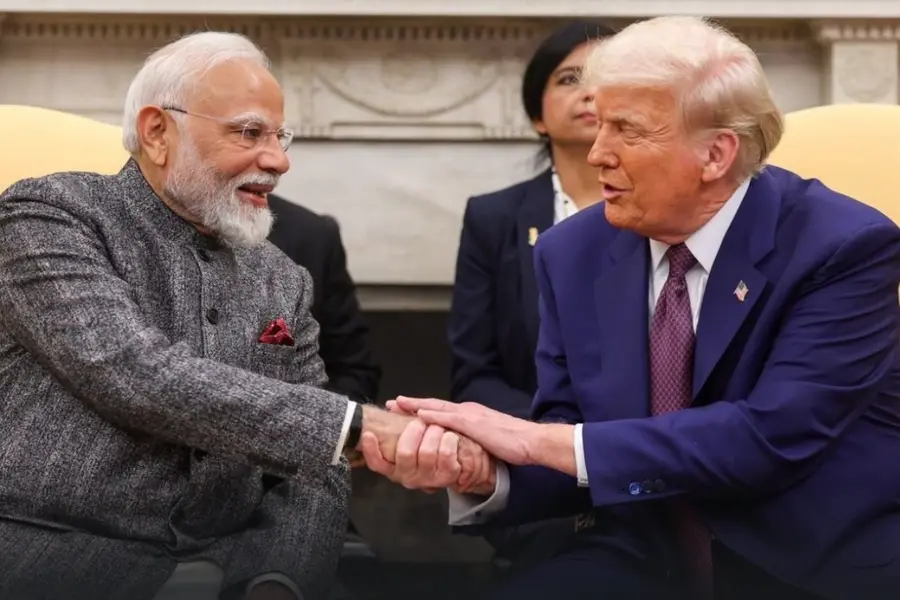
Trump is also expected to hold separate meetings with leaders from Egypt, Qatar, the United Arab Emirates and India on the sidelines of the official summit.
Trade and economic growth will also form an important part of the discussion. The summit comes amid global trade tensions following tariff measures imposed by the United States on several countries, including G7 members and key trading partners.
Trade relations and tariff concerns are expected to figure prominently in Trump's discussions with India’s Prime Minister Narendra Modi.
Besides, China's growing economic influence is expected to be a key point of discussion, particularly its dominance in rare earth minerals critical to global technology supply chains.
France has stated that global economic imbalances should be seen as a shared responsibility, pointing to China's high production, the United States' high consumption, and Europe's relatively lower levels of investment.
Senior technology executives, including OpenAI CEO Sam Altman and Anthropic CEO Dario Amodei, will discuss emerging developments in artificial intelligence, along with the opportunities and potential risks associated with the technology. Issues such as the protection of children online and strengthening digital infrastructure are also on the agenda. However, taxation of digital giants is not expected to be discussed.
The G7 leaders are also expected to reaffirm their commitment to addressing the rising debt burden faced by developing and emerging economies, although the specific measures in this regard remain unclear.
PM Modi at the G7 Summit: Opportunities galore
Prime Minister Narendra Modi is attending the G7 Summit 2026 in France to represent India’s position on key global issues and to strengthen engagement with major advanced economies.
He is expected to highlight the aspirations of the Global South, focusing on concerns of developing and emerging countries, including equitable growth, development priorities, and reforms in global governance, such as the expansion of representation in institutions like the United Nations Security Council.
India’s participation also reflects its growing role in multilateral platforms such as the G20, BRICS, and other global forums. The visit also offers scope for bilateral meetings with world leaders, including a possible discussion with US President Donald Trump on the sidelines of the summit, amid ongoing tensions between New Delhi and Washington over trade disputes, maritime security concerns, and energy-related issues. Despite differences, both sides are also reportedly close to finalising a bilateral trade agreement.
Why is G7 Summit facing protests?
Thousands of protesters clashed with police in Geneva days ahead of the G7 Summit scheduled to be held in nearby Évian, France.
The demonstration, which drew around 20,000 people according to police estimates, showed growing opposition to the policies and influence of the G7 countries. Protesters raised concerns over global inequality, rising economic gaps, climate inaction, and the influence of wealthy nations in global decision-making.
Many demonstrators also criticised the G7’s approach in ongoing global conflicts, including the wars in Ukraine and West Asia, arguing that the group's policies have contributed to geopolitical tensions rather than easing them.
Slogans calling for an end to imperialist alliances and stronger support for developing nations were widely seen during the march.
Environmentalists were a large part of the protest, raising concerns about carbon emissions, dependence on fossil fuels, and weak climate action by advanced economies. Some groups also spoke against capitalism, corporate influence, and the concentration of wealth.
While the majority of the demonstration remained peaceful, some groups engaged in violent acts, including throwing stones and firecrackers at security forces. Police responded with tear gas and water cannons as clashes broke out in several parts of the city.
Authorities in Geneva had permitted a controlled march away from the city centre to prevent disruption, but parts of the protest turned violent after some groups broke away from the main rally and caused damage to property, including vehicles and public infrastructure.
Compiled by S Gowri Nanda
Published: 15 Jun 2026, 09:21 pm IST
Related Topics
Disclaimer: Kindly avoid objectionable, derogatory, unlawful and lewd comments, while responding to reports. Such comments are punishable under cyber laws. Please keep away from personal attacks. The opinions expressed here are the personal opinions of readers and not that of Mathrubhumi.