
US President Donald Trump announced that American forces had killed Nino Guerrero, the notorious leader of Venezuela's Tren de Aragua criminal syndicate, in what he described as a targeted operation against one of the world's most violent transnational gangs.
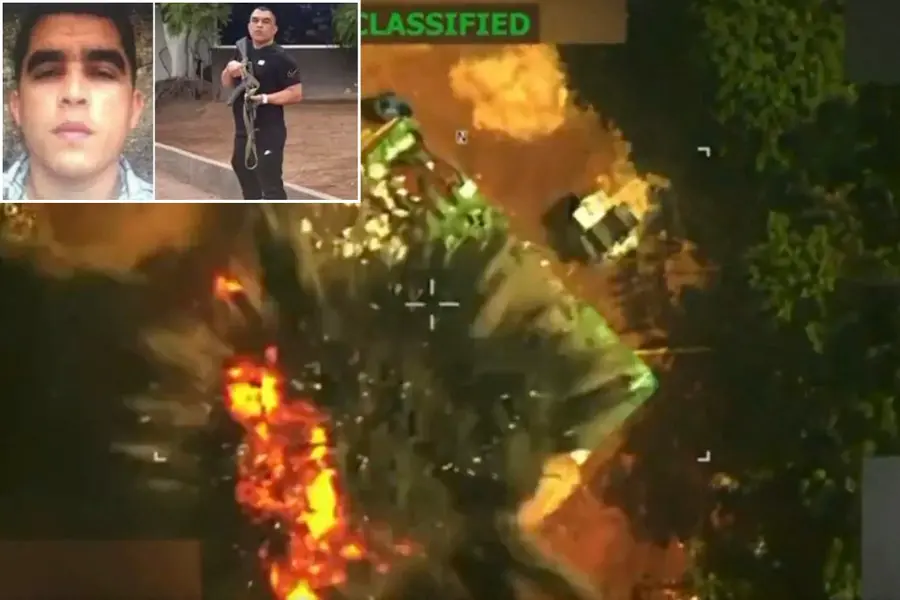
United States President Donald Trump announced Saturday morning that US forces had eliminated Nino Guerrero, the dreaded gangster belonging to the Tren De Argua crime syndicate in Venezuela. Trump termed the syndicate as one of the most bloodthirsty terrorist organisations on the planet.
Taking to the Truth platform, he wrote: "At my direction, the United States Southern Command delivered a swift and lethal kinetic strike to successfully execute Nino Guerrero."
Also Read

Trump further said the killing brought justice to the families of victims affected by the violence perpetrated by the organisation. The whole strike was portrayed as part of a broader campaign aimed at eliminating the transnational criminal organisation and strengthen border security.
Notably, the planned strike comes five months after US forces nabbed former Venezuelan President Nicolas Maduro and his wife and flew them to the US to face indictment.
In many ways, the elimination of Guerrero breaks the backbone of Tren de Argua crime syndicate and is a shot in the arm for American efforts to take down cartels operating across the Americas.
Who was Nino Guerrero?
Hector Rusthenford Guerrero Flores led one of the largest criminal organizations in Latin America. He was born in Maracay in the state of Aragua, Venezuela.
His first criminal record dates back to thee early 2000s when he was associated with some petty crimes and robberies. He was arrested and incarcerated in the Tocoron prison.
Guerrero grew in notoriety as he escalated from petty robberies to murder. In 2005, he was linked to a 2005 attack on a police station that claimed the life of a officer named Corporal Oswaldo Gonzalez. He was detained in 2010 for drug trafficking and dealing in stolen goods in Maracay.
He was imprisoned in the Aragua Penitentiary Centre, from which he escaped in 2012. A year later, he was recaptured by the Venezuela's Criminal and Scientific Investigation Corps (CICPC) during an operation in Barquisimeto, Lara state.
Guerrero was sentenced to 17 years in prison for homicide, drug trafficking, identity theft and hiding military-grade weapons among other charges. While in the prison Guerrero led the operations of the Tren de Aragua, promoting the expansion of the terrorist group by taking advantage of the large number of Venezuelans leaving the country during the economic crisis.
According to Venezuelan media reports, the Aragua Penitentiary Centre was reported to have housed a swimming pool, nightclub, bars, restaurants, a games area, pig and chicken farms, a baseball stadium and even a zoo during Guerrero's years of influence inside the prison.
Venezuelan authorities launched the Cacique Guaicaipuro Liberation Operation in September 2023 to retake control of the Aragua Penitentiary Centre. They deployed nearly 11,000 personnel. But Guerrero manage to escape through a tunnel.
An NGO claimed that Guerrero had been negotiating with corrupt government officials beforehand to facilitate his escape. However, the Venezuelan government denied the claim.
Following his escape, Guerrero reportedly fled to Peru. Following this, Peru's interior ministry announced a reward of 500,000 Soles for information leading to his capture and placed him on the country's wanted fugitives' list. Besides Peru, Guerrero had another arrest warrant out in Chile for criminal activities.
In January 2026, Guerrero was named among the six person charged officially in a grand jury federal indictment alongside Maduro, Maduro’s wife and son and two Venezuelan politicians. The indictment accused him of involvement in cocaine trafficking, illegal importation of narcotics, possession of military-grade weapons and the use of firearms in support of criminal activities.
United States' tryst with Tren de Argua
Guerrero's Tren de Aragua engaged in public displays of violence, including extortion, kidnapping, human trafficking for sexual exploitation, migrant smuggling, drug trafficking and theft. In order to gain ultimate control over local criminal markets, the gang instilled a sense of fear and intimidation, employing targeted violence.
The transnational group initially targeted inmates in Tocoron Prison as part of its recruitment efforts, while some were also subjected to its criminal activities as victims.
The gang established international cells as it expanded beyond Venezuela, adapting to local conditions and exploiting vulnerable populations, especially Venezuelan migrants, to further its illegal operations.
According to US authorities, Tren de Aragua expanded its criminal network through drug trafficking, human trafficking, migrant smuggling, extortion, kidnappings and other violent crimes.
The gang also attracted major attention in the United States due to its alleged links to high-profile cases, including the murders of Jocelyn Nungaray in Texas and Laken Riley in Georgia. The incidents heightened concerns over the group's growing presence in the country and prompted Washington to designate the organisation as a foreign terrorist group.
(Compiled by Gowri Nanda)
Published: 13 Jun 2026, 08:18 pm IST
Related Topics
Disclaimer: Kindly avoid objectionable, derogatory, unlawful and lewd comments, while responding to reports. Such comments are punishable under cyber laws. Please keep away from personal attacks. The opinions expressed here are the personal opinions of readers and not that of Mathrubhumi.