
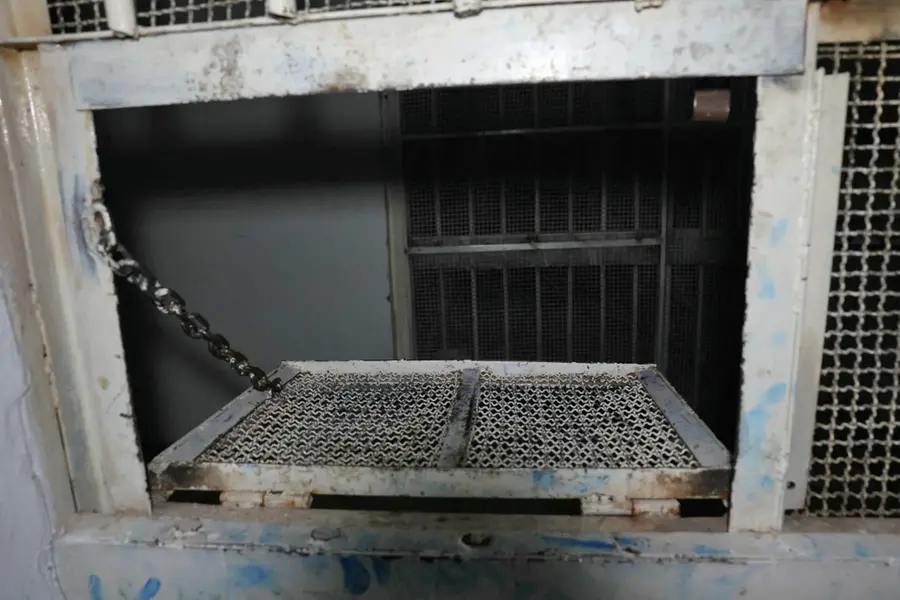
Beirut, Lebanon: Rebel fighters said they found around 40 bodies bearing signs of torture inside a hospital morgue near Damascus on Monday, stuffed into body bags with numbers and sometimes names written on them.
"I opened the door of the morgue with my own hands, it was a horrific sight: about 40 bodies were piled up showing signs of gruesome torture," Mohammed al-Hajj, a fighter with rebel factions from the country's south told by telephone from Damascus.
Also Read

Hajj took dozens of photographs and video footage that showed corpses with evident signs of torture: eyes and teeth gouged out, blood splattered and bruising. The footage taken in Harasta hospital also showed a piece of cloth containing bones, while a decomposing body's rib cage peaked through the skin.
The bodies were placed in white plastic bags or wrapped in white cloth, some stained with blood. Corpses had pieces of cloth or adhesive tape bearing scribbled numbers and sometimes names. Some seemed to have been killed recently. While some of the dead were wearing clothes, others were naked.
Islamist-led rebels seized power on Sunday ousting former President Bashar al-Assad, whose family ruled Syria with an iron fist for more than five decades. At the core of the system of rule that Assad inherited from his father Hafez was a brutal complex of prisons and detention centres used to eliminate dissent by jailing those suspected of stepping out of the ruling Baath party's line. Thousands of people hoping to reunite with loved ones who disappeared in Assad's jails had gathered Monday evening at the notorious Saydnaya prison outside Damascus.
Hajj said the fighters received a tip from a hospital worker about the bodies that were being dumped there. "We informed the military command of what we found and coordinated with the Syrian Red Crescent, which transported the bodies to a Damascus hospital, so that families can come and identify them," he added.
Diab Serriya, who cofounded the Association of Detainees and the Missing in Sednaya Prison (ADMSP) watchdog, told the bodies were likely detainees from Saydnaya prison. "Harasta Hospital served as the main centre for collecting the bodies of detainees," he said. "Bodies would be sent there from Saydnaya prison or Tishrin Hospital, and from Harasta, they would be transferred to mass graves," he added. "It is very important to document what we are seeing in the video."
According to the British-based Syrian Observatory for Human Rights war monitor, at least 60,000 people have been killed under torture or because of terrible conditions in Assad's detention centres. Since the start of the conflict, President Bashar al-Assad's government has been accused of human rights abuses and of cases of torture, rape and summary executions.
Hajj said he hoped that efforts will focus on "exposing the crimes committed by Assad in prisons and detention centres" during the transitional period. "We hope Assad will be held to account as a war criminal," he said.
AFP
Published: 11 Dec 2024, 12:21 pm IST
Disclaimer: Kindly avoid objectionable, derogatory, unlawful and lewd comments, while responding to reports. Such comments are punishable under cyber laws. Please keep away from personal attacks. The opinions expressed here are the personal opinions of readers and not that of Mathrubhumi.