
Bangladesh’s opposition Bangladesh Nationalist Party (BNP) is projected to win a commanding parliamentary majority in the country’s first general election since the deadly 2024 uprising, with early TV forecasts signalling a dramatic political shift.
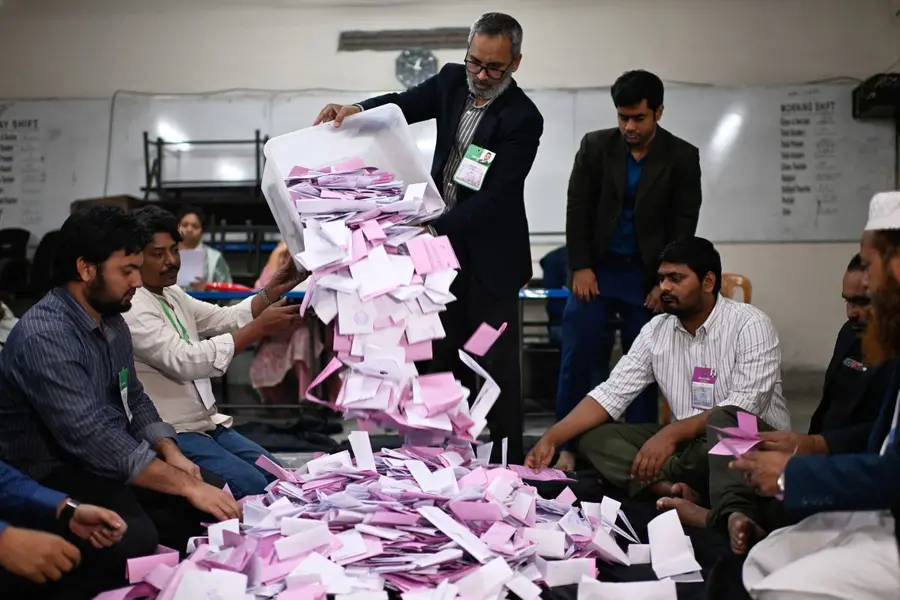
Dhaka: The Bangladesh Nationalist Party (BNP), led by Tarique Rahman, is projected to clinch a decisive victory in Bangladesh’s 13th parliamentary election, the first national vote since the deadly 2024 uprising that reshaped the country’s political landscape.
Bangladeshi television stations Jamuna TV and Somoy TV early Friday projected that the BNP had pushed well beyond the 150-seat threshold required for a majority in the 300-member Jatiya Sangsad.
Also Read

As of 5.30 am (2330 GMT Thursday), broadcasters estimated the BNP had secured 197 seats, while an Islamist-led coalition headed by Jamaat-e-Islami was projected to win 63 seats, a significant gain for the alliance but far short of forming a government.
The projections remain unofficial, with counting still underway across 299 constituencies where voting took place. An additional 50 seats reserved for women will be allocated based on party lists once final tallies are confirmed.
BNP Chairman Tarique Rahman, 60, who is now poised to become the next prime minister if results hold, expressed confidence ahead of polling.
In remarks to AFP earlier this week, Rahman said he was “confident” the BNP, sidelined during the 15-year rule of ousted premier Sheikh Hasina, would return to power.
Senior BNP leader Ruhul Kabir Rizvi declared a “sweeping victory” in a party statement but refrained from citing figures. In a notable departure from the usual post-election festivities, Rizvi urged party workers to offer thanks through prayers rather than public rallies.
“There will be no victory rally despite the BNP’s sweeping victory,” the statement read. “We will hold special prayers at mosques after Jumma (Friday) prayers across the country.”
BNP election committee spokesman Mahdi Amin echoed optimism, telling reporters the party was on track to win at least two-thirds of the seats. He added that Rahman had won both constituencies he contested.
Outside BNP offices in Dhaka, supporters who had gathered overnight described the result as both political and personal vindication. “We will join the nation-building effort led by Tarique Rahman,” Md Fazlur Rahman, 45, told AFP. “Over the last 17 years, we have suffered a lot, faced multiple politically motivated cases, and lost a factory I owned.”
Despite tensions and sporadic violence during campaigning, which police records say left five people dead and more than 600 injured, polling day itself was largely peaceful.
The Election Commission reported only “a few minor disruptions,” crediting heavy deployments of security forces nationwide.
Ahead of voting, United Nations experts had warned of “growing intolerance, threats and attacks,” alongside what they described as a “tsunami of disinformation.”
Interim leader Muhammad Yunus, who has governed Bangladesh since Sheikh Hasina’s ouster in August 2024, called for calm and unity. “We may have differences of opinion, but we must remain united in the greater national interest,” Yunus said after casting his vote.
The 85-year-old Nobel Peace Prize laureate, who is set to step down once a new government assumes office, described the election as a turning point. “The country has ended the nightmare and begun a new dream,” he said.
Hasina, 78, sentenced to death in absentia for crimes against humanity, dismissed the vote as an “illegal and unconstitutional election” in a statement issued from India, where she remains in hiding. Yunus’s interim administration had barred her Awami League party from contesting.
Alongside parliamentary voting, Bangladeshis participated in a referendum on Yunus’s proposed democratic reform charter.
The package includes prime ministerial term limits, the creation of an upper house of parliament, enhanced presidential powers, and stronger judicial independence. Television projections suggested broad public support for the reforms. Final official results are expected later Friday.
Published: 13 Feb 2026, 07:22 am IST
Related Topics
Disclaimer: Kindly avoid objectionable, derogatory, unlawful and lewd comments, while responding to reports. Such comments are punishable under cyber laws. Please keep away from personal attacks. The opinions expressed here are the personal opinions of readers and not that of Mathrubhumi.