
BNP’s decisive electoral victory coincides with strong early signals from Bangladesh’s reform referendum, triggering debate over whether the country’s foundational 1972 Constitution could face its most dramatic transformation yet.
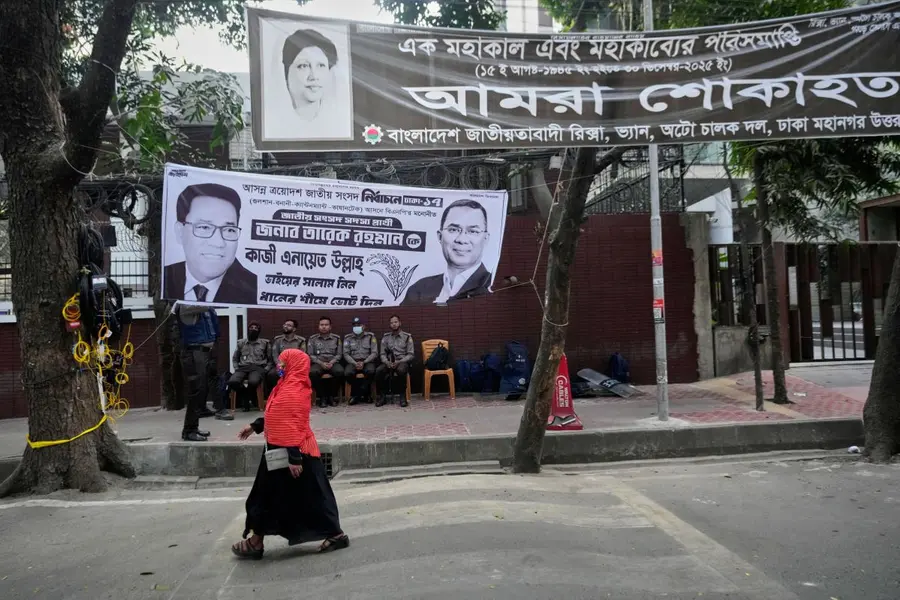
Bangladesh is standing at a pivotal political crossroads after the Bangladesh Nationalist Party (BNP) claimed victory in the country’s first general election since the 2024 student-led uprising that toppled Sheikh Hasina’s government.
While the Election Commission is yet to formally declare the final tally, multiple local media reports indicate that the BNP has crossed the majority mark in the 350-member Parliament, positioning Tarique Rahman to lead the next government.
Also Read

The BNP’s media unit announced on X that the party had secured enough seats to govern independently. Senior leaders congratulated citizens, calling the outcome a restoration of democratic choice after years of disputed polls and boycotts.
Tarique Rahman, the party’s prime ministerial candidate, returned to Bangladesh in December after 17 years in self-exile in London, a comeback that reshaped the electoral narrative.
Even as the BNP celebrated its apparent mandate, Rahman urged restraint. His press secretary said the leader had asked supporters to offer special prayers rather than take out victory rallies, signalling an attempt to project stability in a politically sensitive environment.
International reactions followed swiftly. The US Embassy in Dhaka described the result as “historic,” with Washington expressing readiness to work with the incoming leadership.
Leaders from India and Pakistan also congratulated Rahman, highlighting the regional significance of Bangladesh’s political reset.
However, the election was not without controversy. Jamaat-e-Islami, which led an 11-party alliance and emerged as the principal challenger, raised concerns over delays in constituency-level results. Despite falling short of a majority, the alliance made notable gains, reportedly securing at least 77 seats, strengthening its role as a formidable opposition bloc.
Parallel to the parliamentary vote, Bangladeshis participated in a referendum on an ambitious constitutional reform package under the “July National Charter” (Constitutional Amendment) Implementation Order 2025.
Early media reports suggest strong backing for the proposals, with some estimates indicating around 73 per cent of counted votes favouring approval, though official confirmation is pending. If endorsed, the reforms would introduce sweeping structural changes.
These include establishing a bicameral legislature through the creation of an Upper House with 100 proportionally allocated seats, reinstating the caretaker government system, expanding reserved seats for women to 100 over time, and mandating cross-party consensus on key appointments and international treaties involving national security.
Supporters, including interim administration leader Muhammad Yunus, have framed the reforms as path-breaking measures aimed at strengthening checks and balances.
Critics, however, warn that the package could trigger legal and constitutional turbulence. Several experts argue that the proposals risk undermining the foundational principles of the 1972 Constitution, noting that the charter itself does not explicitly provide for such a plebiscite-driven overhaul.
Legal scholars anticipate potential court challenges, particularly over whether the referendum can effectively reshape core constitutional structures.
The debate revives memories of Bangladesh’s earlier referendums in 1977, 1985, and 1991 exercises that carried overwhelming approval but unfolded under vastly different political contexts.
For many observers, the twin developments, a BNP resurgence and a possible constitutional redesign, represent both an opportunity and a test.
After years of political polarisation, allegations of democratic backsliding, and episodes of violence, Bangladesh’s new leadership may face immediate pressure to balance governance, reform, and reconciliation.
As analyst Michael Kugelman noted, the BNP’s return to power, despite its historical baggage of dynastic politics and corruption allegations, will be judged by whether it governs differently in a post-uprising Bangladesh.
Published: 13 Feb 2026, 12:01 pm IST
Related Topics
Disclaimer: Kindly avoid objectionable, derogatory, unlawful and lewd comments, while responding to reports. Such comments are punishable under cyber laws. Please keep away from personal attacks. The opinions expressed here are the personal opinions of readers and not that of Mathrubhumi.