
A routine US Air Force test mission ended in tragedy after a B-52 bomber crashed shortly after take-off from Edwards Air Force Base in California, killing all eight people on board.
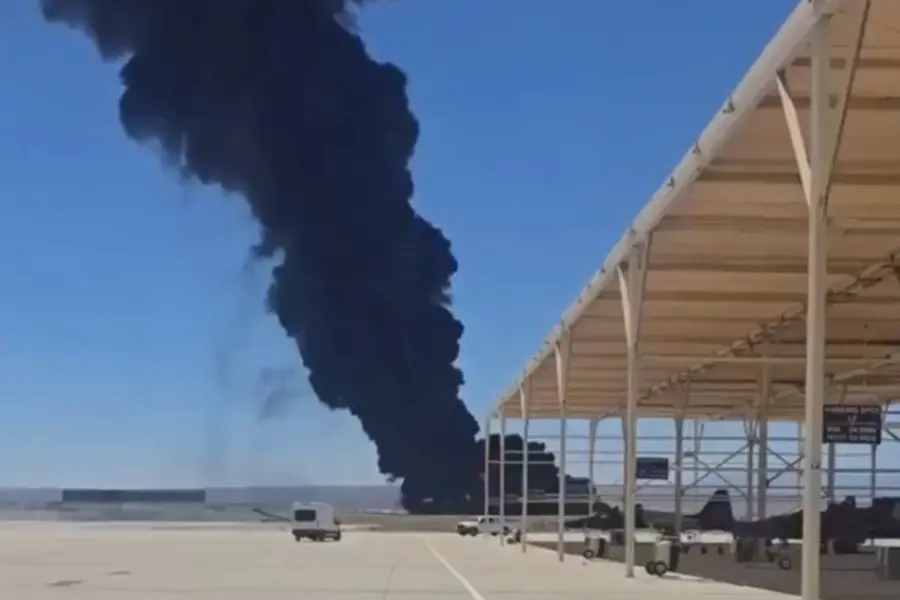
A routine test mission turned into a major tragedy on June 15 after a B-52 Stratofortress bomber crashed moments after taking off from Edwards Air Force Base in California's Mojave Desert.
Military officials confirmed that all eight people on board were killed in the accident, which is now under investigation.
Also Read

Routine mission ends in disaster
The B-52 bomber crashed at approximately 11:20 a.m. local time shortly after departing from Edwards Air Force Base, one of the United States Air Force's most important testing facilities. Witness footage and aerial images showed the aircraft bursting into flames upon impact, leaving a large charred area near the runway.
Emergency crews rushed to the scene, but officials later determined that the crash was unsurvivable. The aircraft was carrying a mix of military personnel, government representatives and civilian contractors.
Eight people confirmed dead
Colonel James Hayes, deputy commander of the 412th Test Wing, confirmed that all eight people aboard the aircraft lost their lives.
Officials said family notification procedures were underway before releasing the identities of the victims. Aircraft manufacturer Boeing later confirmed that two of its employees were among those killed in the crash.
"We lost eight great Americans," Hayes said while addressing reporters at Edwards Air Force Base.
Aircraft was supporting radar modernisation programme
According to Air Force officials, the bomber was participating in a test mission connected to an ongoing radar modernisation programme.
The aircraft was being used to evaluate a new Active Electronically Scanned Array (AESA) radar system designed to replace older equipment on the ageing bomber fleet. The programme is part of broader efforts to keep the Cold War-era aircraft operational for decades to come.
Investigators have not yet confirmed whether the crashed aircraft was the same B-52 previously assigned to the radar upgrade project.
ALSO READ | Strait of Hormuz reopening? Trump says yes, US Navy says blockade remains
Investigation begins into cause of crash
Authorities have launched a formal investigation to determine what caused the aircraft to go down so soon after take-off.
Military officials cautioned that the investigation could take several months to complete. No immediate evidence has been released pointing to mechanical failure, pilot error or issues connected to the testing programme.
Aviation experts noted that crashes occurring immediately after take-off often involve flight control problems, engine failures or issues linked to newly installed systems being tested.
One of America's most recognisable bombers
The B-52 Stratofortress first entered service in the 1950s and remains one of the most recognisable aircraft in the US military.
Designed during the Cold War, the bomber has participated in numerous conflicts, including operations in Vietnam, the Gulf region, Iraq, Afghanistan and more recently missions connected to tensions involving Iran.
The aircraft remains a critical part of America's long-range strike capability and can carry both conventional and nuclear weapons.
Edwards Air Force Base's historic role
Edwards Air Force Base has long served as the centre of aircraft testing and development for the US Air Force.
Located in California's Mojave Desert, the base is famous for hosting some of aviation's most important milestones, including the historic flight in which test pilot Chuck Yeager became the first person to break the sound barrier in 1947.
The facility continues to conduct testing of aircraft, weapons systems and military technologies before they enter operational service.
Air Force and Boeing express condolences
Following the crash, Air Force Secretary Troy Meink expressed sorrow over the loss of life and paid tribute to those who died while supporting the military's mission.
Boeing also offered condolences to the families of the victims and confirmed that two company employees were among those aboard the aircraft.
As investigators work to determine what caused the crash, the accident stands as one of the deadliest US Air Force aviation tragedies in recent years.
Published: 16 Jun 2026, 08:54 am IST
Disclaimer: Kindly avoid objectionable, derogatory, unlawful and lewd comments, while responding to reports. Such comments are punishable under cyber laws. Please keep away from personal attacks. The opinions expressed here are the personal opinions of readers and not that of Mathrubhumi.