
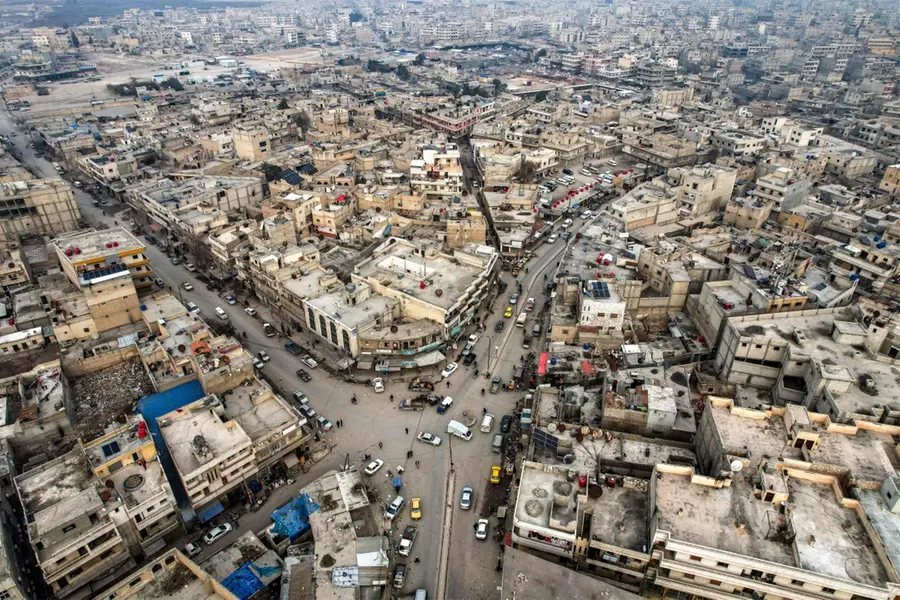
Damascus: Intense fighting between Turkish-backed groups, supported by air strikes, and Kurdish-led forces in Syria’s northern Manbij region resulted in 37 deaths on Thursday, a war monitoring group reported.
According to the Syrian Observatory for Human Rights, the clashes took place in the Manbij countryside between the Kurdish-led Syrian Democratic Forces (SDF) and the Turkish-backed National Army factions. These battles were further fueled by Turkish air strikes, leading to significant casualties.
Also Read

"The attacks killed 37 people in a preliminary toll," the British-based monitor stated. "The majority of those killed were Turkish-backed combatants, but the toll also included six SDF fighters and five civilians." Since December, the conflict in the region has intensified. The Observatory reported that at least 322 people have lost their lives in the Manbij countryside alone.
Kurdish forces call for ceasefire amid rising tensions
In response to the escalating violence, Mazloum Abdi, leader of the US-backed Syrian Democratic Forces (SDF), reiterated his group's commitment to "the unity and integrity of Syrian territory" in a statement. He urged Syria’s authorities to intervene and implement a ceasefire across the country.
Abdi's call followed what he described as a "positive" meeting between Kurdish leaders and the Syrian government late last month. However, despite diplomatic discussions, fighting has persisted, particularly between Turkish-backed forces and the SDF.
This new wave of violence erupted after Turkish-backed factions in northern Syria resumed their offensive against the SDF. At the same time, Islamist-led rebels launched an attack that eventually led to the fall of Syrian President Bashar al-Assad's regime on November 27.
Despite US-led efforts to mediate a ceasefire in the region, the Turkish-backed groups successfully captured Kurdish-held territories, including Manbij and Tal Rifaat, located in northern Aleppo province. The violence has continued since, contributing to an increasing death toll.
US Seeks to Prevent Further Escalation
On Wednesday, US Secretary of State Antony Blinken acknowledged Turkey's "legitimate concerns" regarding Kurdish militants, specifically the Kurdistan Workers' Party (PKK), operating in Syria. Blinken stressed the importance of finding a peaceful resolution that includes the removal of "foreign terrorist fighters."
"That's a process that's going to take some time, and in the meantime, what is profoundly not in the interest of everything positive we see happening in Syria would be a conflict, and we'll work very hard to make sure that that doesn't happen," Blinken told reporters in Paris.
Tensions remain high, as Turkey warned of potential military action against Kurdish forces in Syria unless its conditions for a peaceful "bloodless" transition are met. Turkey has long accused the SDF’s main component, the People’s Protection Units (YPG), of having ties to the PKK. The PKK has waged a decades-long insurgency against Turkey, and is labeled a terrorist organization by Turkey, the United States, the European Union, and most of Turkey's Western allies.
Control over Syria’s oil-rich northeast
Syria’s Kurdish forces have maintained control over the oil-rich northeastern region of the country, gaining de facto autonomy during the ongoing civil war since 2011. The US-backed SDF played a leading role in the military campaign that ousted ISIS from their final strongholds in Syria in 2019.
However, Turkey’s ongoing military operations against the SDF since 2016 have made the situation volatile, with both sides continuing to clash in the region as diplomatic efforts struggle to reach a lasting resolution.
As the fighting continues, the death toll rises, and concerns grow over the broader stability of Syria. The international community is closely monitoring developments, urging all parties to seek a peaceful solution to avoid further escalation.
Agency
Published: 09 Jan 2025, 02:35 pm IST
Disclaimer: Kindly avoid objectionable, derogatory, unlawful and lewd comments, while responding to reports. Such comments are punishable under cyber laws. Please keep away from personal attacks. The opinions expressed here are the personal opinions of readers and not that of Mathrubhumi.