
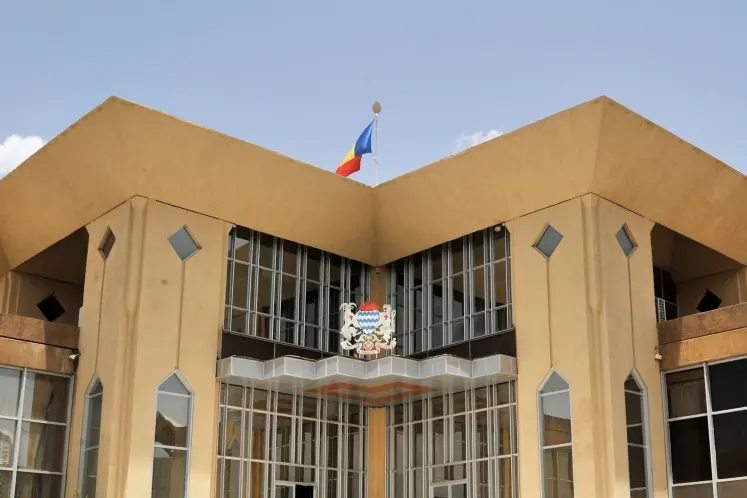
N'Djamena: A violent assault on Chad’s presidential complex in the capital, N'Djamena, on Wednesday resulted in the deaths of 19 people, including 18 attackers and one security personnel. The attackers attempted to storm the complex, leading to a fierce battle with security forces.
Gunfire erupted near the presidential complex, and tanks were seen on the streets of the city. Security sources reported that a commando unit of armed men tried to overrun the complex. The government later confirmed that 19 people died in the fighting, with 18 being members of the commando unit and one being a member of the presidential security team.
Also Read

Government spokesman and Foreign Minister Abderaman Koulamallah provided details of the assault, stating: “There were 18 dead and six injured among the attackers and we suffered one death and three injured, one of them seriously.”
Hours after the shooting, Koulamallah appeared in a video posted to Facebook, surrounded by soldiers. He declared: “The situation is completely under control... the destabilisation attempt was put down.”
Attacker identity and motivation
A security source initially suggested that the attackers were members of the Boko Haram jihadist group. However, Koulamallah later dismissed this, saying: “They were probably not terrorists, but rather drunken ‘Pieds Nickeles’," referring to a French comic featuring hapless criminals. He explained that the attackers had subdued four guards before entering the complex, where they were easily overpowered by the presidential guard. The surviving attackers were described as “completely drugged.”
Chad, a landlocked country under military rule, has faced regular attacks from Boko Haram, especially in its western Lake Chad region, which borders Cameroon, Nigeria, and Niger. The country recently ended its military accord with former colonial power France, a move that follows a growing trend of African countries rejecting French military presence in the region.
Details of attack
The assault occurred at around 7:45 PM (1845 GMT), when an armed commando unit opened fire inside the presidential complex. It was quickly overrun by the presidential guard. Tanks were deployed, and all roads leading to the presidency were blocked. The city saw civilians fleeing the area on motorcycles and in cars, while armed police were stationed at key points.
The attack came just days after Chad held a general election, which the government hailed as a step towards ending military rule. However, the election was marred by low voter turnout and opposition allegations of fraud. Opposition groups had called for a boycott, allowing pro-government candidates to dominate the election, which was contested by those who accused President Mahamat Idriss Deby Itno of securing his position through military means.
Diplomatic, military shifts
In recent months, President Deby has moved to consolidate his power, including reshuffling the army and building new strategic partnerships with countries such as Russia and Hungary. Meanwhile, France, which had maintained military bases in Chad, is in the process of withdrawing its troops after Chad ended its defense agreements with Paris in November. France has already been expelled from other Sahelian countries, including Mali, Burkina Faso, and Niger.
Chad’s government, under Deby, continues to navigate internal and external challenges, including ongoing security threats, political unrest, and shifting international alliances.
Agency
Published: 09 Jan 2025, 07:52 am IST
Disclaimer: Kindly avoid objectionable, derogatory, unlawful and lewd comments, while responding to reports. Such comments are punishable under cyber laws. Please keep away from personal attacks. The opinions expressed here are the personal opinions of readers and not that of Mathrubhumi.