
Many taxpayers are experiencing delays in receiving their FY24-25 income tax refunds as the department flags high-value and deduction-heavy claims for additional verification.
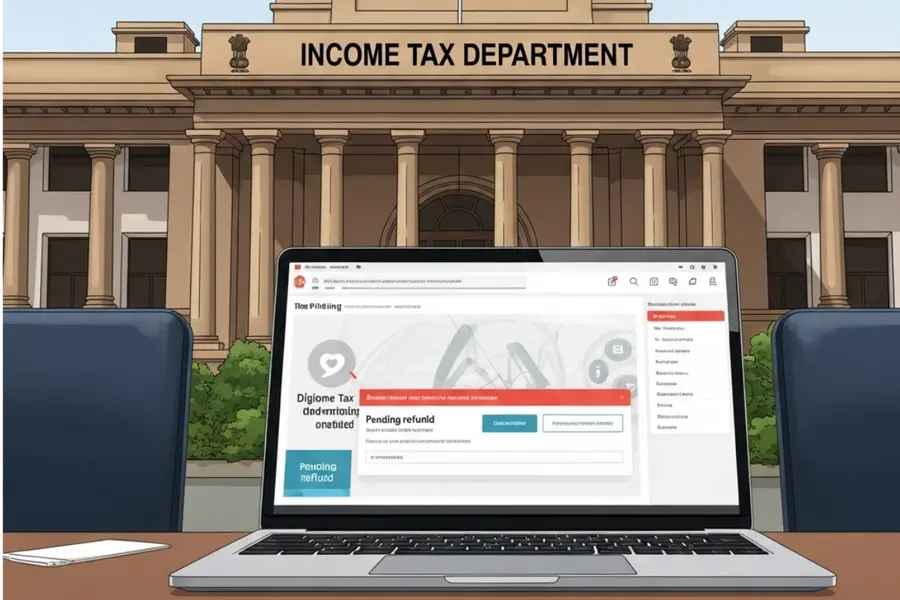
Income tax refunds for FY24-25 have been delayed for many taxpayers this year as the tax department conducts additional checks on deduction claims and mismatched financial data. Several returns have been flagged for verification, slowing down the usual refund timeline.
Why income tax refunds are delayed this year
Also Read

Income tax refunds for FY24-25 (AY 2025-26) have been delayed for several taxpayers after the Central Board of Direct Taxes (CBDT) identified irregularities in certain deduction claims. According to officials, the department’s data-analytics system flagged a number of returns where deductions, income details, or TDS claims did not match information recorded in Form 26AS or the Annual Information Statement (AIS).
Ravi Agrawal, Chairman of the CBDT, stated that the department is examining cases involving incorrect or disproportionately large deductions. These mismatches are prompting manual verification, extending the processing time of such returns. In addition to deduction-related scrutiny, refunds may be held up due to issues such as unvalidated bank accounts, PAN–bank detail mismatches, incomplete e-verification, or high-value refunds requiring deeper review.
The expected refund credit timeline
Refunds for simple cases with accurate data are being released, but returns flagged for review will take longer. The tax department expects to complete the majority of pending refunds, including many high-value cases, by the end of December 2025. Refunds for straightforward salary-based filings with standard deductions are likely to be processed earlier, while complex claims or returns showing significant refund amounts may face extended timelines.
Typical reasons your refund may be on hold
- Mismatch in income or TDS data: When details in the return differ from what appears in AIS or Form 26AS, the system automatically triggers a review.
- Incorrect or suspicious deductions: Large or unusual deduction claims, especially under sections such as 80C, 80D, or house-rent exemptions, are under tighter scrutiny this year.
- High-value refunds: Cases involving substantial refund amounts undergo manual checks to verify the accuracy of tax credits.
- Unvalidated bank details: Refunds cannot be credited if the bank account is not pre-validated on the e-filing portal.
- Outstanding past tax demands: If earlier tax dues exist, refunds may be adjusted or withheld until the matter is resolved.
- Failure to e-verify: Returns not e-verified in time remain unprocessed, halting refunds entirely.
How to check your ITR refund status
Taxpayers can check their current refund position through the official Income Tax e-filing portal:
- Log in to the portal at incometax.gov.in.
- Go to e-File → Income Tax Returns → View Filed Returns.
- Select Assessment Year 2025-26 for FY24-25.
- Click View Details to see the current status such as “e-Verified”, “Processed”, “Refund Issued”, “Refund Failure” or “Under Verification”.
For some older refunds, the status may still be visible on the NSDL (OLTAS) refund status page using PAN and the relevant assessment year.
What to do if your refund is delayed or failed
If your refund remains pending or fails to credit, the following steps are recommended:
- Check bank details: Ensure the bank account listed is active, correctly entered, and pre-validated. If not, update it on the portal and submit a Refund Reissue Request.
- Check AIS and Form 26AS for mismatches: If figures do not match your ITR, consider filing a revised return with accurate data.
- Review the “e-Proceedings” and “Compliance” sections: If the department has sought clarification, respond promptly to avoid prolonged delays.
- Raise a grievance: If your refund is stuck beyond 6–8 weeks despite accurate details, you may raise an online grievance through the portal for a formal follow-up.
What this means for taxpayers
This year’s refund cycle demonstrates the department’s increased reliance on data analytics to identify incorrect claims and unacceptable mismatches. While this has resulted in longer waits for some taxpayers, especially those with complex or high-value returns, the system is designed to release refunds once verification is complete. Regular filers with accurate data are likely to receive their refunds on time, while those with deductions or data inconsistencies should ensure all details match official records to avoid further delays.
Published: 27 Nov 2025, 07:43 am IST
Related Topics
Disclaimer: Kindly avoid objectionable, derogatory, unlawful and lewd comments, while responding to reports. Such comments are punishable under cyber laws. Please keep away from personal attacks. The opinions expressed here are the personal opinions of readers and not that of Mathrubhumi.