
AI traffic cameras in Kerala miss violations due to poor positioning, lighting issues, and technical flaws.
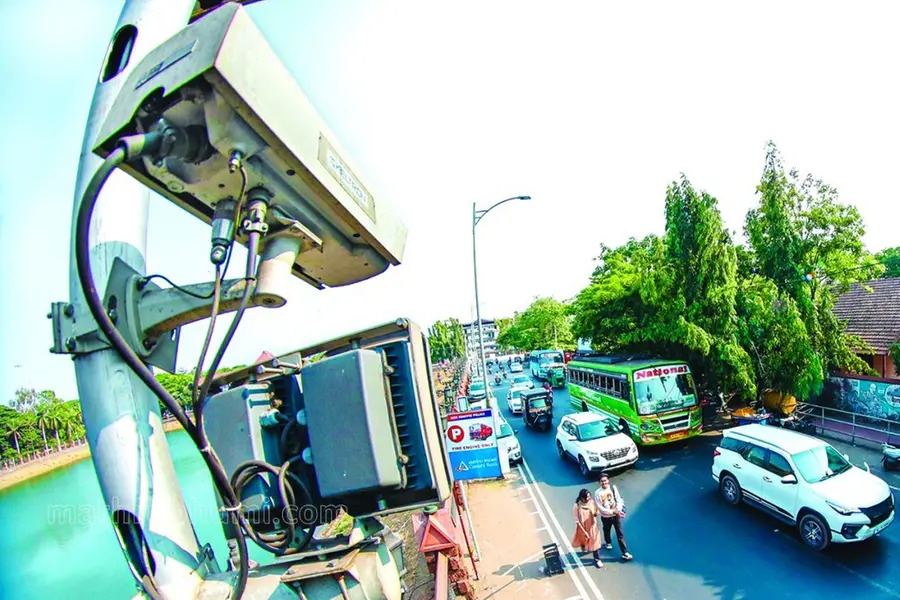
Thrissur, Kerala: The AI cameras installed on roads to detect traffic violations are failing to record all offences. Various types of vehicles escape detection due to the height and positioning of the cameras. Excessive light or obstruction by larger vehicles also hinders visibility, preventing the cameras from capturing all incidents on the road.
Although many Motor Vehicle Department (MVD) officers in the state are aware of the issue, they are reportedly helpless, as the problem cannot be easily resolved. Only Keltron, the state-run electronics firm that installed the cameras, has the authority and capacity to rectify the technical shortcomings.
One recurring issue is when two or more vehicles pass simultaneously; the camera often fails to capture the violation. Similarly, during bright daylight, images become blurry, reducing clarity. In one instance, during a roadside inspection by an MVD officer, around 25 two-wheeler violations were observed at a particular location. However, the AI camera managed to detect only seven.
Incidents such as auto drivers using mobile phones while driving are going unnoticed. While officials had claimed that the accuracy of AI cameras would improve over time, there has been little progress.
Despite a rise in violations such as mobile phone use and failure to wear seatbelts, only lorries and buses are marginally detected. Tempos are more likely to be caught due to their height aligning with the camera’s angle. Police jeeps and ambulances are occasionally recorded, but many vehicles—both larger and smaller—go undetected based on camera placement.
A total of 732 AI cameras were installed across Kerala’s roads at a cost of Rs 232 crore. In the past 18 months, Rs 161 crore have been collected from five lakh people as fines for various traffic offences.
Published: 11 Jun 2025, 10:31 am IST
Related Topics
Disclaimer: Kindly avoid objectionable, derogatory, unlawful and lewd comments, while responding to reports. Such comments are punishable under cyber laws. Please keep away from personal attacks. The opinions expressed here are the personal opinions of readers and not that of Mathrubhumi.
