
The government is planning new safety norms for two-wheelers that could require bikes and scooters to detect hands-free riding, issue alerts and even slow down automatically to reduce dangerous road behaviour and accidents.
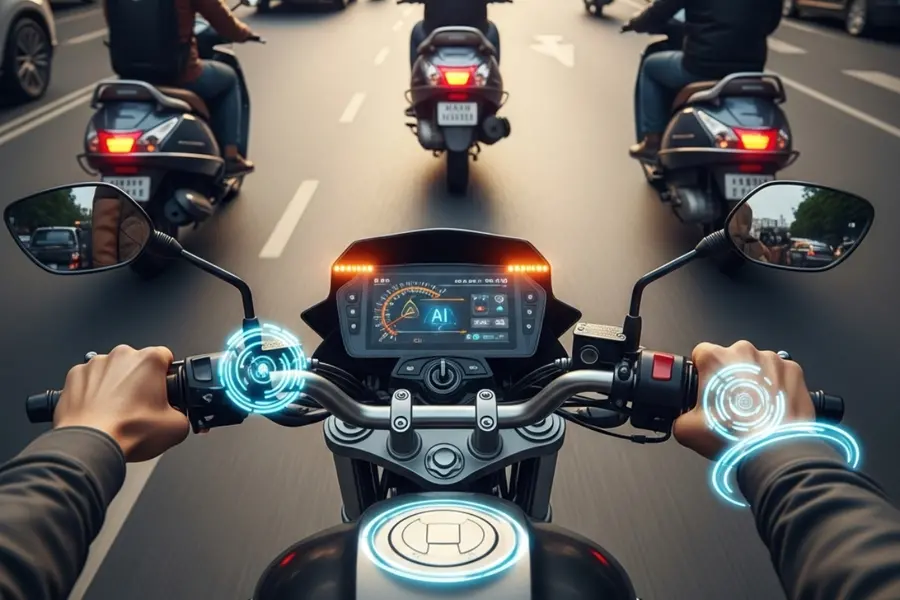
New Delhi: The Centre is planning a new technology-driven safety framework for two-wheelers that could require bikes and scooters to detect whether riders are keeping both hands on the handlebars while driving.
According to reports citing an internal draft proposal, the government is considering a three-layer “hands-free” safety system aimed at reducing dangerous riding behaviour and lowering accident risks on Indian roads.
Also Read

The proposal comes amid growing concerns over reckless bike stunts, speeding and social media-driven riding trends that often put both riders and pedestrians at risk.
New system may stop ignition without proper grip
One of the major features being discussed is an ignition-lock mechanism that may prevent a bike or scooter from starting unless both hands are detected on the handlebars.
Officials believe such a system could discourage unsafe riding habits from the beginning of the journey itself.
The proposed technology is expected to rely on grip sensors or pressure-detection systems integrated into the handlebars, allowing the vehicle to determine whether the rider is maintaining proper control.
The second layer of the proposed safety mechanism would reportedly involve warning systems that activate if riders remove their hands from the handlebars while the vehicle is moving.
These warnings could include:
- Audio alerts
- Dashboard warning signals
- Flashing visual indicators
The objective is to immediately alert riders before risky behaviour escalates into a serious accident.
Authorities are particularly focused on situations where riders perform stunts, use mobile phones while driving or ride without maintaining proper balance and control.
Automatic slowdown feature under consideration
The third and most advanced layer of the proposal involves a gradual automatic slowdown mechanism.
Under the draft plan, if the system detects prolonged hands-free riding, the vehicle may automatically reduce speed in a controlled manner instead of continuing at normal speed.
Officials reportedly want the slowdown to happen gradually rather than through sudden braking, which could itself create safety risks for riders and surrounding traffic. The idea is to encourage riders to regain control safely while reducing the likelihood of high-speed accidents. The proposed norms are being developed against the backdrop of increasing road accident concerns involving motorcycles and scooters across India.
Two-wheelers account for a significant share of road fatalities in the country. Authorities have repeatedly highlighted speeding, stunt riding, distracted driving and poor safety compliance as major causes behind fatal accidents.
In recent years, dangerous riding videos shared on social media platforms have also become a concern for enforcement agencies, particularly videos showing riders performing stunts on highways and crowded public roads. Officials believe new technology-based interventions may help discourage such behaviour.
Cost of two-wheelers may rise slightly
Industry estimates suggest that implementing the proposed safety technology could increase the price of two-wheelers by around ₹800 to ₹1,000 per vehicle.
Manufacturers may need to add:
- Sensor-based grip detection systems
- Electronic control modules
- Warning systems
- Speed management software
Automobile companies are expected to hold consultations with the government before the rules are finalised.
The proposal reflects a broader global trend where vehicle safety systems are becoming more technology-driven.
Modern vehicles increasingly use sensors, automation and rider-assistance systems to improve road safety. Features such as ABS, traction control, collision alerts and smart braking systems have already become more common in premium two-wheelers.
If approved, India’s proposed hands-free detection system could become one of the first large-scale attempts to directly monitor rider handlebar control behaviour.
Draft stage discussions still ongoing
The proposed norms are currently at the discussion and draft stage, and no final implementation timeline has been announced yet.
Government officials are expected to consult:
- Automobile manufacturers
- Road safety experts
- Industry associations
- Transport authorities
- before finalising the framework.
The new proposal is part of broader efforts to reduce road accident deaths and strengthen vehicle safety standards in India, where two-wheelers remain the most widely used mode of transport for millions of people.
If the rules are approved, manufacturers may eventually be required to integrate the new safety systems into future bike and scooter models sold in India.
The proposal could also trigger debates around:
- Rider privacy
- Technology reliability
- Cost impact on consumers
- Enforcement practicality
However, road safety experts argue that stronger preventive systems may become increasingly necessary as traffic density and accident numbers continue rising nationwide.
Published: 19 May 2026, 10:02 am IST
Related Topics
Disclaimer: Kindly avoid objectionable, derogatory, unlawful and lewd comments, while responding to reports. Such comments are punishable under cyber laws. Please keep away from personal attacks. The opinions expressed here are the personal opinions of readers and not that of Mathrubhumi.