
A CMFRI study reveals rising sardine numbers along Kerala’s coast, but stunted growth due to food scarcity is affecting market supply and prices.
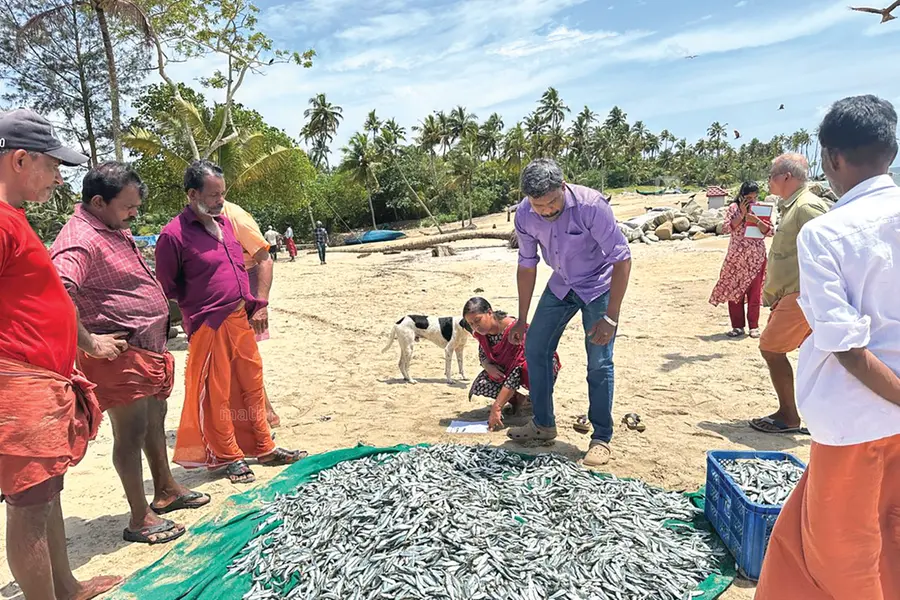
Kannur: The number of sardines has risen due to favourable sea conditions, but a prolonged shortage of food has hindered their growth, a new study has revealed.
During the monsoon, nutrient-rich water from the seabed rises to the surface, a process known as upwelling, which increases microplankton, the main food source for sardine larvae. While this boosts their survival rate, food scarcity at later stages leads to stunted growth and weight loss once the larvae reach finger length.
The study, led by Dr U Ganga, Principal Scientist at the Central Marine Fisheries Research Institute (CMFRI), warns that fluctuations in fish availability could become more frequent due to climate change. It recommends the development of short-term, species-specific forecasts and the enforcement of localised fishing restrictions.
The shortage of fully grown sardines has caused a sharp decline in market prices, prompting many fishermen to stop catching them altogether. Those who landed large quantities have been forced to sell them at lower prices for use in organic fertiliser and other purposes.
Sardine availability stood at four lakh tonnes in 2012, but dropped drastically to 3,500 tonnes by 2021. In the past two years, however, smaller sardines averaging around 10 centimetres have been returning to the coast in large numbers.
Published: 06 Oct 2025, 09:35 am IST
Related Topics
Disclaimer: Kindly avoid objectionable, derogatory, unlawful and lewd comments, while responding to reports. Such comments are punishable under cyber laws. Please keep away from personal attacks. The opinions expressed here are the personal opinions of readers and not that of Mathrubhumi.
