

Producer Naseeruddin Shah, producer Anushka Shah and writer-director Tej Sisodia tell Mathrubhumi why 'It's Only 47°C' focuses on the everyday realities of climate change, the invisible struggles of outdoor workers and the inequality at the heart of the crisis.
Climate change is often reduced to graphs, policy debates, and rising temperature records. However, for the team behind 'It's Only 47°C', the crisis is far more personal.
It is about the people who step out every day into relentless heat because they have no other choice.
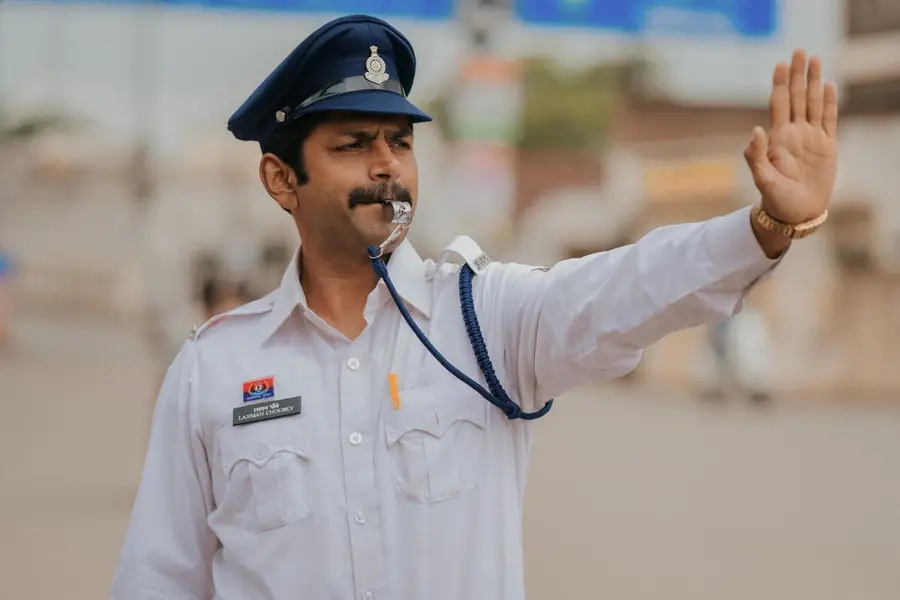
Starring Sharib Hashmi, the short film follows a traffic constable navigating a scorching workday as temperatures soar.
Along the way, the story intersects with the lives of a struggling farmer, a street food vendor, and a rickshaw puller, quietly exposing how extreme heat affects those who are least equipped to escape it.
Produced by Naseeruddin Shah, Anushka Shah, Harish Borah and Civic Studios, and directed by Tej Sisodia, the film recently screened at Mumbai Climate Week before its digital release.
In an interaction with Mathrubhumi, the makers explained why they chose to tell an intimate story instead of a large-scale climate disaster, and why inequality sits at the heart of the film.
For producer Naseeruddin Shah, what made the project stand apart was its honesty.
'Climate change is something we often talk about in terms of numbers and future projections. But for many people, it is already part of everyday life. What stayed with me about It’s Only 47°C was that it doesn’t lecture or preach - it simply shows us that reality with honesty,' he said.
Shah believes the film succeeds because it turns the spotlight on those who contribute the least to the climate crisis but pay the highest price for it.
'The people who contribute the least to this crisis are often the ones who suffer its worst consequences. That’s a story worth telling. I believe cinema is at its most meaningful when it quietly encourages us to look again at lives we too easily overlook. This film does exactly that, and that’s why I wanted to support it.'
That philosophy also shaped the film's ending. Instead of closing with facts or statistics, the makers chose a poem by Swanand Kirkire.
'Facts are essential. But they don’t always tell us what it feels like. By the end of the film, we wanted to leave them with a feeling that stayed with them after the screen went dark,' Shah said.
'When Tej suggested we close the film on a poem, it made sense to me. A poem has a way of reaching places that facts alone cannot. Swanand’s words don’t instruct the audience what to think - they invite them to reflect. They give voice to the quiet injustice the film has been observing all along.'
Producer Anushka Shah said the decision to centre the narrative around outdoor workers was deliberate from the very beginning.
She revealed that director Tej Sisodia's childhood in a farming family shaped the emotional core of the story and grounded it in lived experience.
'From the outset, we wanted to tell a story that moved beyond heat as just another weather event and instead focused on how extreme heat shapes people's everyday lives. The people most affected by extreme heat are often those who spend their days working outdoors, yet their experiences rarely sit at the centre of climate narratives. By placing them at the heart of the film, we hoped to make the human impact of extreme heat more visible, relatable, and harder to ignore.'
She added that the team intentionally moved away from abstract climate conversations to show how access to resources determines who can cope with rising temperatures and who cannot.
Beyond the film itself, she said, the makers have partnered with organisations including UNEP, People's Courage International and ASAR to use the project for awareness programmes, journalist training and conversations around protecting outdoor workers.
Director Tej Sisodia said he wanted audiences to experience climate change rather than simply understand it intellectually.
'One of the unintended consequences of the way we often talk about climate change is that the conversation becomes dominated by technical language and policy terminology. Those conversations are essential, but they can sometimes distance us from the people living the consequences every day.'
Instead of depicting floods or wildfires, Sisodia chose a slow, observational narrative because, as he explained, 'Heat rarely announces itself through dramatic imagery. It quietly wears people down, hour after hour, day after day.' To preserve authenticity, the team filmed during an actual hot day in one of India's hottest cities.
For Sisodia, the final shot encapsulates everything the film wants to say. An exhausted traffic constable sits on the road while a little girl watches him from inside an air-conditioned luxury car.
'Climate justice begins with recognising that climate change does not affect everyone equally. Those who contribute the least to the crisis are often the ones with the fewest means to protect themselves from it. If audiences leave questioning why surviving a heatwave should depend on where you work or whether you can afford air conditioning, then the film has achieved what we set out to do.'
Published: 15 Jul 2026, 02:48 pm IST
ABOUT THE AUTHOR
Related Topics
Disclaimer: Kindly avoid objectionable, derogatory, unlawful and lewd comments, while responding to reports. Such comments are punishable under cyber laws. Please keep away from personal attacks. The opinions expressed here are the personal opinions of readers and not that of Mathrubhumi.