
A genetic analysis of mpox cases reported in Kerala in 2024 has found that most infections were linked to international travel, particularly from the United Arab Emirates
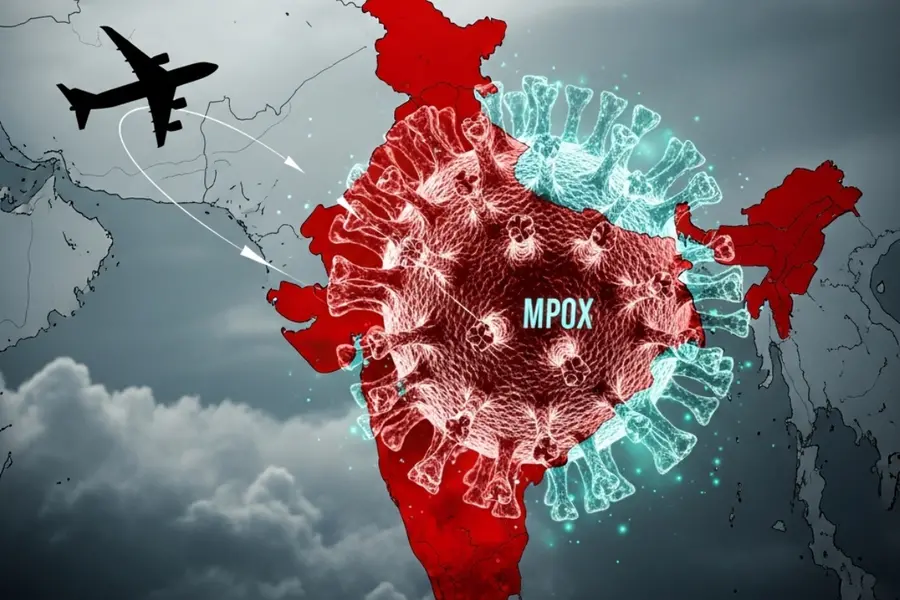
A genetic study has linked Kerala’s 2024 mpox outbreak primarily to international travel, with the majority of cases associated with travel from the United Arab Emirates (UAE).
The findings are based on an analysis of laboratory-confirmed cases conducted by researchers, including scientists from the Indian Council of Medical Research–National Institute of Virology (ICMR-NIV), Pune.
Also Read

The researchers analysed 10 confirmed cases of the Mpox virus (MPXV) belonging to the Clade Ib strain, reported in Kerala between September 2024 and March 2025. According to the study, seven of the 10 individuals had a recent travel history to the UAE. One case involved travel from Oman, while another was identified as a contact case.
Mpox, previously known as monkeypox, is a viral illness caused by the monkeypox virus. It commonly presents with skin rashes or lesions, fever, headache, muscle or back pain, fatigue and swollen lymph nodes. Symptoms typically last between two and four weeks.
The study, published in the journal Virology, represents the first detailed analysis of the clinical and genomic characteristics of the Clade Ib strain detected in India. The authors noted that Clade Ib was first identified in the Democratic Republic of Congo in September 2023 and has since spread to several African countries, including Uganda, Rwanda, Kenya and Burundi.
Also read: Mpox awareness: Key Do's and Don'ts issued by the Union Health Ministry
Due to the rapid spread and severity of disease linked to Clade Ib, the World Health Organization declared the mpox outbreak a public health emergency of international concern on August 14, 2024. Outside Africa, the strain has been detected in countries such as Sweden, the UK, India, the United States and China.
As of early 2025, more than 22,000 confirmed or suspected cases of mpox caused by the Clade Ib strain have been reported worldwide, with over 60 deaths. Most fatalities have occurred in the Democratic Republic of Congo. Researchers noted that the fatality rate associated with Clade Ib is about three per cent higher than that of Clade IIb, the strain responsible for the 2022 global outbreak.
The Clade IIb strain is known for efficient human-to-human transmission through both sexual and non-sexual contact. Its sub-lineage A.2 was the main driver of the 2022 multi-country outbreak, which resulted in more than 102,000 cases globally and led the WHO to declare a public health emergency of international concern in July 2022.
Published: 21 Jan 2026, 03:06 pm IST
Related Topics
Disclaimer: Kindly avoid objectionable, derogatory, unlawful and lewd comments, while responding to reports. Such comments are punishable under cyber laws. Please keep away from personal attacks. The opinions expressed here are the personal opinions of readers and not that of Mathrubhumi.