
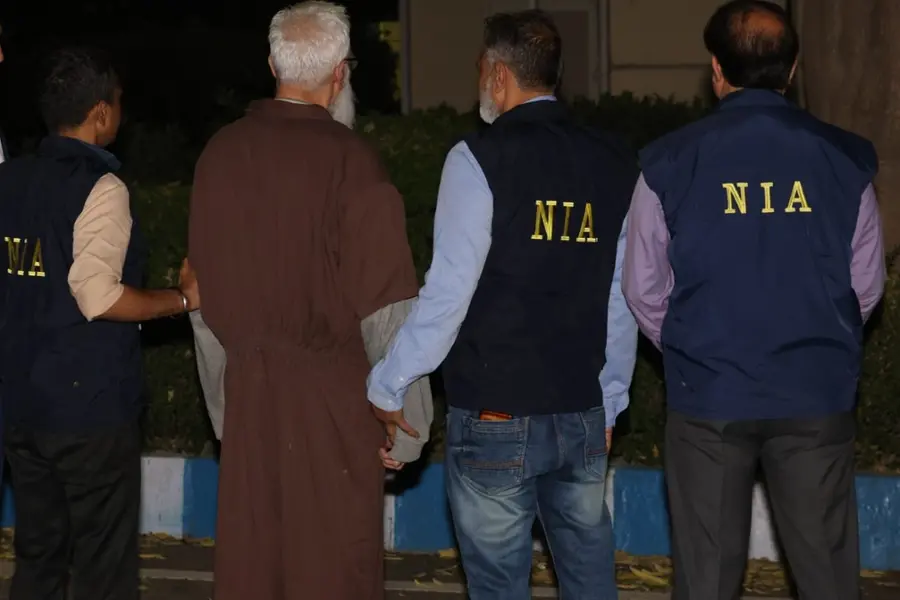
New Delhi: Tahawwur Rana, a key conspirator in the 2008 Mumbai terror attacks, is suspected by National Investigation Agency (NIA) officials of using his medical condition, including Parkinson’s and 32 other illnesses, to avoid answering direct questions related to the attacks.
Despite his claims of poor health and memory loss, an official said Rana appears mentally alert and is giving sharp responses during questioning. “He may seem sick and tired, but mentally, he is very alert and sharp,” the official added. Rana is currently being questioned about sleeper cells, financial networks, and his visits to India prior to the attacks.
Daily questioning and medical checks
Rana is being interrogated for around three hours each day, with medical evaluations being conducted every 48 hours, according to officials.
NIA officers are particularly suspicious of Rana’s visits in 2008 to Delhi, Hapur and Agra. They are focusing on gaining more details about an Indian contact, known only as “B”, and the Indian relatives of Rana’s wife, Samraz Rana Akhtar, who accompanied him on the trip.
Rana had also visited Mumbai with his wife and stayed at the Taj Mahal Palace Hotel, one of the main targets of the attack that claimed 166 lives. The couple also travelled to Kochi and Ahmedabad. Investigators are probing whether these visits were part of a reconnaissance operation ahead of the attacks, designed to generate global attention.
Legal demands and court proceedings
Rana, according to sources, showed high awareness of his rights and the legal procedures involved. This included choosing non-famous defence lawyers, requesting medical support, and instructing his lawyers to raise issues under the US Constitution.
“He sought non-famous lawyers and asked the court to restrict them from talking to the media,” said a source familiar with the court proceedings. Following the court’s appointment of Piyush Sachdeva and Lakhshya Dheer from the Legal Services Authority, Rana asked them to cite his rights under the Fifth Amendment of the US Constitution.
The Fifth Amendment provides several legal protections, such as protection against double jeopardy and self-incrimination, as well as the right to due process.
Arguments against extradition
In the US, Rana’s lawyer, John D. Cline, opposed his extradition, arguing that it would “set a shocking precedent” by challenging the finality of a jury acquittal in the United States. “Extraditing Rana to face the death penalty in India would set a shocking precedent that would call into question the finality of what has until now been sacrosanct: acquittal by a jury of ordinary American citizens following a full and fair trial,” said Cline.
Possible visits to other cities
An NIA official has indicated that they may seek court permission to take Rana to other cities as part of the investigation.
Rana, a 64-year-old Pakistani-Canadian, is accused of working alongside David Coleman Headley and Pakistan-based terror groups and the ISI to carry out the 26/11 attacks. The coordinated assault, which began on 26 November 2008 and lasted for three days, involved shootings and bombings at 12 locations across Mumbai.
The attackers, who entered via boat through a fishermen’s colony, were armed with blueprints and floor plans of key targets, including Chhatrapati Shivaji Maharaj Terminus, the Taj Mahal Palace hotel, Oberoi Trident and Nariman House.
IANS
Published: 13 Apr 2025, 06:31 pm IST
Disclaimer: Kindly avoid objectionable, derogatory, unlawful and lewd comments, while responding to reports. Such comments are punishable under cyber laws. Please keep away from personal attacks. The opinions expressed here are the personal opinions of readers and not that of Mathrubhumi.
