
Rana’s lawyers in Toronto have appealed the decision, calling it unfair and a violation of his rights
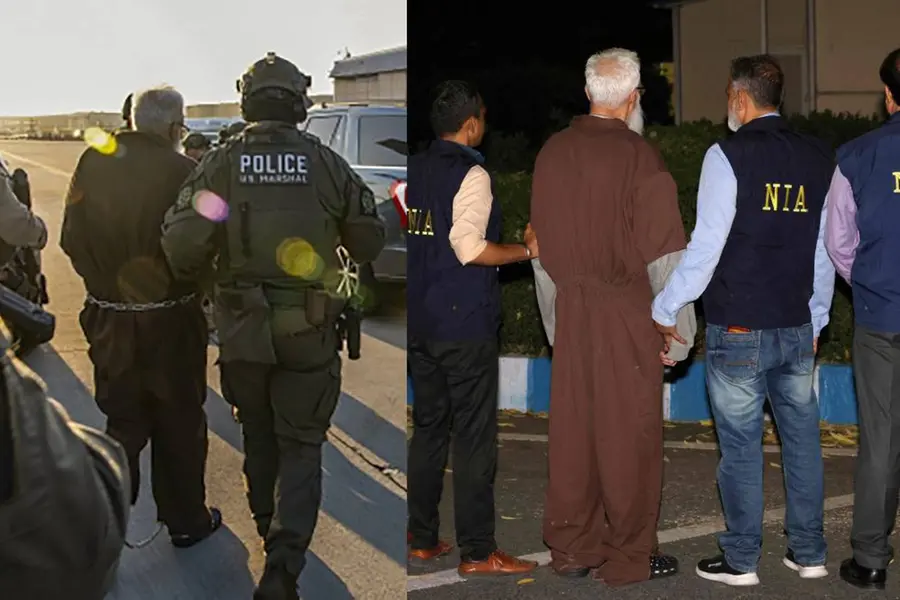
Toronto: Ahead of Mark Carney’s visit to India, the Canadian government is seeking to revoke the citizenship of Pakistan-born businessman Tahawwur Rana Hussain, accused of involvement in the 2008 Mumbai terror attacks.
Rana, 64, a Pakistan-born Canadian national, was a close associate of David Coleman Headley, a US citizen and one of the main conspirators of the attacks. He was extradited from the United States to India in April 2025 and arrested by the National Investigation Agency (NIA) upon arrival in New Delhi.
Documents obtained by Global News show that Immigration, Refugees and Citizenship Canada (IRCC) has informed Rana that it intends to strip him of the Canadian citizenship he acquired in 2001. Officials say the revocation is not being pursued for terrorism-related reasons, but due to misrepresentation on his citizenship application.
When applying in 2000, Rana claimed to have resided in Ottawa and Toronto for the previous four years with only a six-day absence. An RCMP investigation found he had actually spent most of that period in Chicago, where he owned several properties and businesses, including an immigration firm and a grocery store.
The IRCC described the case as “a serious and deliberate deception,” adding that his “lack of respect for the citizenship laws of Canada” had led officials to wrongly grant him citizenship. A letter to Rana dated 31 May 2024 stated:
"Your misrepresentation led decision makers to believe that you had met the residence requirements for citizenship, when it appears you had not."
Rana’s lawyers in Toronto have appealed the decision, calling it unfair and a violation of his rights. A hearing in Federal Court was held last week, with government lawyers requesting permission to withhold sensitive national security information.
An immigration department spokesperson said revoking citizenship for misrepresentation is “an important tool for maintaining the integrity of Canadian citizenship” and that the Federal Court ensures the process is fair.
The spokesperson added that the government does not take revocation lightly and noted that such cases are rare, with a Global News review identifying only three similar decisions in the past decade.
(PTI)
Published: 24 Feb 2026, 12:28 pm IST
Disclaimer: Kindly avoid objectionable, derogatory, unlawful and lewd comments, while responding to reports. Such comments are punishable under cyber laws. Please keep away from personal attacks. The opinions expressed here are the personal opinions of readers and not that of Mathrubhumi.
