
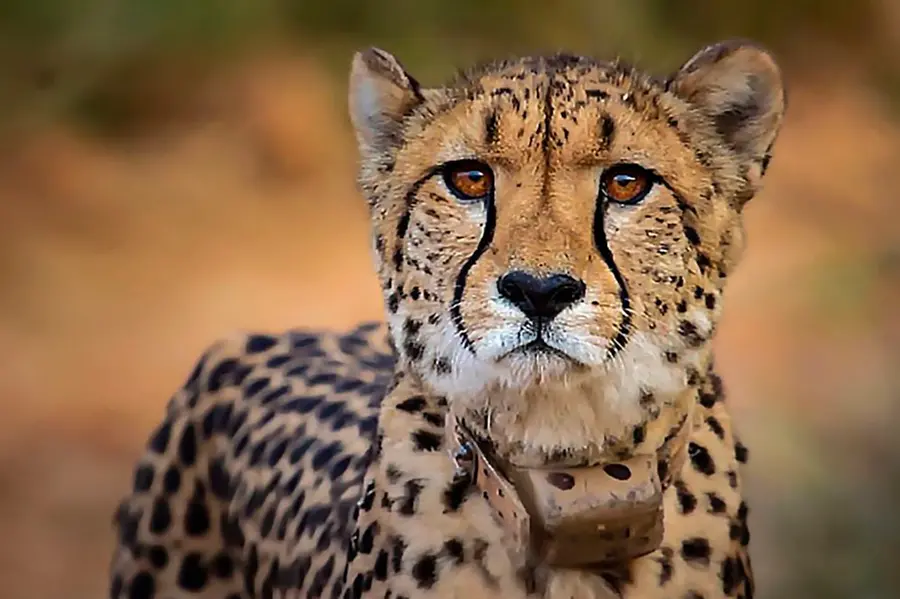
New Delhi: After the deaths of three cheetahs in just over a month at Madhya Pradesh's Kuno National Park last year, the National Tiger Conservation Authority (NTCA) sought external expertise to review health monitoring protocols. In May 2023, NTCA's Assistant Inspector General of Forests, Abhishek Kumar, requested that Reliance's Greens Zoological Rescue and Rehabilitation Centre (GZRRC) in Gujarat send a team of experts to Kuno. The request was aimed at ensuring the welfare of the cheetahs following the deaths of the animals between March 27 and May 9.
Kumar's letter highlighted the unprecedented nature of Project Cheetah, an intercontinental reintroduction of a wild, large carnivore species, and acknowledged the challenges associated with such a complex project. He noted that despite meticulous planning and execution, the project faced difficulties and sought the assistance of GZRRC due to its expertise in managing cheetahs in captivity.
In response, GZRRC director Brij Kishor Gupta confirmed that a four-member team, including senior veterinary officers Jorge Francisco Soares and Nitin Yashwant Tambe, lab in-charge Mandeep, and Gupta himself, visited Kuno on May 25-26, 2023. Gupta reported that the team found Kuno's health care protocols to be appropriate and in line with best practices.
However, Bhopal-based wildlife activist Ajay Dubey has raised concerns about the decision to involve GZRRC in the project. Dubey questioned the necessity of seeking assistance from GZRRC when top wildlife experts from NTCA, the Wildlife Institute of India, South Africa, and Namibia were already involved in the project. He also expressed concern over the lack of transparency regarding GZRRC’s involvement, noting that there was no mention of their support in the Project Cheetah annual report or the minutes of the Cheetah Project Monitoring Committee meetings.
Dubey highlighted that the government had already invested in training staff from the Madhya Pradesh wildlife department in cheetah management in South Africa and Namibia. He questioned what additional insights GZRRC could provide and why their involvement was not publicly acknowledged.
The annual report for Project Cheetah indicates that eight adult cheetahs, including three females and five males, have died since their arrival. The report details the causes of death for three cheetahs between March 27 and May 9, 2023: Sasha, a Namibian female, succumbed to chronic renal insufficiency; Uday, a South African male, died suddenly; and Daksha, a South African female, was fatally injured during a violent encounter.
The project has seen the birth of 17 cubs, with 12 surviving, bringing the total number of cheetahs at Kuno to 24, including the cubs. Despite the losses, Gupta emphasized the project's successes, noting the birth and survival of cheetah cubs in India and the high survival rate compared to similar projects elsewhere.
Gupta pointed out that GZRRC has extensive experience with captive cheetahs and emphasized the differences between managing captive environments and re-wilding projects. The GZRRC has been recognized by the Central Zoo Authority and has recently expanded its facilities to include various conservation and research centers.
The Central Zoo Authority (CZA) granted approval for the setting up of GZRRC on February 14, 2019, and accorded it recognition on August 17, 2020.
According to its 2023-24 annual report submitted to the CZA, new facilities such as Rescue Centre for Herbivores, Asiatic Lion Care, Medical Research and Hospital, Cheetah Conservation and Research Centre, Vulture Conservation Breeding Centre and multi-specialty hospital were added to GZRRC in 2023-24. PTI
Published: 07 Sept 2024, 02:17 pm IST
Related Topics
Disclaimer: Kindly avoid objectionable, derogatory, unlawful and lewd comments, while responding to reports. Such comments are punishable under cyber laws. Please keep away from personal attacks. The opinions expressed here are the personal opinions of readers and not that of Mathrubhumi.
