
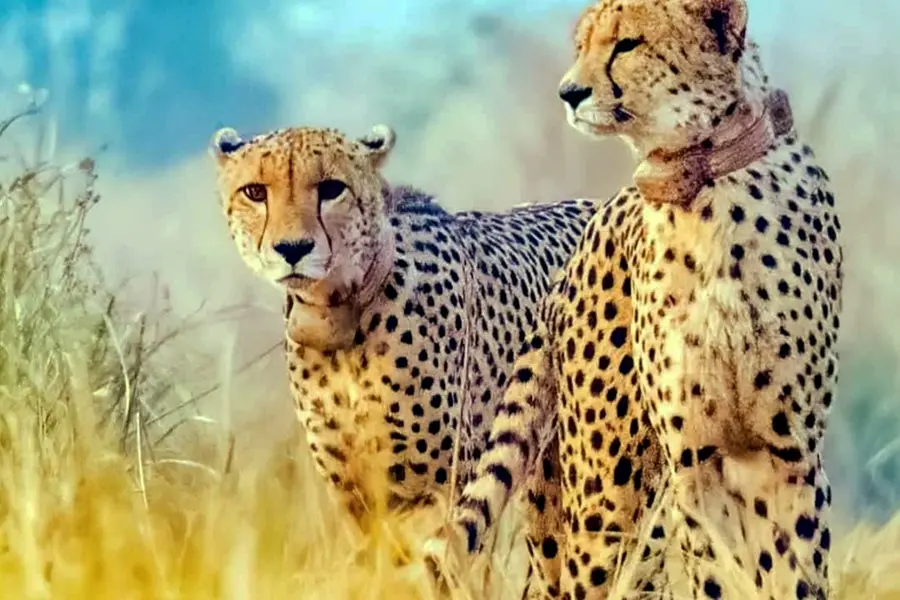
New Delhi: African cheetahs brought to India as part of the world’s first intercontinental translocation of big cats will soon be released into the wild, nearly a year after being returned to enclosures for health check-ups in Madhya Pradesh's Kuno National Park, officials said.
The Centre's Cheetah Project Steering Committee said on Friday that the release of the cheetahs and their cubs will happen in phases, starting after the monsoon season ends. "Members of the committee and NTCA (National Tiger Conservation Authority) officials conducted field visits to Kuno and discussed the schedule for releasing the cheetahs. While adult cheetahs will be released into the wild in phases once the rains end, the cubs and their mothers will be released after December," an official said.
Also Read

All 25 cheetahs, including 13 adults and 12 cubs, are reported to be in good health.
The project began with the introduction of eight cheetahs from Namibia in September 2022, followed by another 12 cheetahs from South Africa in February 2023. Initially, some cheetahs were released into the wild but were brought back to their enclosures by August 2023 due to the deaths of three cheetahs from septicemia—a severe infection caused by bacteria entering the bloodstream. This issue stemmed from wounds under their winter coats, which became infested with maggots and led to blood infections.
Challenges included the unexpected growth of winter coats during India’s summer and monsoon, which complicated management of the animals. "Even African experts did not expect this. The winter coat, combined with high humidity and heat, caused itching, leading the cheetahs to scratch their necks on tree trunks or the ground. This resulted in bruises and exposed skin, which attracted flies that laid eggs, leading to maggot infestations, bacterial infections, and ultimately, the death of three cheetahs," said S P Yadav, Director General of the International Big Cat Alliance and former NTCA member secretary.
The deaths prompted the steering committee to recommend that "future cheetahs for reintroduction should be sourced from countries in the Northern Hemisphere, such as Kenya or Somalia, to avoid biorhythmic complications".
Currently, only one cheetah, named Pavan, is known to be roaming free, but he is hard to spot and capture.
"The cheetahs are not truly living in the wild, despite spending two years on Indian soil. Cheetahs prefer long journeys and they could be under severe stress," an African expert who assisted with the cheetah reintroduction in India said on condition of anonymity.
Despite the difficulties and some fatalities, the project has seen 17 cubs born in India, with 12 surviving. The total number of cheetahs in Kuno National Park, including cubs, stands at 25, all of which are now in enclosures.
Agencies
Published: 24 Aug 2024, 01:05 pm IST
Related Topics
Disclaimer: Kindly avoid objectionable, derogatory, unlawful and lewd comments, while responding to reports. Such comments are punishable under cyber laws. Please keep away from personal attacks. The opinions expressed here are the personal opinions of readers and not that of Mathrubhumi.