
Conceptualized and engineered entirely by the Gajraj Corps, the monorail system is designed to carry more than 300 kg of load in a single trip.
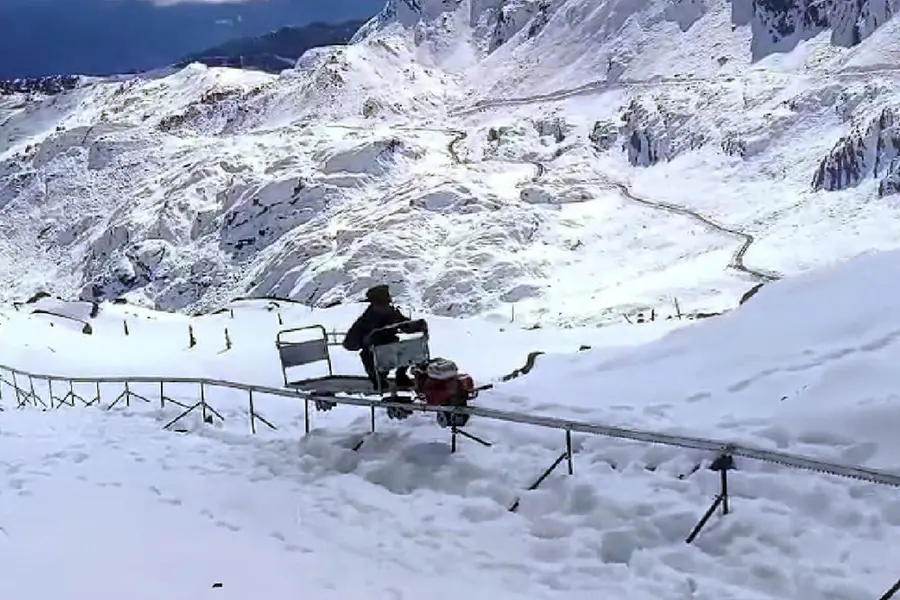
The Indian Army has achieved a major logistical breakthrough along the Line of Actual Control (LAC) in Arunachal Pradesh. The Army's Gajraj Corps has successfully developed and operationalized an indigenous High Altitude Mono Rail System at a forbidding elevation of nearly 16,000 feet in the Kameng sector.
This frontier area is known for its treacherous landscape, marked by sheer cliffs, sub-zero temperatures, and violent weather swings that routinely disrupt critical supply lines.
The persistent challenge of ensuring uninterrupted movement of essential stores, ammunition, and equipment to forward posts -- which are often cut off by heavy snow -- necessitated this innovation.
A 24/7 supply lifeline
Conceptualized and engineered entirely by the Gajraj Corps, the monorail system is designed to carry more than 300 kg of load in a single trip. Its robust, weather-agnostic design allows it to function around the clock, day or night, and operate reliably through hail, storms, or whiteout conditions.
"It enables reliable movement of mission-critical stores, ammunition, rations, fuel, engineering equipment, and other heavy or awkward loads that are otherwise difficult to ferry across steep gradients and unstable surfaces," a defense official stated.
"This transportation facility is fully operation worthy to be used day or night, with or without escort, during hail or storm, irrespective of the weather conditions."
The system's ability to move supplies efficiently over steep gradients and unstable surfaces mitigates the significant risk faced by traditional transport methods, such as mules, vehicles, and porters, in the extreme terrain.
Beyond its core logistical role, the monorail system has also proven its value in rapid casualty evacuation. In stretches where helicopter landings are impossible or unsafe, and where manual evacuation is slow and perilous, the monorail offers an efficient and safer method for moving injured personnel.
Published: 14 Nov 2025, 07:30 pm IST
Related Topics
Disclaimer: Kindly avoid objectionable, derogatory, unlawful and lewd comments, while responding to reports. Such comments are punishable under cyber laws. Please keep away from personal attacks. The opinions expressed here are the personal opinions of readers and not that of Mathrubhumi.
