
On 14 July 1999, Prime Minister Atal Bihari Vajpayee declared Operation Vijay a success, marking the decisive turning point of the Kargil War as the Indian Army regained control of most of the strategic heights in the Dras, Kargil and Batalik sectors.
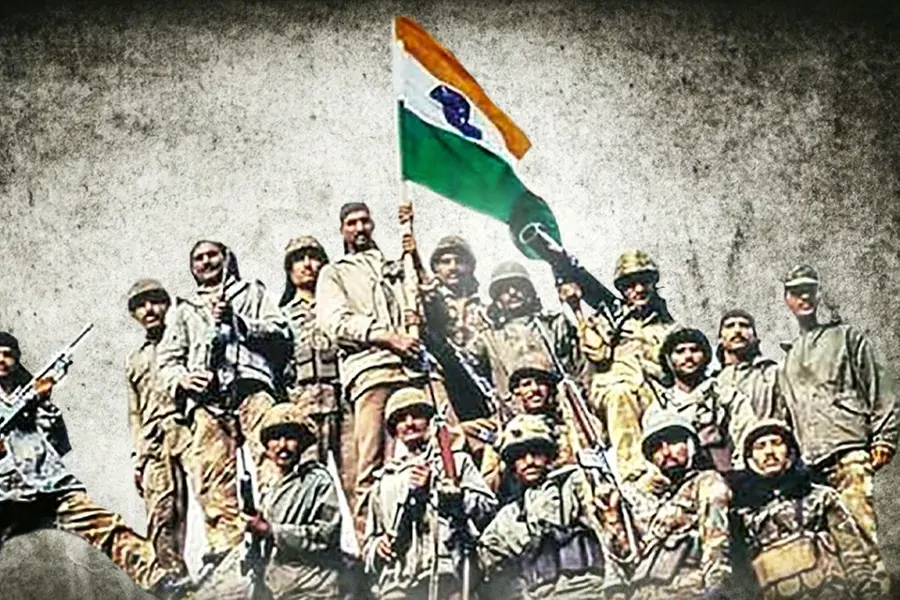
14 July 1999. That's the day when then Prime Minister Atal Bihari Vajpayee declared Operation Vijay a success, marking the decisive turning point of the Kargil War as the Indian Army had regained control of most of the strategic heights in the Dras, Kargil and Batalik sectors.
That day came after weeks of dogged mountain fighting, devastating artillery fire and determined infantry assaults that rolled back Pakistani intruders who had covertly occupied positions along the Line of Control (LoC) in the disputed Kashmir region.
Though operations continued to evict the remaining intruders, 14 July 1999 marked the moment when India’s military and political victory was affirmed in the eyes of the world.
The road to July 14: From Tololing to Tiger Hill
The Kargil War began after Pakistani troops infiltrated and occupied strategic areas in the India-administered side of the LoC in February 1999. These positions were detected by India in early May, triggering a major mobilisation of the Indian Army and Air Force under Operation Vijay and Operation Safed Sagar.
Key battles shaped the course of the war. The Battle of Tololing in the Dras sector, followed by the capture of Tiger Hill on 4 July 1999 and the grueling fight for Point 4875, broke the enemy’s control over key heights and opened the way for broader Indian advances.
By mid-July, the Indian Army had secured most of the strategic peaks and ridges, collapsing the enemy’s defensive network across Dras, Kargil and Batalik.
The Indian offensive was not a series of isolated actions but a meticulously coordinated operation, combining artillery dominance, air support and relentless infantry assaults.
Fighting took place at altitudes often above 15,000 feet, with troops enduring extreme cold, steep gradients and heavy enemy fire.
The declaration of victory
On 14 July 1999, then Prime Minister Vajpayee addressed the nation from New Delhi, declaring Operation Vijay a success. He paid tribute to the valour, supreme sacrifice and unwavering resolve of the Armed Forces, acknowledging the heavy toll exacted by the war.
The declaration was not merely symbolic. By that date, Indian forces had recaptured the majority of positions that had been infiltrated by Pakistani troops, and the balance of the war had shifted decisively in India’s favour.
For a country that had been caught off guard by the infiltration, the recovery of the LoC heights represented both a military triumph and a political vindication.
India’s formal declaration of victory would later be commemorated each year on 26 July as Kargil Vijay Diwas, when the last intruders were evicted and the war officially came to an end. But 14 July remains widely regarded as the decisive turning point that affirmed India’s victory.
Pakistan announces withdrawal under pressure
On the same day, under mounting military setbacks and increasing international diplomatic pressure, Pakistan announced the withdrawal of its forces from the occupied positions. The move came after weeks of intense fighting, heavy casualties and a clear deterioration of the enemy’s position on the ground.
Pakistani troops began pulling back from key areas in early July, with the withdrawal accelerating after the Indian capture of Tiger Hill and other strategic points. International pressure, including from the United States and other major powers, urged Pakistan to withdraw its forces and respect the LoC.
The announcement on 14 July effectively acknowledged that the enemy’s plans had collapsed under the relentless offensive of the Indian Armed Forces. Though evictions continued in some pockets, the strategic initiative had passed to India, and the war’s trajectory was set.
The cost and the legacy
The Kargil War was fought between India and Pakistan from May to July 1999 in the Kargil district of Ladakh, then part of the Indian-administered state of Jammu and Kashmir, along the Line of Control. It is one of the few instances of a conventional war fought between two nuclear-armed powers.
More than 500 Indian soldiers died during the war, and estimated Pakistani losses range between 400 and 4,000. By 26 July 1999, India had recaptured all territories infiltrated by Pakistani troops, and the war officially ended.
The conflict exposed significant gaps in India’s border surveillance and intelligence capabilities, leading to major reforms in the country’s defence and intelligence architecture. But it also reinforced the resolve of the Indian Armed Forces and demonstrated the effectiveness of coordinated Army–Air Force operations in high-altitude warfare.
Published: 14 Jul 2026, 05:17 pm IST
Related Topics
Disclaimer: Kindly avoid objectionable, derogatory, unlawful and lewd comments, while responding to reports. Such comments are punishable under cyber laws. Please keep away from personal attacks. The opinions expressed here are the personal opinions of readers and not that of Mathrubhumi.
