
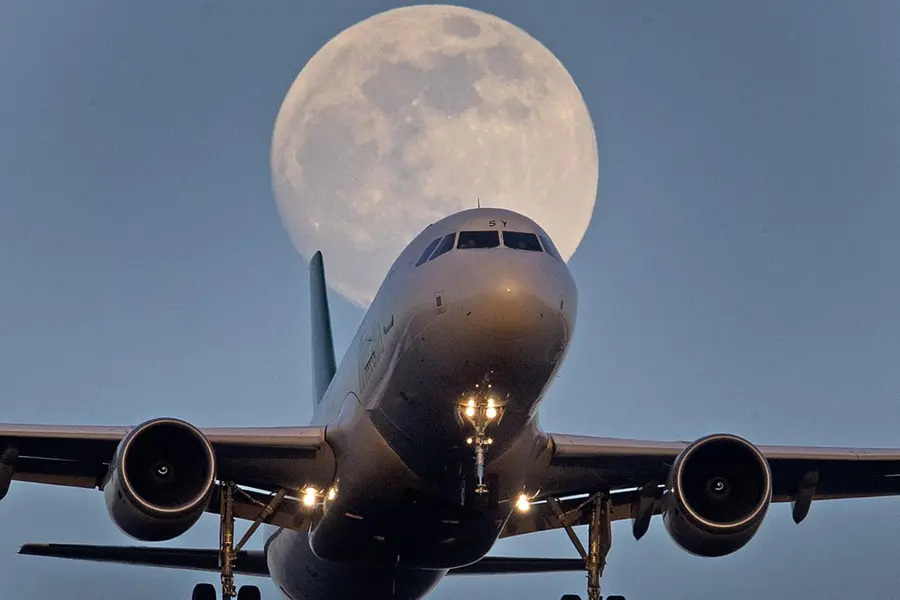
The aviation sector between India and the United Arab Emirates (UAE) has witnessed significant growth, with approximately 19 million passengers traveling between the two countries in 2023, accounting for about 30% of India's international traffic, as per a report by the Observer Research Foundation (ORF). Their study, "Combined Skies: Unlocking the Benefits of UAE-India Aviation Liberalisation for Indian Travellers," discussed the impact of increased air connectivity and liberalization between the two nations.
Despite this burgeoning demand, the Indian government remains cautious about entering into an Open Skies Agreement with the UAE, citing concerns over the competitiveness of domestic carriers and the broader implications for the national aviation industry.
UAE's advocacy for open skies
UAE carriers, including Emirates, flydubai, and Air Arabia, have long advocated for an Open Skies policy, which would allow unlimited flights between the two nations. Speaking at public forums, the chief executives of leading Middle Eastern airlines emphasized the potential benefits of the policy, stating that if implemented, "the potential is endless."
Adel Ali, CEO of Air Arabia, expressed strong support for the agreement while talking to media in 2024, he said: "Given that the UAE has always been open and liberal, I would love to see an open sky between the two countries." Similarly, Ghaith Al Ghaith, CEO of flydubai, reinforced this stance, stating: "We should have an Open Skies arrangement between us and India... If that happens, the potential is endless."
India's reservations
Conversely, Indian authorities have expressed reservations about liberalizing air service agreements. The primary concern revolves around ensuring a level playing field for Indian carriers. The government has been reluctant to grant Open Skies agreements to countries like the UAE, citing the relatively smaller scale of domestic airlines' international operations.
Campbell Wilson, CEO of Air India, articulated this apprehension, noting that granting more bilateral rights to foreign carriers could impact Indian airlines' ability to fill seats on newly ordered aircraft, representing investments exceeding $100 billion. This cautious stance aligns with India's broader strategy of protecting its aviation industry from aggressive foreign competition.
Emirates President Tim Clark also acknowledged this shift, stating that India is becoming "less important" to the airline as a direct consequence of restricted seat allocations. Emirates, which has long sought additional capacity rights, has increasingly looked at alternative markets as negotiations with India stall.
Economic implications of open skies
A report titled "Combined Skies: Unlocking the Benefits of UAE-India Aviation Liberalisation for Indian Travellers" suggests that even a modest 1% increase in passenger volume from India to the UAE could lead to approximately a 0.2% drop in average airfares. The study further indicates that liberalizing air service agreements could generate over $1 billion in consumer surplus for Indian travelers while boosting bilateral trade.
However, Indian authorities argue that unrestricted access to UAE carriers could disproportionately benefit them, given their extensive global networks and financial backing. This could make it harder for Indian airlines to compete internationally and develop strong hub airports within India.
The path forward: A balanced approach
To address these concerns, stakeholders have proposed a phased approach to liberalization. This strategy includes gradually increasing flight capacities and investing in infrastructure to bolster Indian carriers' competitiveness. Additionally, developing major Indian airports into international hubs could help balance the benefits of liberalization with the need to support domestic airlines.
Analysts suggest that structured liberalization—potentially tied to investment commitments from UAE-based airlines in India's aviation sector—could offer a win-win scenario. Collaborative efforts in areas such as aircraft maintenance, repair, and overhaul (MRO) and training programs for aviation professionals may help alleviate concerns over domestic industry growth while allowing for enhanced connectivity between the two countries.
Conclusion
As the dialogue continues, both nations seek a mutually beneficial arrangement that promotes connectivity while safeguarding their respective aviation sectors. While the UAE remains a strong advocate for Open Skies, India is weighing the long-term implications of such an agreement on its aviation ecosystem. The coming years will likely see incremental changes rather than an outright adoption of Open Skies, with a focus on protecting Indian aviation interests while addressing growing demand for better air connectivity between the two nations.
Published: 04 Apr 2025, 06:12 pm IST
Related Topics
Disclaimer: Kindly avoid objectionable, derogatory, unlawful and lewd comments, while responding to reports. Such comments are punishable under cyber laws. Please keep away from personal attacks. The opinions expressed here are the personal opinions of readers and not that of Mathrubhumi.
