
This historic 24-hour flight was not only a triumph of engineering, but also a reminder of how aviation continues to bring people, cultures and continents closer togethera
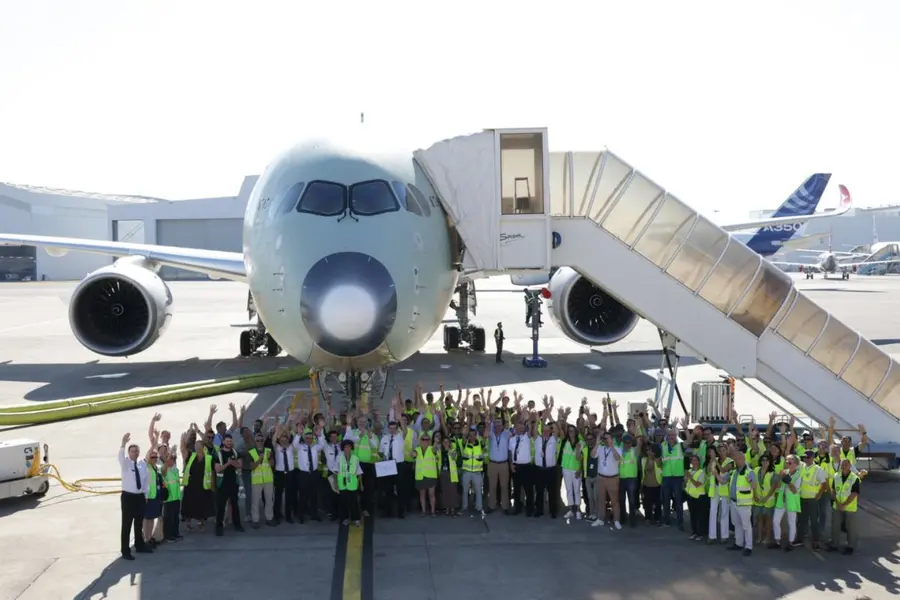
There are flights that connect cities, and then there are flights that redefine the future of travel. Airbus has now achieved exactly that, with its specially designed A350-1000ULR completing the longest journey ever flown by a commercial aircraft.
The aircraft travelled non-stop from Melbourne, Australia, to Toulouse, France, covering an incredible 23,075.92 kilometres in 24 hours and 24 minutes. More than just a record, the flight marked a major step towards a future where travellers can fly from one side of the world to another without changing planes, waiting at airports, or spending long hours in transit.
For passengers who dream of seamless travel, this is an exciting glimpse into what aviation could soon offer.
A journey across oceans, continents and time
The Airbus A350-1000ULR departed Melbourne at 07:28 UTC on July 27 and landed at Airbus’ headquarters in Toulouse at 07:52 UTC the next day. During its extraordinary journey, the aircraft crossed three continents, two oceans, 19 Flight Information Regions (FIRs), and 17 time zones.
Along the way, the crew witnessed two sunsets and two sunrises in a rare experience that few travellers in history have had the opportunity to enjoy from the skies.
Flying at a maximum altitude of 41,000 feet and reaching ground speeds of up to 662 knots, the aircraft covered a distance far greater than the direct great-circle route between Melbourne and Toulouse, which is around 16,888 kilometres. The longer route was carefully planned to meet testing requirements and air traffic considerations.
The flight surpassed the previous world record held by the Boeing 777-200LR, which in 2005 completed a 22-hour and 42-minute journey between Hong Kong and London via the Pacific.
A flight designed for the future
This historic journey was not just about breaking records. The flight formed part of Airbus’ certification programme for the A350-1000ULR, a specially modified version of the A350 designed for Qantas’ ambitious Project Sunrise.
Project Sunrise aims to make ultra-long-haul travel a reality, connecting Australia’s east coast directly with major global cities such as London and New York.
Qantas plans to begin non-stop Sydney-London services in October 2027, followed by Sydney-New York flights. What once took travellers several days, with multiple stops along the famous “Kangaroo Route,” could soon become a single journey lasting around 19 to 21 hours. For passengers, this means less waiting, fewer connections, and the comfort of travelling from one continent to another in one uninterrupted experience.
An engineering marvel
The A350-1000ULR has been specially adapted to fly these extraordinary distances. One of its most important features is an additional rear centre fuel tank that can carry approximately 20,000 litres of extra fuel. Airbus says the aircraft can achieve a range of nearly 10,000 nautical miles.
Powered by two Rolls-Royce Trent XWB-97 engines, the aircraft has been designed not only for long range but also for efficiency, comfort and reliability.
During the flight, Airbus engineers carefully monitored fuel systems, aircraft performance and cabin conditions. Particular attention was given to the new rear fuel tank and the aircraft’s ability to maintain efficiency over more than 24 continuous hours in the air.
Airbus test pilot Xavier Pepin, who commanded the return flight to Toulouse, explained that these long missions helped validate the final performance parameters of the aircraft.
The crew also evaluated a specially designed double flight crew rest compartment, created specifically for ultra-long-range operations. The new arrangement allows pilots to rest in separate spaces, helping reduce fatigue during extremely long flights.
Life On board during ‘those’ 24-Hours
Managing a flight that lasts more than a full day requires careful planning and teamwork. Four Airbus test pilots, five flight-test engineers and two Qantas guest pilots took part in the mission. The crew followed a structured rotation system, with pilots working in shifts to maintain alertness and ensure safe operations throughout the journey.
Interestingly, because some of the crew rest areas were occupied with testing equipment, crew members used the aircraft’s rear bunk area for sleep during the flight.
This attention to crew wellbeing reflects an important aspect of future ultra-long-haul travel: comfort is not just about passengers, but also about the people operating the aircraft.
Followed by millions
The record-breaking journey captured the imagination of aviation enthusiasts around the world. More than 3.6 million people followed the aircraft live on Flightradar24, making it the second most tracked flight in the platform’s history. Only the 2022 flight carrying Queen Elizabeth II’s coffin attracted greater attention.
The previous Airbus test flight from Toulouse to Melbourne now occupies third place on Flightradar24’s list of most-tracked flights, showing the enormous public interest in the future of ultra-long-haul travel.
A new chapter
The Airbus A350-1000ULR is more than just a new aircraft; it represents a new chapter in aviation. For travellers, it promises a future where distant cities feel closer than ever before. A journey from Sydney to London or New York could soon become as simple as boarding one flight, settling into a comfortable seat, watching the world pass beneath the wings, and arriving at the other end of the globe without ever changing aircraft.
This historic 24-hour flight was not only a triumph of engineering, but also a reminder of how aviation continues to bring people, cultures and continents closer together.
From two sunrises to two sunsets, from Australia to Europe without a stop, Airbus’ record-breaking journey has shown that the future of travel is not just about going farther, it is about making the world feel smaller, warmer and more connected.
Published: 29 Jul 2026, 03:21 pm IST
ABOUT THE AUTHOR

Disclaimer: Kindly avoid objectionable, derogatory, unlawful and lewd comments, while responding to reports. Such comments are punishable under cyber laws. Please keep away from personal attacks. The opinions expressed here are the personal opinions of readers and not that of Mathrubhumi.