

India recently passed the Transgender Persons (Protection of Rights) Amendment Bill, 2026. The Bill, which narrowed the legal definition of "transgender," curbing self-identification, and mandating rigorous medical certification for official recognition. The passing of Bill in Parliament has triggered outrage. As part of the ongoing coverage related to the Act, we reached out to multiple stakeholders. Here is part 1 of the series.
Part 2: Born different, made afraid: Intersex lives at the margins of the Trans Bill debate
Part 3: ‘Parents who threw us out; why will they give consent?’ A trans man’s anguish over India’s new law
Part 4: ‘Completely divorced from science and medicine…’ says SAATHII on India’s new trans law
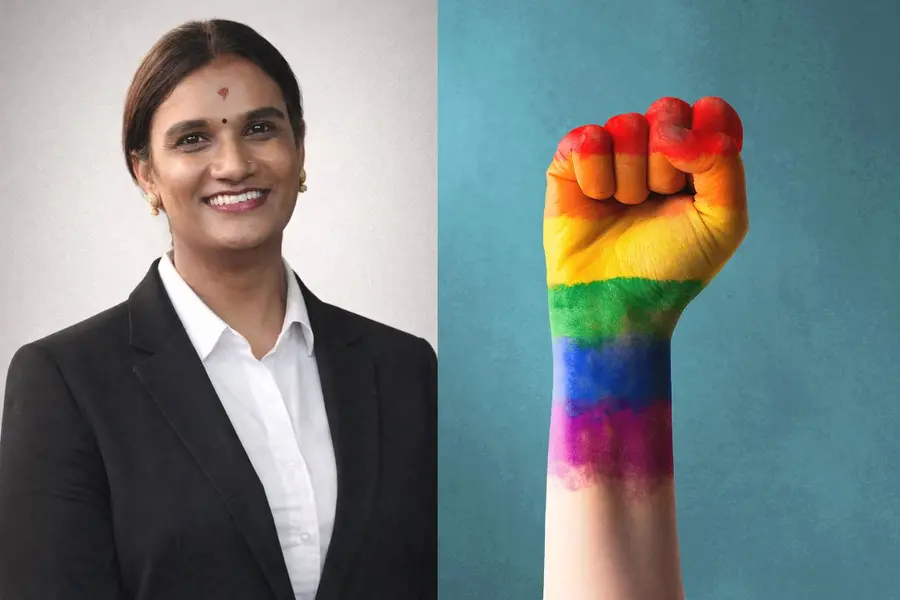
Agni Pradeep does not begin the conversation with the bill. She begins with a memory instead.
“I always felt different from cis people as a child,” she says. “But I didn’t have the language for it.”
That language arrived much later, at 27.
“That’s when I stepped out. I came out as a trans woman.”
Agni today works as an Oracle HCM technical consultant. She is a trans writer, activist, poet and academician. Her life moves between corporate systems and cultural spaces. But as she speaks about the recent amendment to the Transgender Persons (Protection of Rights) Act, 2019, that distance collapses.
“This bill is going to take away our identity,” she says.
A law that moved fast
Earlier this month, Union Minister Virendra Kumar introduced amendments to the Transgender Persons (Protection of Rights) Act, 2019. In under two weeks, the bill cleared both Houses of Parliament. The bill has now received assent from President Droupadi Murmu.
The pace has drawn criticism, as has the absence of consultation. Members of the National Council for Transgender Persons have resigned, and civil society groups have called for the bill to be reconsidered. Every day, there are protests happening across the country from the members and supporters of the community.
But beyond questions of process lies a deeper concern: what the amendment changes.
Undoing a core principle
India’s current legal framework is anchored in the Supreme Court’s landmark ruling in NALSA vs. Union of India, which established that gender identity is self-determined- not subject to medical tests or external validation.
The 2019 Act attempted, albeit imperfectly, to reflect that principle.
Agni recalls what that “imperfect” reality looked like in practice.
“We still had to go through medical certification,” she says. “Stand before doctors. Be examined. It stripped our dignity. After a series of protests, that was slowly changing.”
She pauses.
“Now we are being taken back.”
The amendment, she argues, shifts recognition away from the individual and back into the hands of the State.
2019 vs 2026: what changes
2019 framework
Definition: Defines a transgender person as one whose gender does not match the gender assigned at birth, including trans-men, trans-women, intersex variations, and genderqueer.
Broad, inclusive definition
- Recognised trans men, trans women, and genderqueer persons
- No requirement of medical validation in principle
→ Grounded in self-identification
2026 amendment
Narrowed Definition: Replaces the broad "gender mismatch" concept with a specific list: socio-cultural identities (kinner, hijra, aravani, jogta, eunuch), intersex variations, and those coerced into the identity via medical procedures.
Removal of Self-Identification: Eliminates the right to recognise "self-perceived gender identity" (Section 4(2) of 2019 Act), affecting trans men, trans women, and genderqueer individuals.
Medical Board Certification: Requires a District Magistrate to issue identity certificates only after recommendation from a designated medical board led by a Chief Medical Officer, introducing clinical gatekeeping.
Exclusion of Gender Fluidity: Explicitly excludes persons with different sexual orientations or self-perceived gender identities.
Criminalisation Clauses: Imposes severe penalties (5–14 years or life imprisonment) for forcing a person into a transgender identity; aimed at forced labor/begging but may impact chosen families or NGOs.
Medical Reporting: Hospitals must report all gender-affirming surgeries to the District Magistrate.
“Gender non-conforming. Gender fluid, Trans men,” Agni says quietly. “These terms are gone. Where do those people go?”
The ‘misuse’ argument
A key justification advanced for the amendment is the possibility of misuse – that self-identification could be exploited to access welfare benefits.
Agni does not dismiss the claim outright. She questions its premise.
“Why would anyone pretend to be part of this community?” she asks. “Society still treats being transgender as something degrading. You face discrimination in jobs, in education, in your own family.”
“That thinking itself shows they don’t understand our lives.”
Criminalisation and silence
Public discussion has centred on the return of medical verification- panels, certification, approval.
Agni shifts the conversation away from medicalisation to another provision she believes has not received enough attention.
“This bill also criminalises the trans community,” she says.
“You are already a marginalised community,” she says. “And now there is suspicion around you- your relationships, your support systems.”
She then turns to what she sees as a critical absence.
“If a trans woman is raped, where does she go?” she asks. “You can’t file under laws meant for women - they will say you are not a woman. So what protection do we have?”
Who gets left out now
Agni repeatedly returns to one group: those who have not yet entered the system.
“People who already have trans cards may manage,” she says. “But younger trans people won’t go through this process of medical examination.”
The barrier is not only procedural, but psychological.
“They won’t stand in front of a medical board. They just won’t apply.”
Without legal recognition, she outlines a chain of consequences.
“No ID means no education. No jobs.”
She lists what remains.
“Many are already thrown out of their families. What options are left? Begging. Sex work.”
Then, almost as an aside:
“Trans men don’t even have those options.”
She pauses.“This will lead to isolation. Trauma. People will break, commit suicides. As activists who understand the emotion of the community, that’s what we are scared of. That people would lose their hope in living. The government does not understand the consequences they are laying the foundation for.”
Not welfare, rights
At one point, Agni brings up welfare schemes, only to dismiss the framing.
“The government talks about welfare,” she says. “But without understanding the community, without data, without listening to us- what is the point?”
“This is not about schemes. This is about rights.”
“The public only ever looks at us with empathy,” she says. “But don’t just feel for us. I want them to do something different and view us politically.”
“See what we are being denied.”
What comes next
The amendment is expected to face constitutional challenges, particularly due to its departure from the principles established in NALSA v. Union of India. A committee led by former judge Asha Menon had earlier raised concerns over the removal of self-identification.
“In the meantime, people’s lives are being affected,” she says.
“Read the NALSA judgment. Understand what we are asking for.”
“Because today it has begun with us, what we face in the future is attacks on all forms of identity. If we don’t act now, we risk slowly turning into countries like the US, where policies under Trump sought to restrict gender strictly to a binary,” says Agni.
What is at stake
Recognition, in Agni’s telling, determines access- to education, to employment, to protection under law.
It shapes whether a person can move through the world with documentation that reflects who they are.
Or whether they must stand before a panel and prove it.
Because what is being debated is not abstract.
It is whether identity remains something you know, or something you have to justify.
Published: 31 Mar 2026, 10:37 am IST
ABOUT THE AUTHOR
Related Topics
Disclaimer: Kindly avoid objectionable, derogatory, unlawful and lewd comments, while responding to reports. Such comments are punishable under cyber laws. Please keep away from personal attacks. The opinions expressed here are the personal opinions of readers and not that of Mathrubhumi.