
The government has ruled out any immediate increase in ethanol blending beyond 20% in petrol. Minister Suresh Gopi said future changes will depend on scientific studies and stakeholder consultations.
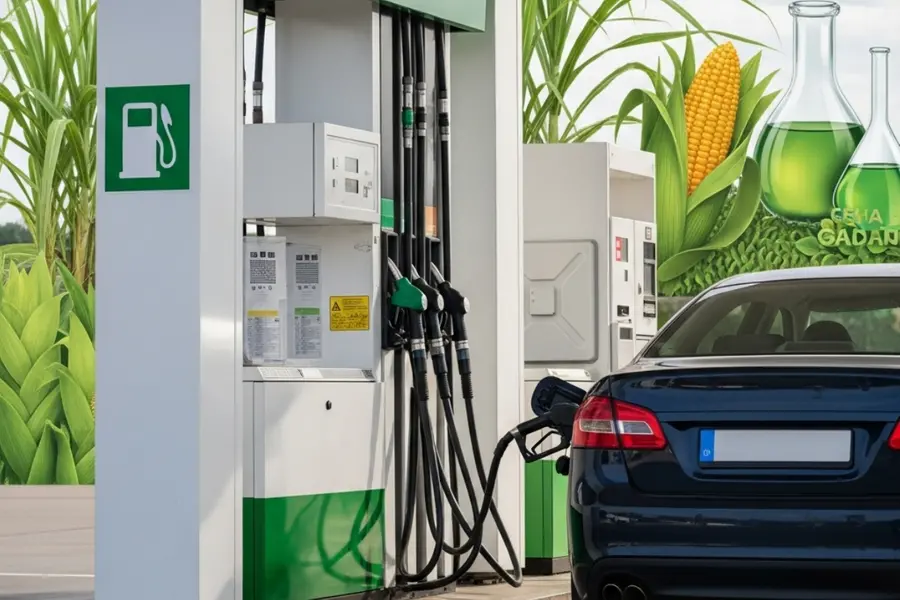
New Delhi: The government has not yet approved any plan to raise ethanol blending in petrol beyond the existing 20 per cent limit, Union Minister of State for Petroleum and Natural Gas Suresh Gopi said in the Rajya Sabha on Monday.
Replying to a question, Gopi said any further increase in ethanol blending would be considered only after detailed scientific and technical studies. The government would also consult automobile manufacturers, oil marketing companies and research institutions before taking any decision.
Also Read

India achieved 20% ethanol blending target
The minister said India achieved its target of 20 per cent ethanol blending five years ahead of schedule. Ethanol blending in petrol increased from around 1.53 per cent in 2013-14 to 20 per cent during the 2025-26 ethanol supply year.
According to the government, the ethanol blending programme has helped save more than Rs 1.97 trillion in foreign exchange, reduce crude oil imports by nearly 316 lakh tonnes and prevent around 952 lakh tonnes of carbon dioxide emissions.
The programme has also generated more than Rs 1.66 lakh crore in additional income for farmers, the minister said.
Government denies widespread vehicle damage concerns
Suresh Gopi said the government has not received widespread or verified complaints from vehicle manufacturers, automobile associations or consumer groups regarding engine failures, fuel pump issues, corrosion or water contamination caused by E20 fuel.
He said concerns raised through media and social media platforms were examined scientifically, but no evidence of widespread vehicle damage was found.
The minister added that more than 20 crore two-wheelers and over 3 crore petrol cars have used E15-plus and E19-E20 fuel without verified reports of large-scale engine failures.
Food security not affected by ethanol programme
The government said ethanol blending has not reduced food crop availability or affected food security. Gopi said only surplus foodgrains are used for ethanol production after meeting requirements under the Public Distribution System, National Food Security Act and buffer stocks.
The minister described the programme as a "waste-to-wealth" initiative that uses surplus agricultural products, damaged foodgrains and other materials unsuitable for human consumption.
He said rice diversion for ethanol production increased to 39.28 lakh tonnes in 2025-26, while maize diversion stood at 67.87 lakh tonnes during the same period.
Focus on cleaner fuels and farmer income
The government said the ethanol programme aims to promote cleaner fuels while supporting farmers. The share of maize in ethanol production increased significantly, helping diversify feedstock sources beyond sugarcane.
The minister said ethanol plants are required to follow zero-liquid-discharge rules to support water sustainability.
Oil marketing companies procured 705.43 crore litres of ethanol worth Rs 49,577 crore in 2025-26 up to June, with 501 ethanol suppliers currently registered with them.
The government also said there is no proposal to introduce separate outlets for non-blended or lower-blend petrol, as maintaining separate supply chains would increase costs and affect the objectives of the ethanol programme.
Published: 20 Jul 2026, 06:15 pm IST
Related Topics
Disclaimer: Kindly avoid objectionable, derogatory, unlawful and lewd comments, while responding to reports. Such comments are punishable under cyber laws. Please keep away from personal attacks. The opinions expressed here are the personal opinions of readers and not that of Mathrubhumi.