
Can cars run entirely on ethanol instead of petrol? Nitin Gadkari's announcement about Toyota's ethanol-powered Innova has put E100 fuel in the spotlight. Here's what it means for motorists, how it compares with petrol and why vehicle compatibility remains a challenge.
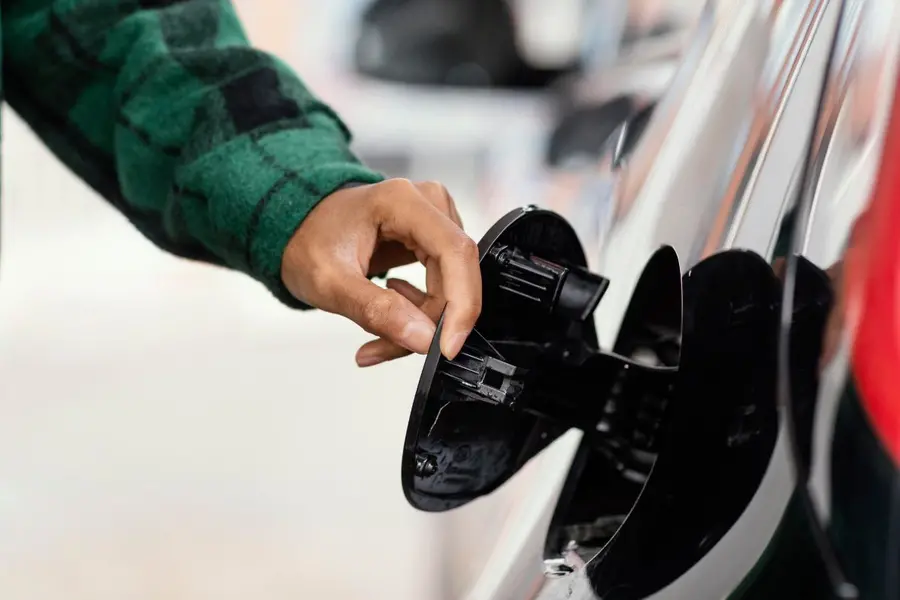
Can India run its cars entirely on ethanol instead of petrol? Union Road Transport and Highways Minister Nitin Gadkari's recent remarks about Toyota's upcoming 100 per cent ethanol-powered Innova have brought the question back into focus, with the government moving towards a regulatory framework for E100 fuel.
Gadkari has said Toyota's ethanol-powered Innova will be launched in October, describing it as a significant step towards expanding the use of ethanol as an alternative to conventional petrol.
Speaking at an event, the minister said he had been invited to the launch of the vehicle and claimed that it would not require petrol. According to him, its running cost would be comparable to that of a petrol-powered car using fuel priced at around Rs 25 per litre.
Also read | E85 Flex Fuel is here: It is cheaper than petrol but will it give you mileage?
The announcement has renewed interest in ethanol-powered vehicles and the possibility of reducing India's dependence on imported crude oil. However, the transition to E100 will depend on the availability of compatible vehicles, fuel infrastructure and the economics of producing and distributing ethanol.
What is E100 fuel?
E100 is a fuel made up of almost 100 per cent ethanol, with no conventional petrol. Ethanol is a renewable fuel produced from agricultural feedstock such as sugarcane, maize, damaged food grains and agricultural waste.
Unlike conventional petrol, E100 requires specially designed engines and fuel systems that can handle high concentrations of ethanol.
Also read | India’s ethanol supply hits 895 crore litres by August; grains contribute 70%
The government is promoting ethanol as part of its efforts to diversify India's energy sources and reduce dependence on imported petroleum products.
Why is India pushing E100?
India's reliance on imported crude oil leaves the economy exposed to fluctuations in international oil prices.
Expanding the use of domestically produced ethanol could help reduce the country's crude oil import bill while creating demand for agricultural produce and biofuel production.
Ethanol is also being promoted as an alternative fuel that could help reduce emissions from the transport sector, although the overall environmental impact depends on how the fuel is produced and used.
The Union government has been encouraging automakers to explore vehicles capable of running on higher ethanol blends as part of its broader alternative fuel strategy.
Can E100 completely replace petrol?
E100 can replace petrol in vehicles specifically engineered to run on pure ethanol, but it cannot immediately replace conventional petrol across India's existing vehicle fleet.
The biggest challenge is compatibility.
Millions of petrol-powered cars, motorcycles and scooters currently on Indian roads are not designed to operate on E100. Most are built to run on conventional petrol or ethanol blends such as E20.
Ethanol has different fuel properties from petrol, including lower energy content per litre. Vehicles running on higher ethanol blends therefore require suitable engine technology and fuel-system components.
This means petrol and E100 are likely to coexist for years, even as manufacturers gradually introduce flex-fuel vehicles capable of running on different ethanol-petrol blends.
What are the challenges of switching to E100?
The transition to E100 involves more than introducing ethanol-powered vehicles.
Vehicle compatibility: Existing petrol vehicles cannot automatically switch to E100. Specially designed engines and fuel systems are required.
Fuel availability: A wider network of fuel stations capable of supplying E100 would be necessary for large-scale adoption.
Fuel economy: Ethanol contains less energy per litre than petrol, which can affect mileage. The actual running cost will depend on fuel prices and vehicle efficiency.
Ethanol production: Scaling up production would require adequate agricultural feedstock, processing capacity and distribution infrastructure.
Affordability: The cost of ethanol-powered vehicles and the savings they offer to consumers will influence adoption.
What Toyota's ethanol-powered Innova means
Gadkari's announcement about Toyota's ethanol-powered Innova has brought the prospect of a mass-market ethanol-powered passenger vehicle into focus.
The minister has described the vehicle as an alternative to conventional petrol-powered cars and said its running cost could be equivalent to using petrol priced at around Rs 25 per litre.
However, the claimed running cost will need to be assessed against the vehicle's actual fuel consumption, ethanol prices and operating conditions.
The launch could also draw attention to the role of automakers in developing vehicles capable of operating on high-ethanol blends.
Maruti Suzuki's E100-ready WagonR
Maruti Suzuki had unveiled the WagonR flex-fuel months earlier, marking a step towards introducing passenger vehicles capable of running on high-ethanol blends.
The company described it as India's first flex-fuel passenger car, with the ability to operate on ethanol-petrol blends ranging from E20 to E100.
The unveiling was attended by Gadkari, who highlighted the government's efforts to promote cleaner mobility and alternative fuels.
At the event, Gadkari said the government was also planning to introduce diesel blended with 15 per cent isobutanol.
He urged automakers, including Maruti Suzuki India Limited and Hero MotoCorp, to explore converting older vehicles into flex-fuel-compatible models and align them with stricter emission standards, including Euro 6 norms.
He said such measures would help curb air pollution and support the vehicle scrappage programme aimed at removing older, more polluting vehicles from the roads.
Gadkari also described the automobile sector as a key growth driver for the Indian economy and noted that India has the world's third-largest automobile industry, contributing significantly to GDP.
Maruti Suzuki Managing Director and CEO Hisashi Takeuchi said the company was investing in compressed biogas (CBG) projects and exploring other cleaner technologies, including hydrogen fuel.
Partho Banerjee, Senior Executive Officer for Marketing and Sales at Maruti Suzuki, said nearly half of all green vehicles sold in the industry in the last financial year were contributed by the company.
The WagonR flex-fuel unveiling and Toyota's upcoming ethanol-powered Innova highlight the automobile industry's efforts to explore alternatives to conventional petrol. However, the wider adoption of E100 will depend on fuel availability, vehicle compatibility and whether consumers find the technology economically viable.
Published: 29 Sept 2026, 07:51 am IST
ABOUT THE AUTHOR

Related Topics
Disclaimer: Kindly avoid objectionable, derogatory, unlawful and lewd comments, while responding to reports. Such comments are punishable under cyber laws. Please keep away from personal attacks. The opinions expressed here are the personal opinions of readers and not that of Mathrubhumi.