
The Centre told the Supreme Court that India's E20 petrol blending programme is still an experiment and its full impact will become clear next year, as the court heard BPCL's challenge over ethanol allocation.
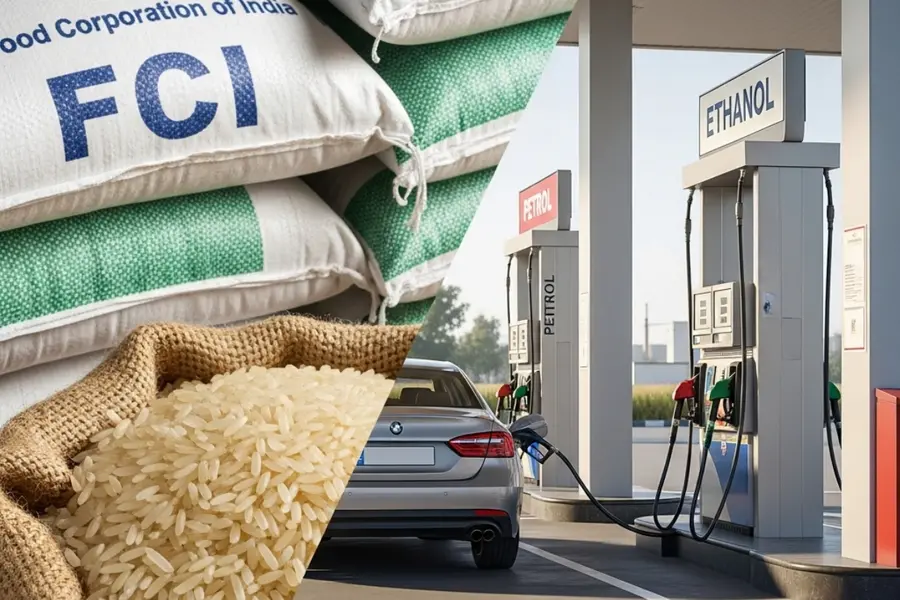
New Delhi: The Centre told the Supreme Court that India's E20 petrol blending programme is still an "experiment" and its full impact will only become clear next year, as the court heard a dispute over ethanol allocation for oil companies.
The Central government informed the Supreme Court on June 30 that India's ethanol blending programme remains an ongoing "experiment" and its long-term results are expected to become clearer next year.
Also Read

Attorney General R. Venkataramani, representing the Centre, made the submission while defending the government's ethanol allocation policy during a hearing involving Bharat Petroleum Corporation Limited (BPCL).
Why the case reached the Supreme Court
The case stems from a Karnataka High Court order directing BPCL, Indian Oil Corporation (IOC) and Hindustan Petroleum Corporation Limited (HPCL) to consider increasing ethanol allocation for the 2025-26 supply year.
The order followed a petition by an ethanol manufacturer, which argued that despite having a production capacity of 9.9 crore litres, it was allocated only 3.92 crore litres.
BPCL challenged the ruling before the Supreme Court, arguing that altering allocations could disrupt the Centre's nationwide ethanol blending policy.
Supreme Court orders status quo
A Bench comprising Justices M.M. Sundresh and Sheel Nagu ordered status quo in the matter while hearing BPCL's plea.
The Attorney General informed the court that ethanol allocations had already been finalised in October 2025, with 378 suppliers allocated around 1,050 crore litres. Of this, nearly 680 crore litres had already been supplied by June 18.
What is India's E20 fuel programme?
Under the E20 programme, petrol contains up to 20 per cent ethanol, a biofuel produced mainly from sugarcane and grain. The policy aims to reduce crude oil imports, cut emissions and support farmers.
India has already achieved its target of 20 per cent ethanol blending, although the government has not officially approved any increase beyond this level.
The ethanol programme has generated debate over concerns that higher ethanol content could affect older vehicles and fuel efficiency.
The government has maintained that there is no evidence linking E20 fuel to mechanical damage in compatible vehicles.
Meanwhile, Union ministers have previously suggested that ethanol blending could eventually be increased beyond 20 per cent, with proposals of up to 85 per cent for suitable vehicles.
Climate concerns surrounding ethanol production
While ethanol is promoted as a cleaner alternative to fossil fuels, its production is not without environmental concerns. Ethanol manufacturing plants consume significant amounts of energy and water, and many rely on coal, natural gas or other fossil fuels to power boilers and distillation processes, resulting in greenhouse gas emissions. Large-scale cultivation of crops such as sugarcane and maize for ethanol can also contribute to deforestation, soil degradation, excessive water use and increased fertiliser consumption, which may pollute rivers and release nitrous oxide—a greenhouse gas far more potent than carbon dioxide. Experts say the overall climate benefit of ethanol depends on how it is produced, the energy sources used by factories, and whether sustainable farming practices are followed.
Published: 30 Jun 2026, 08:21 pm IST
Related Topics
Disclaimer: Kindly avoid objectionable, derogatory, unlawful and lewd comments, while responding to reports. Such comments are punishable under cyber laws. Please keep away from personal attacks. The opinions expressed here are the personal opinions of readers and not that of Mathrubhumi.