
India's first hydrogen-powered train promises cleaner travel, but it's the unusually affordable fare that's turning heads.
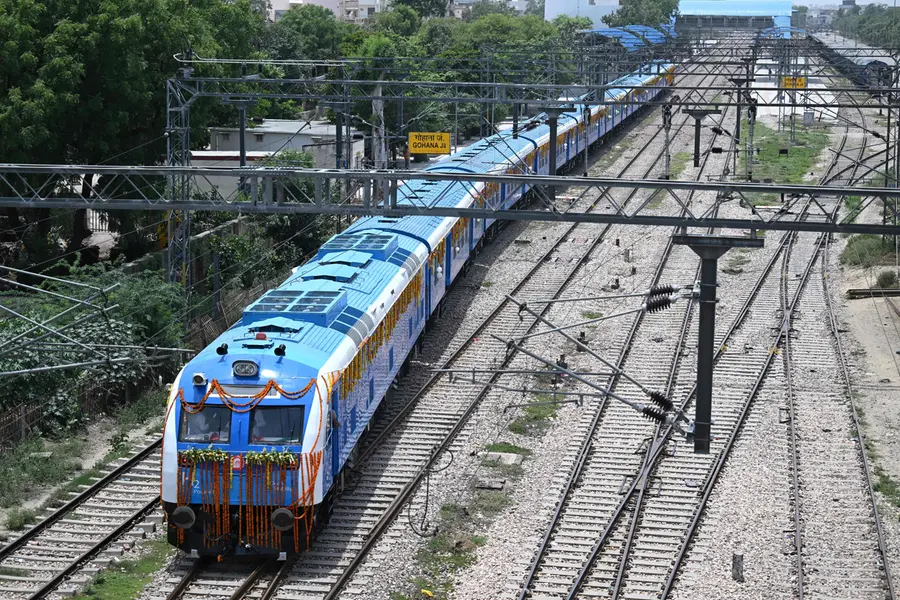
India's first hydrogen-powered passenger train has grabbed attention not only for its clean-energy technology but also for its surprisingly low ticket prices. Flagged off by Prime Minister Narendra Modi on July 17, the new service on the Jind-Sonipat route in Haryana marks the country's entry into hydrogen-powered passenger rail transport, and for some journeys, travelling on it costs less than buying a platform ticket at many railway stations.
With fares starting at just Rs 5, the train has become one of the most affordable passenger services on the Indian Railways network. Depending on the distance travelled, the fare goes up to Rs 25, with passengers on the inaugural journey also purchasing tickets priced at Rs 5.
Is the fare cheaper than a platform ticket?
Yes…. for the shortest journey, it is.
A platform ticket on Indian Railways currently costs Rs 10 at most stations. That means the minimum fare of Rs 5 for India's first hydrogen-powered train is Rs 5 cheaper than the cost of entering a station platform.
The highest fare on the route is Rs 25, depending on the distance covered.
Where does the train operate?
The hydrogen-powered train runs on the Jind-Sonipat section of Northern Railway in Haryana.
The service connects Jind Junction and Sonipat, stopping at multiple stations along the route, including Jind City, Pandu Pindara, Lalit Khera Halt, Bhambhewa, Isapur Kheri Halt, Butana Halt, Khandrai Halt, Rabrah Halt, Lath, Mohana and Barwasni Halt before reaching Sonipat.
The train has been cleared for an operational speed of 75 kmph, although it has been designed to run at speeds of up to 110 kmph.
What makes it different from other trains?
Unlike conventional trains that depend on diesel engines or electricity supplied through overhead wires, the new service generates its own electricity using hydrogen fuel cells.
Inside the fuel cell, hydrogen combines with oxygen to produce electricity, while the only by-products are water vapour and heat. This allows the train to operate without direct carbon emissions during service, making it a cleaner alternative to diesel-powered rail transport.
The hydrogen needed to power the train will be supplied through a dedicated storage and refuelling facility built at Jind.
Key features at a glance
The train has been designed with several features aimed at improving efficiency and safety, including:
- A 10-coach hydrogen fuel cell trainset
- Two hydrogen-powered driving power cars and eight trailer coaches
- A 1,200 kW hydrogen fuel cell propulsion system
- Capacity to carry around 2,600 passengers
- Hydrogen leak, smoke, flame and overheating detection systems
- Operation without conventional overhead electric lines
A step towards greener rail transport
The launch is part of Indian Railways' broader effort to introduce cleaner transport technologies and reduce dependence on fossil fuels.
The project has also resulted in the establishment of the country's largest railway hydrogen storage and refuelling facility at Jind. The plant can store nearly 3,000 kg of hydrogen and has been developed in accordance with internationally accepted safety standards, with independent safety assessments carried out before passenger operations began.
With the introduction of the service, India joins a small group of countries that have deployed hydrogen-powered passenger rail technology.
Published: 19 Jul 2026, 10:24 am IST
Related Topics
Disclaimer: Kindly avoid objectionable, derogatory, unlawful and lewd comments, while responding to reports. Such comments are punishable under cyber laws. Please keep away from personal attacks. The opinions expressed here are the personal opinions of readers and not that of Mathrubhumi.
