
The launch, conducted under the aegis of the Strategic Forces Command, which oversees the country’s strategic nuclear assets, validated all operational and technical parameters.
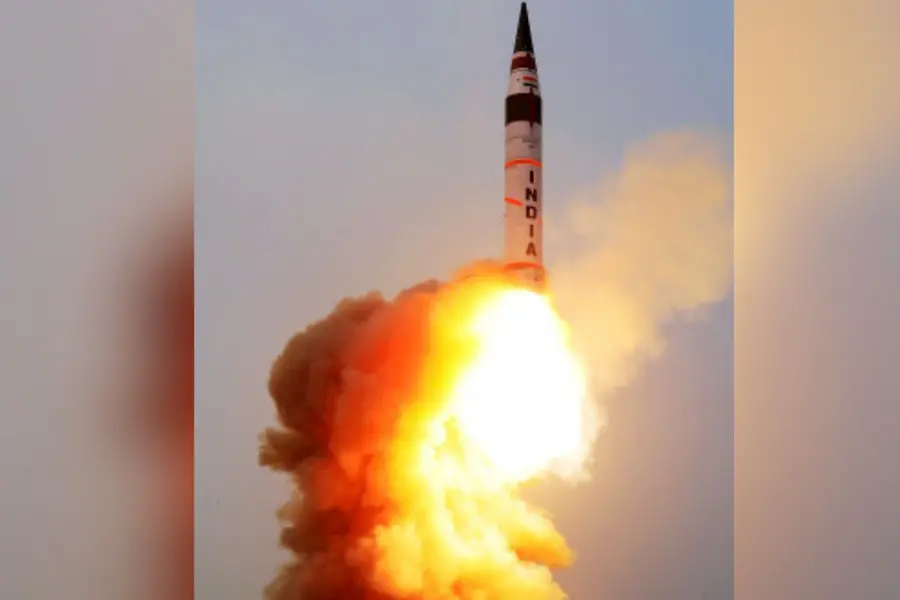
New Delhi: India on Friday successfully test-fired its Intermediate Range Ballistic Missile (IRBM) Agni-3 from the Integrated Test Range at Chandipur in Odisha, defence officials confirmed.
The launch, conducted under the aegis of the Strategic Forces Command, which oversees the country’s strategic nuclear assets, validated all operational and technical parameters. Officials said the test reaffirmed the reliability and readiness of the missile system.
Also Read

Also Read | Flight test showcases India’s advanced missile technology, enters elite league
Agni-3, a nuclear-capable missile with a strike range of 3,000 to 3,500 kilometres, is designed to reach strategic targets deep inside adversary territory. An indigenously developed intermediate-range ballistic missile (IRBM), it has been a key component of India’s Strategic Forces Command (SFC) since entering service in 2011. Despite the development and testing of other missiles in the Agni series, including upgraded variants, Agni-3 remains a cornerstone of India’s deterrence capability.
The missile is a two-stage system powered by solid fuel. Designed primarily as a nuclear delivery system, the missile can carry a payload of up to 1,500 kilograms, with an estimated warhead yield of 200 to 300 kilotons. Measuring 16.7 metres in length and two metres in diameter, Agni-III has a launch weight of 48,300 kilograms.
Also Read | Agni-Prime missile with 2,000 km strike range launched from mobile rail platform | WATCH
Defence sources emphasised that the successful test underlines India’s commitment to maintaining a credible strategic arsenal and strengthens its long-term security posture.
Published: 06 Feb 2026, 08:50 pm IST
Related Topics
Disclaimer: Kindly avoid objectionable, derogatory, unlawful and lewd comments, while responding to reports. Such comments are punishable under cyber laws. Please keep away from personal attacks. The opinions expressed here are the personal opinions of readers and not that of Mathrubhumi.