
The submarine, whose official name is yet to be announced, is reported to displace around 7,000 tonnes
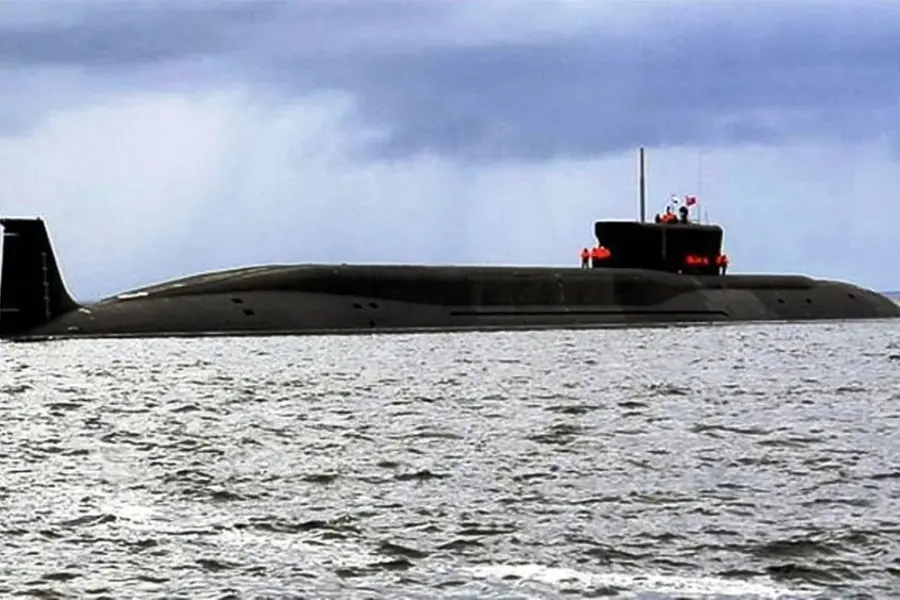
India has reportedly taken a major step to strengthen its maritime nuclear deterrence by beginning sea trials of the fourth Arihant-class nuclear-powered ballistic missile submarine (SSBN – Sub-Surface Ballistic Nuclear), temporarily identified as S4.
Open-source reports say the submarine departed the Shipbuilding Centre (SBC) in Visakhapatnam in November 2025, marking the start of detailed sea trials and evaluations. These tests will continue before final delivery and formal induction into the Indian Navy.
The submarine, whose official name is yet to be announced, is reported to displace around 7,000 tonnes. It is expected to be the final submarine of the Arihant programme, before India shifts to the next-generation S5 class.
With S4, India would operate four SSBNs at different stages. INS Arihant (S2), commissioned in 2018, and INS Arighaat (S3), commissioned in 2024, are already in service. The third submarine is expected in 2026, while S4 is likely to join the Navy in 2027.
Sources indicate that S4 has significantly higher missile capacity. Unlike S2 and S3, which can carry four K-4 or 12 K-15 missiles, S4 is designed to carry eight K-4 or 24 K-15 submarine-launched ballistic missiles
The K-15 ballistic missile, also known as Sagarika, has a range of over 750 kilometres. It weighs about 6–7 tonnes, carries a nuclear warhead of up to 1,000 kilograms, is around 10 metres long, and has a diameter of 0.74 metres. It can reach Mach 7.5 (about 9,200 km/h).
The larger K-4 (Kalam-4) ballistic missile has a range exceeding 3,500 kilometres. It weighs around 17–19 tonnes, can carry a warhead of up to 2,500 kilograms, and measures about 12 metres in length with a diameter of 1.3 metres. Its long reach allows submarines to strike distant targets while remaining hidden underwater, greatly strengthening India’s nuclear deterrence.
A key highlight of the new SSBN is its very high indigenous content. Reports suggest more than 80 percent of onboard equipment is made in India, the highest level achieved so far under the Arihant programme.
This development aligns with India’s broader push for self-reliance in critical technologies, particularly in naval systems and nuclear defence, reducing dependence on foreign suppliers in strategic areas.
If current timelines hold, S4’s sea trials are expected to last about one year, after which the submarine could be commissioned into the Indian Navy by early 2027.
Progress has also been reported on new ballistic missiles for future Arihant-class submarines. According to DRDO, the K-6 submarine-launched ballistic missile (SLBM) is close to entering its testing phase. The missile is expected to strike targets up to 8,000 kilometres away and travel at hypersonic speeds of around Mach 7.5, making interception extremely difficult.
The Arihant programme began in 1984 under the Advanced Technology Vessel (ATV) project to give India a credible sea-based nuclear deterrent. The first submarine was launched in 2009, commissioned in 2016, and completed its first deterrent patrol in 2018, firmly establishing the maritime leg of India’s nuclear triad.
The nuclear triad means a country can launch nuclear weapons from land-based missiles, aircraft, and submarines, ensuring strong deterrence even if one system is neutralised.
Looking ahead, the Indian Navy has already begun early construction work on the S5-class nuclear ballistic missile submarines. These boats are expected to displace around 13,500 tonnes, making them nearly twice the size of the Arihant class. The first S5 submarines are likely to enter service in the early 2030s, with four vessels planned by the end of that decade.
Published: 01 Jan 2026, 04:03 pm IST
Related Topics
Disclaimer: Kindly avoid objectionable, derogatory, unlawful and lewd comments, while responding to reports. Such comments are punishable under cyber laws. Please keep away from personal attacks. The opinions expressed here are the personal opinions of readers and not that of Mathrubhumi.
