
BJP-ruled states argue in Supreme Court that Governors’ and President’s assent to bills cannot be imposed by courts, defending constitutional autonomy.
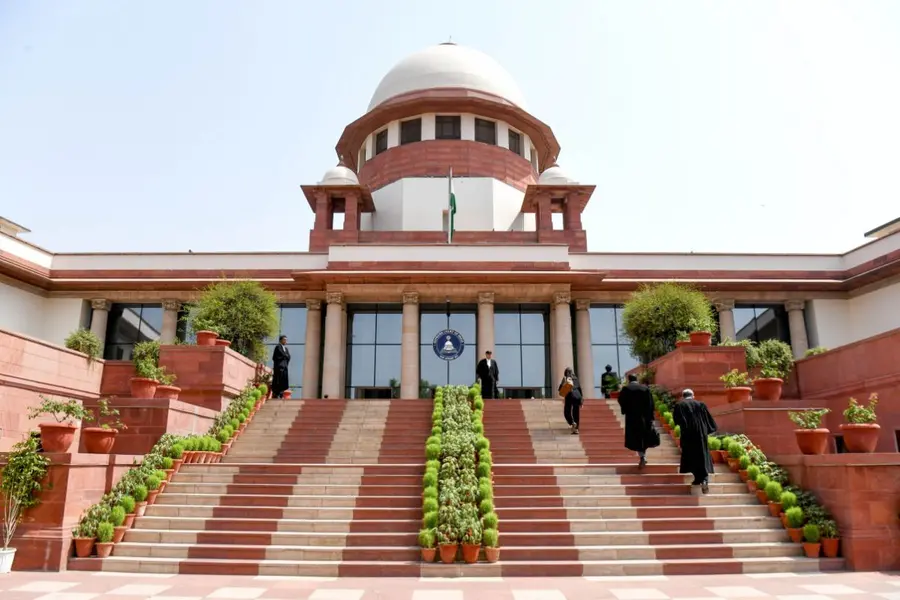
New Delhi: Several BJP-ruled states on Tuesday told the Supreme Court that governors and the President have constitutional autonomy to give assent to bills passed by state legislatures, and argued that “assent to a law cannot be given by the court.”
A five-judge Constitution bench, headed by Chief Justice BR Gavai, heard submissions from senior advocate Harish Salve, representing Maharashtra, who said the power to accord assent rests solely with governors or the President, and there is no concept of “deemed assent.”
The bench is hearing a presidential reference on whether courts can impose timelines for governors and the President to act on bills passed by state assemblies.
“The court cannot issue a writ of mandamus asking the governors to grant assent to bills. Assent to a law cannot be given by the court. Assent to a law has to be given either by governors or by the President,” Salve told the bench, which also comprises Justices Surya Kant, Vikram Nath, PS Narasimha and AS Chandurkar.
Salve referred to Article 361 of the Constitution, noting that the President or governor “shall not be answerable to any court for the exercise and performance of the powers and duties of his office or for any act done or purporting to be done by him in the exercise and performance of those powers and duties.” He said the court could only inquire into decisions taken by governors or the President, not question why those decisions were made.
Additional Solicitor General KM Nataraj, representing Uttar Pradesh and Odisha, added that the President and governors enjoy functional autonomy and have absolute discretion before giving assent. “When language and the Article are clear, we should not supply cassius omissus (a situation which is not covered under the statute),” he said, adding that courts cannot prescribe timelines for their actions.
Similarly, Additional Solicitor General Vikramjit Banerjee, appearing for Goa, said the legislative process is incomplete until the governor’s assent, and “the Constitution does not envisage the concept of deemed assent and the judiciary can't insert itself giving deemed assent to bills passed by the assembly.” Justice Kant observed that deemed assent is only a fiction and not legally recognised.
Solicitor General Tushar Mehta noted that certain provisions, such as Article 198(5) on money bills, explicitly provide for deemed action, but these are limited exceptions.
Senior advocate Mahesh Jethmalani, representing Chhattisgarh, argued that the April 8 verdict of the apex court “inserted something” not present in Article 200, which governs governors’ powers over state bills. Salve added that while the President acts on the aid and advice of the central government, governors possess wider powers, including the authority to withhold assent.
“It is not a feature of Indian federalism that an assent must follow after a few rounds of confabulations. We have a limited federalism with hope that all these functionaries will act with wisdom,” Salve said, emphasising that governors’ decisions are not amenable to judicial review.
Senior advocates NK Kaul, Maninder Singh, Vinay Navare and Guru Krishnakumar also made submissions for various BJP-ruled states in support of the constitutional powers of governors and the President.
Tamil Nadu and Kerala are scheduled to present their arguments on August 28, defending the April 8 verdict. The reference follows a May request by President Droupadi Murmu under Article 143(1), seeking clarity on whether courts could impose timelines on presidential discretion in dealing with bills passed by state assemblies.
PTI
Published: 27 Aug 2025, 09:43 am IST
Disclaimer: Kindly avoid objectionable, derogatory, unlawful and lewd comments, while responding to reports. Such comments are punishable under cyber laws. Please keep away from personal attacks. The opinions expressed here are the personal opinions of readers and not that of Mathrubhumi.
