
Hundreds stranded as cloudburst hits Himachal's Kinnaur during Kinnar Kailash yatra; over 400 rescued
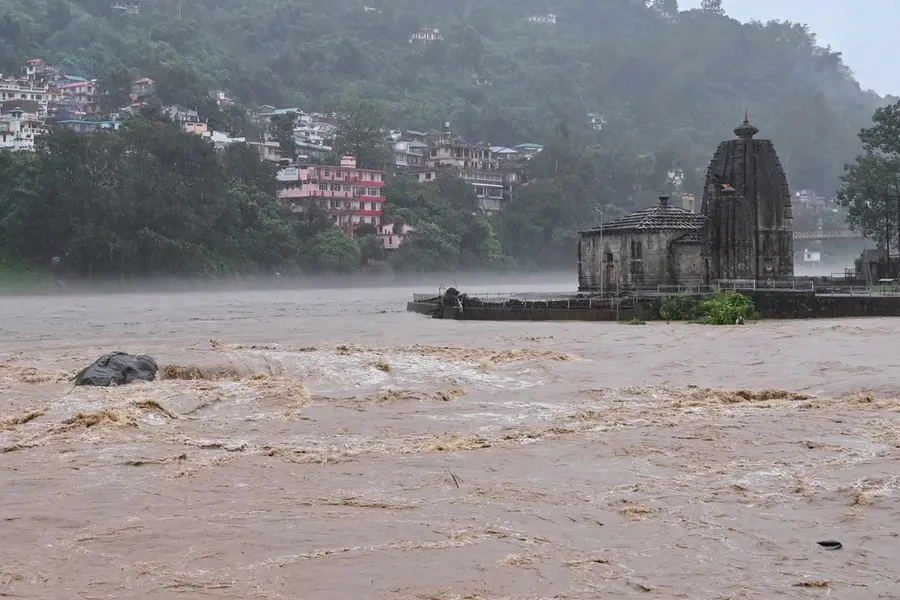
Shimla: A cloudburst in Kinnaur, Himachal Pradesh,on Wednesday during the Kinnar Kailash Yatra led to severe disruptions and stranded pilgrims.
According to reports two bridges collapsed and a significant stretch of the yatra route in the Tangling area was washed away, cutting off hundreds of devotees. Rescue efforts led by the Indo-Tibetan Border Police (ITBP) and National Disaster Response Force (NDRF) have so far safely evacuated more than 400 individuals using rope-based crossing techniques.
Also Read

Meanwhile, persistent bad weather has delayed rescue operations in Uttarkashi, where another cloudburst recently struck. The broader Himachal region, particularly districts such as Mandi and Kullu, has faced increased instances of flash floods and landslides over recent monsoon seasons.
In Mandi, over 15 cloudbursts were recorded in the towns of Pundoh and Thunag between June and July 2023, causing extensive damage to homes and infrastructure. The heavy rainfall on 9–10 July 2023 submerged parts of Pandoh Bazar and damaged highways. Flash floods also swept through Thunag Bazar, the constituency of former CM Jai Ram Thakur.
Although rainfall volumes in Mandi are lower than in districts like Kangra or Shimla, the area has witnessed the highest number of flash floods and associated fatalities. Experts point to poorly planned development as a primary cause. Buildings and roads have been constructed near natural drainage channels, obstructing water flow and increasing vulnerability during heavy rains.
Construction debris is often dumped into nearby streams, blocking natural watercourses and increasing siltation. During monsoons, fallen trees, rocks, and logs worsen the situation, contributing to river blockages and flood risk. Mandi district has seen 10 flash floods in 2023 alone—the highest in the state this year.
Between 2022 and 2025, damages across the state amounted to an estimated ₹9,000 crore and 823 deaths. Environmentalists and policymakers are now calling for a new road construction policy tailored for the Himalayan terrain and science-backed urban planning norms to mitigate future risks.
Published: 06 Aug 2025, 12:27 pm IST
Related Topics
Disclaimer: Kindly avoid objectionable, derogatory, unlawful and lewd comments, while responding to reports. Such comments are punishable under cyber laws. Please keep away from personal attacks. The opinions expressed here are the personal opinions of readers and not that of Mathrubhumi.