EXCLUSIVEIndia's aerospace manufacturing community has built trust component by component: Jeh Aerospace CEO
India’s aerospace story is entering a new phase, one defined not just by ambition, but by execution. As global aviation supply chains undergo a structural shift, the spotlight is increasingly turning towards India, not merely as a cost-effective destination, but as a credible hub for high-precision, safety-critical manufacturing. At the centre of this evolution are companies like Jeh Aerospace, quietly building capabilities that meet the exacting standards of the world’s leading aerospace players.
Its recent long-term agreement with Liebherr-Aerospace to manufacture landing gear components marks more than just a business milestone. It signals a deeper shift, where Indian manufacturers are being trusted with some of the most critical systems on an aircraft.
From Hyderabad, a city steadily emerging as a key aerospace and MRO hub, Jeh Aerospace is contributing to this transformation by combining advanced manufacturing, skilled talent, and a relentless focus on quality. In this exclusive conversation with Mathrubhumi English, the Jeh Aerospace Founder Vishal R Sanghavi shares insights on India’s growing role in global aviation supply chains, the impact of initiatives like Make in India, and what it takes to build trust in one of the most demanding industries in the world.
At a time when the world is looking to diversify and strengthen its aerospace supply chain, India’s moment seems not just imminent but already unfolding.
Congratulations on the latest agreement with Liebherr-Aerospace to manufacture and supply high-precision components for landing gear systems on commercial single aisle aircraft. How does it reflect the growing global confidence in India's aerospace manufacturing capabilities?
This agreement reflects something important, that India's aerospace manufacturing ecosystem has matured to a point where global Tier 1 suppliers are not just looking here for cost efficiency, but for genuine technical capability.
Liebherr-Aerospace is one of the most demanding customers in the industry. Prior to the agreement being formalised, a senior delegation from Liebherr-Aerospace including COO Martin Wandel visited our Hyderabad facility. The purpose was to see the operation firsthand, the manufacturing environment, quality infrastructure, and readiness for high-volume production. The technical review was conducted by their engineering and quality teams. That level of senior engagement before signing reflects how seriously global Tier 1s take supplier qualification at this level.
The confidence being placed in facilities like ours is earned through execution, through certifications, through consistent quality across hundreds of thousands of components, and through the talent and infrastructure that Hyderabad in particular has developed over the last decade.
Landing gear components are among the most critical parts of an aircraft. What does this partnership say about how far India has come in building trust in high-precision manufacturing?
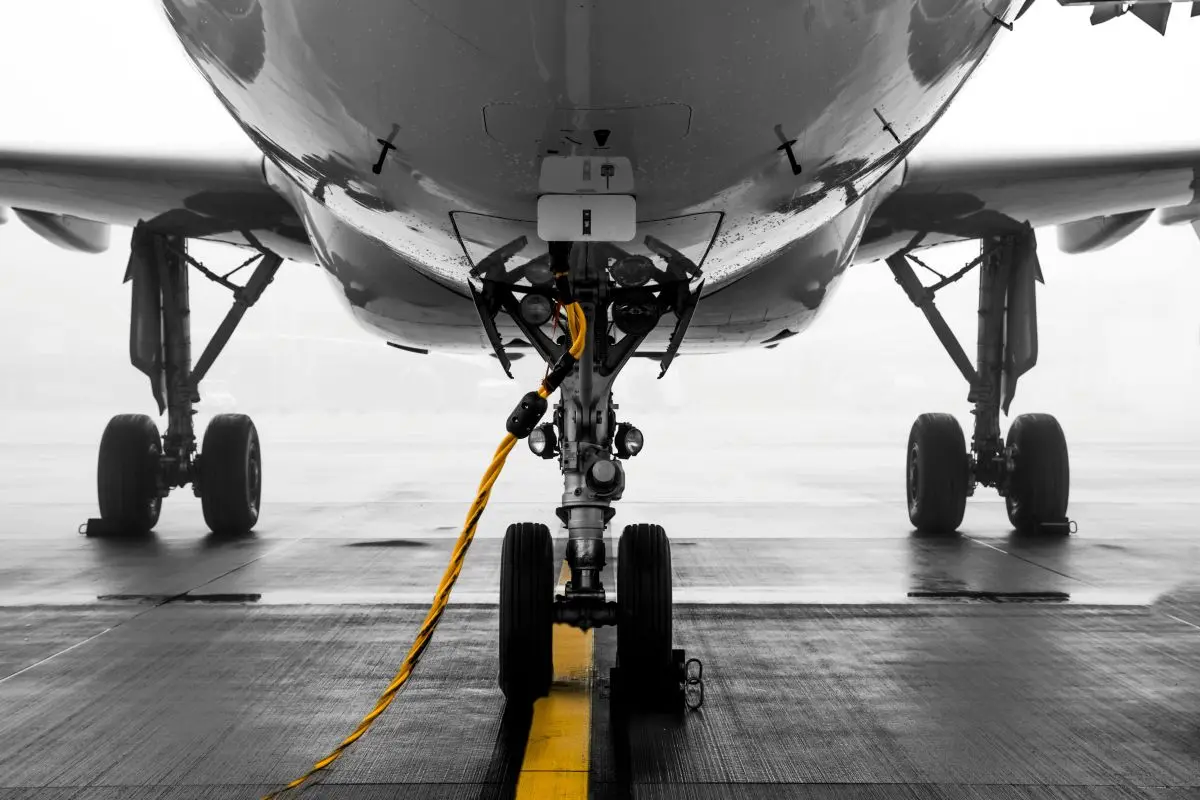
Landing gear is not a domain where trust is given, it is qualified for, methodically and over time. These are flight-safety-critical components that must perform reliably across the entire service life of an aircraft. The tolerance requirements, material specifications, and qualification processes are among the most stringent in the industry.
Also Read: A new chapter for economy travellers opens as sleep stops being a luxury
Being selected to manufacture these components from our Hyderabad facility is a direct reflection of the technical depth that Indian precision manufacturing has developed. A few years ago, this category of work was largely concentrated in Western Europe and North America. That is changing.
What has made this possible is a combination of factors, investment in advanced machining capability, the development of special processes like NDT, robotic welding and surface treatments, rigorous quality systems, and critically, a generation of aerospace engineers and technicians who have grown up in this industry. India's aerospace manufacturing community has built that trust component by component, programme by programme.
How do you see initiatives like Make in India influencing global partnerships such as this, and what more needs to be done to accelerate growth in the aerospace component sector?
Policy frameworks like Make in India have played a meaningful role in signalling intent and creating conditions for investment. They have helped attract global OEMs and Tier 1s to explore Indian supply chain partnerships, and they have supported infrastructure development in aerospace clusters like Hyderabad and Bangalore.
That said, partnerships like the one we have signed with Liebherr-Aerospace are ultimately driven by capability and execution, not by policy alone. What global customers require is consistent quality, on-time delivery, and the technical infrastructure to handle complex, safety-critical programmes. Policy creates the environment; industry has to deliver.
To accelerate growth in the sector, a few things matter most. First, continued investment in special process capabilities like NDT, heat treatment, surface finishing which remain underdeveloped relative to machining. Second, faster development of the aerospace-qualified supplier ecosystem, so that Indian manufacturers are not dependent on imported raw materials and sub-components. Third, sustained focus on skills the industry needs more aerospace-trained engineers and technicians entering the workforce each year. The opportunity is significant, and the foundation is there.
Hyderabad is increasingly being seen as an emerging aerospace and MRO hub. What advantages does the city offer, and how is Jeh Aerospace contributing to this ecosystem?
Hyderabad has built a genuine aerospace cluster over the last two decades. The presence of DRDL, HAL, DMRL, and a growing base of private manufacturers has created an ecosystem of technical talent, supplier networks, and regulatory familiarity that is difficult to replicate quickly elsewhere. The city's engineering colleges continue to produce strong graduates, and the broader technology ecosystem supports manufacturing digitalisation in ways that matter for advanced production.
Also Read: Inside Qantas airline's ambitious Project Sunrise
Jeh Aerospace is contributing to this ecosystem in a few direct ways. Our manufacturing facility employs over 150 people, with a strong focus on skill development through our in-house training centre. We are currently building our second facility in Hyderabad, 200,000 square feet which will significantly expand our capacity for complex, flight-critical component manufacturing.
Beyond our own operations, every programme we qualify for a global Tier 1 customer adds to the credibility of Hyderabad as a location capable of handling the highest levels of aerospace manufacturing. That matters for the broader ecosystem.
For a common reader, how would you explain the importance of manufacturing such components within India rather than relying on imports?
Think about any commercial aircraft flying today, the landing gear alone is made up of hundreds of precision components, each one engineered to absorb the forces of thousands of landings over the life of an aircraft. Until recently, almost all of those components were made in Europe or North America and imported into supply chains around the world.
When India builds the capability to manufacture these components locally, to the same exacting standards that global aviation demands, a few important things happen. Indian engineers and technicians develop skills in one of the most technically demanding manufacturing disciplines in the world. Those capabilities do not stay confined to aerospace; they raise the bar across Indian manufacturing more broadly.
There is also a supply chain resilience argument. Global aviation supply chains were severely disrupted over the last few years. Having manufacturing capability closer to home, or distributed across more geographies makes those supply chains more robust. India becoming a reliable source for precision aerospace components is good not just for Indian industry, but for global aviation as a whole.
India is aiming to become a major player in global aviation supply chains. What role do companies like Jeh Aerospace play in achieving this ambition?
India's ambition in global aviation supply chains will be realised company by company, programme by programme, not through announcements, but through execution at the shopfloor level.
Companies like Jeh Aerospace play a specific role, demonstrating that Indian manufacturers can qualify for, and consistently deliver on, the most demanding programmes in the industry. Every time a global Tier 1 like Liebherr-Aerospace selects an Indian facility for flight-critical work, it expands the aperture for what the broader Indian industry can pursue.
We also have a responsibility to raise standards, investing in quality systems, training the next generation of aerospace manufacturing talent, and building the process depth that complex programmes require. The ambition is achievable. But it requires the industry to hold itself to global standards, not just aspire to them.
With global demand for aircraft rising, do you see Indian manufacturers stepping up to meet large-scale production requirements in the coming years?
The demand signal is unambiguous. Airbus and Boeing have order backlogs stretching well into the next decade, and both are actively working to expand and diversify their supply chains. For Indian manufacturers, this is the clearest opportunity the industry has seen.
The honest answer is that Indian manufacturers are stepping up, but the pace needs to accelerate. Capacity is growing, quality systems are improving, and the talent pipeline is deepening. What is still needed is a faster move into higher-complexity work, assemblies, special process integration, tighter tolerance programmes. Machining capacity alone is not enough to capture the full opportunity.
Jeh Aerospace's second facility, coming online in 2026, is our direct response to this demand environment. We are building for the production ramp that is already under way, not the one we expect in five years.
Looking ahead, what is your long-term vision for Jeh Aerospace in terms of expanding capabilities, global partnerships, and contributing to India's aerospace growth story?
Our long-term vision is to be among the most trusted precision aerospace manufacturers in the world, measured not by scale alone, but by the complexity and criticality of the programmes we are trusted to execute.
That means continuing to expand our process capabilities into more integrated and complex work packages. It means deepening partnerships with global Tier 1s across commercial and defence programmes. And it means building an organisation, rooted in Hyderabad that sets a benchmark for what aerospace manufacturing in India can look like.
Our contribution to India's aerospace story is not made through statements. It is made through the programmes we qualify for, the standards we hold ourselves to, and the people we develop. If we do that consistently, the broader impact follows.