
The operation is remembered for the supreme sacrifice of Naik Kaushal Yadav, whose gallantry secured the summit and remains a defining victory of the Kargil War.
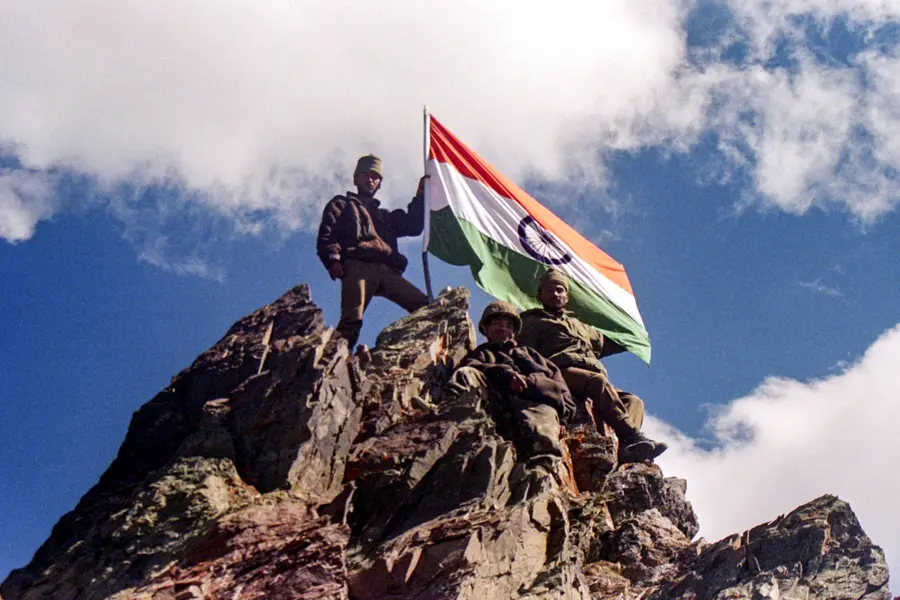
By late July 1999, the political tides of the Kargil War were shifting, and Pakistan had formally announced the withdrawal of its forces. Yet, high in the freezing, jagged peaks of the Mushkoh Valley, the reality on the ground was far from peaceful. The enemy remained deeply entrenched in the strategic Zulu Complex, unwilling to yield.
What followed was a masterclass in military coordination, unyielding grit, and ultimate sacrifice.
The Gorkha Advance
On July 22, 1999, the silence of the Mushkoh Valley was shattered by the battle cries of the 3/3 GORKHA RIFLES. Tasked with clearing the lower ridges of the Zulu Complex, the Gorkhas launched a ferocious assault against the dug-in infiltrators.
Navigating treacherous terrain under heavy fire, the battalion systematically dismantled the enemy's forward defences. Through sheer infantry dominance, the 3/3 GORKHA RIFLES successfully captured the vital features of Tri Junction, Thumb, and Zulu Base. Outgunned and overwhelmed by the relentless advance, the surviving enemy forces were forced into a desperate retreat, falling back to their final, highest stronghold: Zulu Top.
The Symphony of Destruction
Taking Zulu Top would require more than just infantry charges; it demanded precision and overwhelming firepower. This is where exemplary Infantry-Artillery synergy turned the tide of the battle.
Captain S Ghosh, a Forward Observation Officer from the 158 Medium Regiment, positioned himself to clearly view the enemy defences. Braving enemy fire, he meticulously directed the heavy guns of 16 Fire Units. The result was a devastating, pinpoint bombardment that rained steel and fire onto Zulu Top. This unrelenting artillery barrage effectively pulverised the enemy's reinforced bunkers, neutralising their defences and paving the way for the final infantry push.
The Decisive Strike
With the enemy battered by artillery, the stage was set for a surgical strike. On the pitch-black night of July 24, 1999, the elite commandos of 9 PARA (SF) were called upon to deliver the final blow.
Operating under the cover of darkness, the Special Forces began their steep, perilous ascent toward Zulu Top. Among them was Naik Kaushal Yadav, a squad leader whose bravery would soon become legendary. As they neared the summit, the commandos engaged the enemy in brutal, close-quarters combat.
Leading from the front, Naik Yadav displayed exceptional courage. He charged through the hostile fire, personally neutralising five enemy soldiers and breaking the back of the enemy's resistance. In the ensuing firefight, Naik Yadav sustained fatal injuries, making the supreme sacrifice for his nation. For his unparalleled gallantry, he was posthumously awarded the Vir Chakra.
Victory at Dawn
By the first light of July 25, 1999, the echoes of gunfire finally faded across the Mushkoh Valley. The tricolour fluttered proudly in the freezing winds above Zulu Top. The combined might of the Gorkhas, the Artillery, and the Special Forces had achieved the impossible, securing the entirety of the Zulu Complex.
The recapture of Zulu Top stands as a gleaming testament to the courage, synergy, and indomitable spirit of the Indian Armed Forces—a story remembered and revered on every Kargil Vijay Diwas.
Published: 22 Jul 2026, 10:36 am IST
Related Topics
Disclaimer: Kindly avoid objectionable, derogatory, unlawful and lewd comments, while responding to reports. Such comments are punishable under cyber laws. Please keep away from personal attacks. The opinions expressed here are the personal opinions of readers and not that of Mathrubhumi.
