
Figures show that Delhi’s average AQI for January–November 2025 stood at 187, down from 201 in 2024
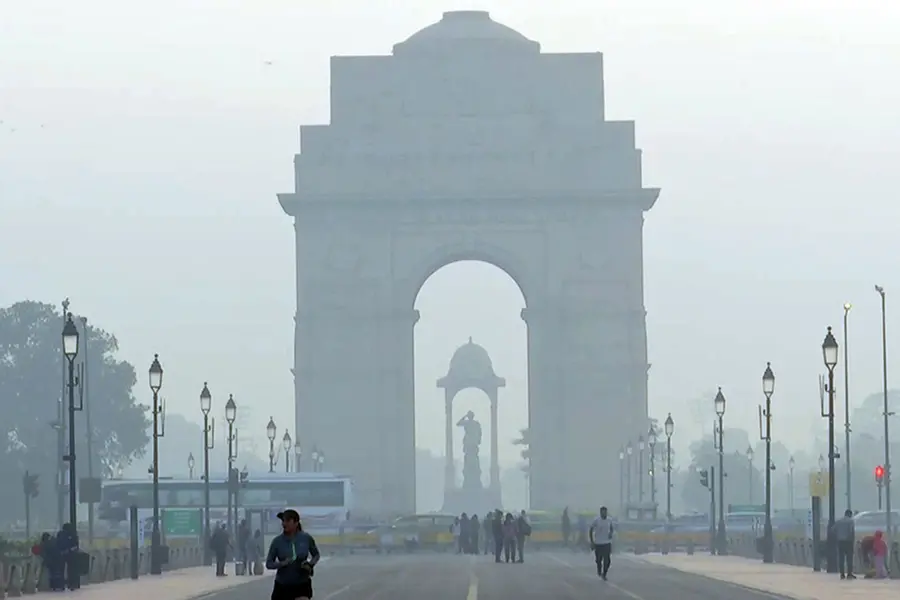
New Delhi: Delhi–NCR has registered a marked improvement in air quality this year, with the region reporting its lowest average Air Quality Index (AQI) for the January–November period in eight years, excluding 2020, the year dominated by COVID-19 lockdowns, according to official data released on Sunday.
The number of days classified under the “Severe” category fell by a large margin. Only three days this year saw daily average AQI levels rise above 400, compared with 11 such days in 2024, 12 in 2023 and 17 in 2021. Notably, 2025 has not yet witnessed a single “Severe+” day, with AQI levels above 450, in contrast to previous years.
Also Read

Figures show that Delhi’s average AQI for January–November 2025 stood at 187, down from 201 in 2024. The index had previously averaged 190 in 2023, 199 in 2022, 197 in 2021, 203 in 2019 and 213 in 2018.
Pollution indicators mirrored this trend. Average PM2.5 concentration dropped to 85 µg/m³ — the lowest since 2018 and comparable to levels recorded in 2020. By comparison, annual averages stood at 98 in 2024, 90 in 2023, 95 in 2021 and 103 in 2018.
PM10 levels also declined, with the average for the first 11 months of the year registering at 183 µg/m³, down from 205 in 2024, 193 in 2023 and 228 in 2018.
Officials attributed the improvement to measures implemented by the Commission for Air Quality Management (CAQM), which continues to coordinate with agencies across Delhi–NCR. The commission said efforts would be intensified in the coming days to build on this year's gains.
On Saturday, the CAQM announced revisions to the Graded Response Action Plan (GRAP) for the entire NCR. Measures previously reserved for the ‘Severe’ category under Stage IV will now be enacted at Stage III, the commission said. Under the revised protocol, NCR state governments and the Delhi administration may decide whether public, municipal and private offices operate at 50 per cent capacity, with remaining staff working from home. The Central Government may also choose to allow work-from-home arrangements for its employees.
Allegations of data manipulation
However, the improvements come amid political controversy. On Friday, Aam Aadmi Party (AAP) Delhi State President Saurabh Bharadwaj alleged that the capital faces a “public health emergency” due to manipulation of air quality data and failure to properly enforce GRAP restrictions.
Bharadwaj accused the BJP-run Delhi Government of falsifying AQI readings and allowing both government and private construction activity to continue despite GRAP Stage III prohibitions. He claimed pollution levels in the 500–700 range were being recorded as 300–400 to avoid triggering tougher curbs.
ANI
Published: 01 Dec 2025, 08:58 am IST
Disclaimer: Kindly avoid objectionable, derogatory, unlawful and lewd comments, while responding to reports. Such comments are punishable under cyber laws. Please keep away from personal attacks. The opinions expressed here are the personal opinions of readers and not that of Mathrubhumi.