
Bombay High Court dismisses Ethiopia volcano ash as reason for Mumbai`s poor air quality
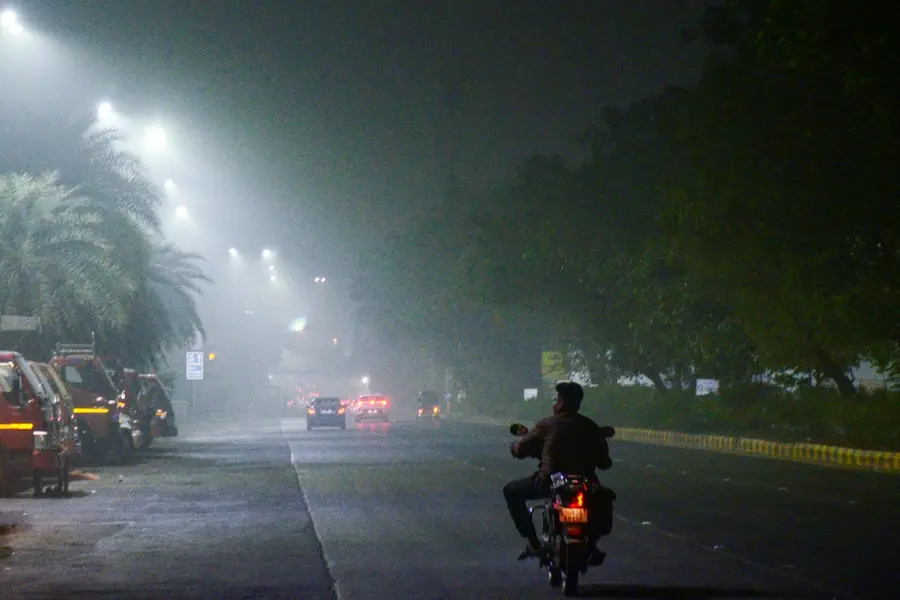
Mumbai: The Bombay High Court on Thursday said authorities cannot blame ash clouds from the volcanic eruption in Ethiopia for the city’s deteriorating air quality, remarking that Mumbai’s Air Quality Index has been poor long before the incident.
A bench of Chief Justice Shree Chandrashekhar and Justice Gautam Ankhad was urged to take up a group of petitions filed in 2023 on rising pollution levels. Senior counsels Darius Khambata and Janak Dwarkadas, appearing for the petitioners, said the AQI in Mumbai has remained consistently poor and above 300 throughout this month.
Did the state blame Ethiopia’s eruption?
Additional government pleader Jyoti Chavan argued that the city’s pollution had worsened because of the volcanic eruption in Ethiopia two days prior.
However, the court rejected this argument and said the city’s pollution has been severe long before Hayli Gubbi erupted. The bench stated, “Even before this eruption, if one stepped out visibility was poor beyond 500 metres.”
What did the judges ask next?
Drawing attention to the severe pollution in Delhi, the court asked what effective measures could be taken in Mumbai. It questioned, “What can be the most effective measures? We are all seeing what is happening in Delhi? What is the effect of that.”
The court posted the matter for hearing on Friday.
What exactly happened in Ethiopia?
Hayli Gubbi, a shield volcano in Ethiopia’s Afar region, erupted on Sunday. The eruption produced a large ash plume rising nearly 14 kilometres into the atmosphere.
According to meteorological agencies, the plume then drifted eastwards across the Red Sea, reaching towards the Arabian Peninsula and the Indian subcontinent.
International reports, including those from the Indian Meteorological Department and global satellite agencies, confirm that the plume caused widespread flight disruptions across Africa and West Asia. Indian aviation authorities issued advisories as the ash cloud approached Indian airspace.
Did the ash cloud affect India’s air quality?
Experts say the ash was concentrated in the upper atmosphere and was unlikely to cause significant damage to ground-level air quality in Indian cities. Meteorologists noted that while the plume disrupted aircraft routes and triggered monitoring alerts, its impact on surface pollution in Mumbai would have been minimal.
Environmental scientists have pointed out that Mumbai’s PM2.5 levels have remained worrying for months because of a combination of construction dust, traffic emissions, industrial activity and stagnant winter air, long before the eruption occurred.
Why is Mumbai’s pollution problem persistent?
Mumbai has been recording poor visibility and heavy smog episodes throughout November, which aligns with the High Court’s observation that air quality had already been consistently poor.
Monitoring agencies reported low wind speeds and temperature inversion in recent weeks, trapping pollutants near the surface.
(With agency reports)
Published: 27 Nov 2025, 05:13 pm IST
Related Topics
Disclaimer: Kindly avoid objectionable, derogatory, unlawful and lewd comments, while responding to reports. Such comments are punishable under cyber laws. Please keep away from personal attacks. The opinions expressed here are the personal opinions of readers and not that of Mathrubhumi.
