
Delhi’s air quality remained in the ‘poor’ category for the fifth straight day on Dhanteras, as pollution levels worsened ahead of Diwali
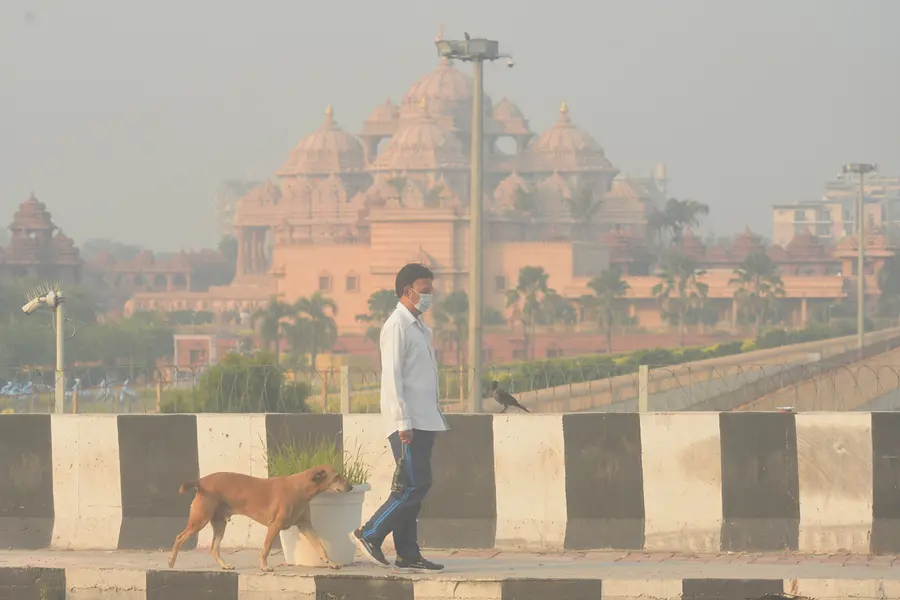
New Delhi: The national capital continued to reel under deteriorating air quality on Saturday, with the Air Quality Index (AQI) touching 268, according to the Central Pollution Control Board (CPCB). The reading marks the fifth consecutive day that Delhi’s air has remained in the ‘poor’ category.
Over the past week, the city’s AQI has shown a steady decline — from 211 on Tuesday to 254 on Friday — culminating in 268 on Saturday. A layer of smog was visible over several parts of the city, including Shadipur, affecting visibility during early morning hours.
Also Read

Ghaziabad records ‘very poor’ air quality
Among NCR cities, Ghaziabad reported the worst air quality with an AQI of 324, placing it in the ‘very poor’ category for the third day in a row. Its AQI stood at 307 on Thursday and 306 on Friday, according to CPCB data.
Pollution levels likely to worsen ahead of Diwali
Experts have warned that air quality could deteriorate further in the coming days as Diwali celebrations approach. The Air Quality Early Warning System (AQEWS) for Delhi forecasts that air quality will remain in the ‘poor’ category until Sunday and could reach the ‘upper end of very poor’ on Monday if emissions from firecrackers increase.
The system also predicts that pollution levels may continue to hover between the ‘poor’ and ‘very poor’ categories through next week.
Weather conditions and visibility concerns
According to the India Meteorological Department (IMD), Delhi recorded a maximum temperature of 33.5°C and a minimum of 19.6°C on Saturday. The weather department expects smog or shallow fog to persist in several parts of the capital during early morning hours on Sunday, which may further affect visibility and contribute to stagnant air conditions.
Delhi’s air pollution levels have shown a consistent upward trend since early October. The CPCB classifies air quality into six categories: ‘Good’ (0–50), ‘Satisfactory’ (51–100), ‘Moderate’ (101–200), ‘Poor’ (201–300), ‘Very Poor’ (301–400), and ‘Severe’ (401–500).
Currently, both PM2.5 and PM10 remain the dominant pollutants. These fine particles pose serious health risks, particularly for children, the elderly, and those with respiratory conditions. Experts recommend limiting outdoor activity during high-pollution periods and using air purifiers indoors.
Delhi’s pollution typically peaks during the festive period due to a combination of firecracker emissions, stubble burning in neighbouring states, and stagnant weather conditions. Authorities have advised residents to follow air quality advisories and avoid open burning or unnecessary travel to reduce exposure.
Published: 18 Oct 2025, 07:59 pm IST
Related Topics
Disclaimer: Kindly avoid objectionable, derogatory, unlawful and lewd comments, while responding to reports. Such comments are punishable under cyber laws. Please keep away from personal attacks. The opinions expressed here are the personal opinions of readers and not that of Mathrubhumi.