
India observes Constitution Day on November 26 to mark the adoption of the Constitution in 1949 and to honour the leaders who shaped the country’s democratic framework.
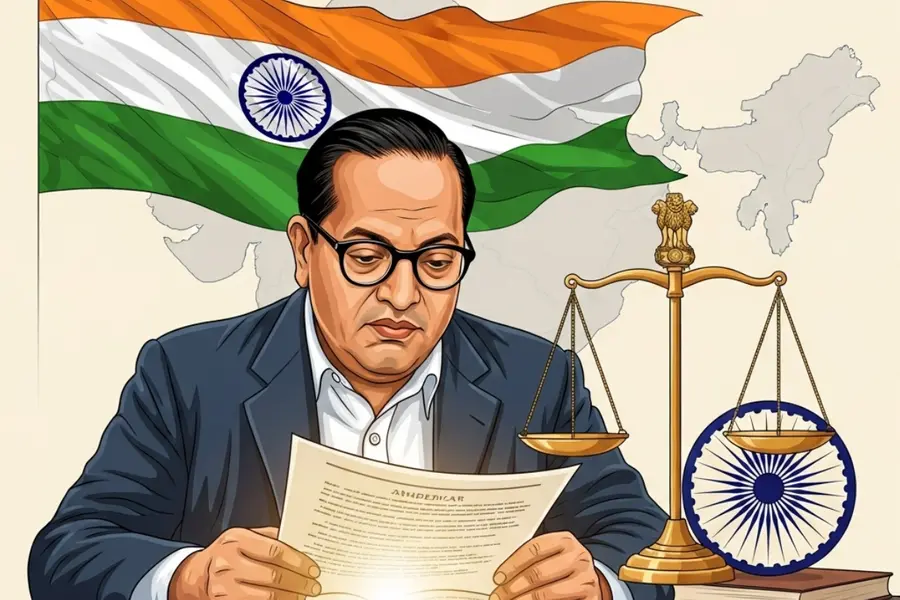
Constitution Day, observed on 26 November, marks the date in 1949 when the Constituent Assembly adopted the Constitution of India.
The observance was formally introduced in 2015 to increase public awareness of constitutional values and the history of India’s democratic formation. The day also honours the work of Dr B.R. Ambedkar, who chaired the Drafting Committee.
Also Read

How the Constituent Assembly Drafted the Constitution
- The Constituent Assembly first convened on 9 December 1946, with 389 members representing provinces, princely states, and various social groups.
- Key figures included Dr B.R. Ambedkar, Jawaharlal Nehru, Sardar Vallabhbhai Patel, Dr Rajendra Prasad and Alladi Krishnaswamy Ayyar.
- The Assembly studied global constitutional models, debated centre–state relations, fundamental rights, reservations, minority protections, the judiciary, and the structure of Parliament.
- Debates spanned 165 days across eleven sessions over nearly three years before the Constitution was finalised.
Adoption and Commencement
The Constitution was adopted on 26 November 1949 and came into force on 26 January 1950, the date now observed as Republic Day.
The final document contained 395 Articles, 8 Schedules and was, at the time, the world’s longest written constitution.
Why the Day Is Marked Today
Though the Constitution was adopted in 1949, 26 November was not widely commemorated until the Government of India designated it as Constitution Day in 2015.
The aim was to encourage citizens to engage with the Constitution, especially its principles of justice, liberty, equality and fraternity as stated in the Preamble.
Educational institutions, government bodies and civic groups mark the day by reading the Preamble, organising seminars and holding discussions on constitutional duties and rights.
The Constitution’s Continuing Relevance
India’s Constitution continues to evolve through amendments and judicial interpretation. The Supreme Court’s role in defining the basic structure doctrine, safeguarding fundamental rights, and examining constitutional amendments has shaped how the document functions in practice.
Constitution Day provides an annual moment for public reflection on democratic institutions, citizen responsibilities and the need to maintain constitutional checks and balances. The observance remains non-partisan, centred on constitutional values rather than political messaging.
Published: 26 Nov 2025, 12:04 pm IST
Related Topics
Disclaimer: Kindly avoid objectionable, derogatory, unlawful and lewd comments, while responding to reports. Such comments are punishable under cyber laws. Please keep away from personal attacks. The opinions expressed here are the personal opinions of readers and not that of Mathrubhumi.