
From the days of suspenders to modern denim, here's the fascinating history of how belt loops became an everyday wardrobe essential
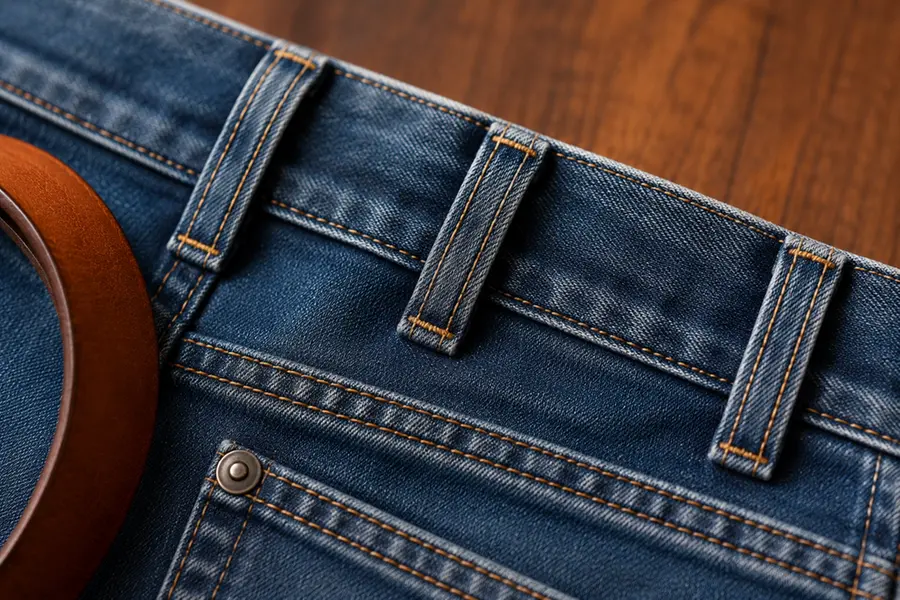
Now and then, an everyday object sends us down an unexpected rabbit hole. Like the line on your towel, the hole in your cooking spoon or those narrow strips of fabric stitched around the waistband of your jeans. They serve a purpose, of course, but have you ever wondered they're actually called?
There's no hidden fashion term or French name. In garment construction and apparel manufacturing, those stitched fabric strips are simply known as belt loops because their job is to hold a belt securely in place around the waist.
But while the name is straightforward, the history behind them is a little more interesting.
Belt loops weren't always part of clothing
Before the 20th century, trousers didn't usually have belt loops at all.
Instead, people relied on braces (suspenders) to keep their trousers up. High-waisted trousers were designed with buttons on the inside or outside the waistband, allowing braces to be attached. Belts were far less common as an everyday accessory.
It wasn't until the early 1900s that belts started becoming fashionable, especially in men's clothing. As belts became more popular, manufacturers began adding loops to trousers so belts could stay in place rather than sliding up or down.
Levi's helped make them mainstream
One reason belt loops became so common is the popularity of denim jeans.
In 1922, Levi Strauss & Co. added belt loops to its famous 501 jeans, adapting to changing fashion trends as more people chose belts over suspenders. Since then, belt loops have become a standard feature on jeans around the world.
Why do most jeans have five or seven loops?
Ever noticed that jeans don't all have the same number? Most adult jeans have five to seven belt loops, although some designs may have more.
The number isn't random. The loops are placed strategically to:
- Keep the belt evenly supported.
- Prevent the waistband from sagging.
- Stop the belt from twisting or shifting during movement.
- Help trousers sit comfortably around the waist.
Typically, you'll find two loops at the front, two at the sides, two at the back and one in the centre back above the pockets.
Some brands add extra loops for larger sizes or heavier fabrics.
Can you wear jeans without using them?
Many people wear jeans or trousers without a belt at all. Belt loops simply give you the option of adding one if you want a better fit or a different look. In fact, some fashion experts suggest skipping the belt altogether if your trousers fit properly. Belt loops don't have to be used every time.
Why are belt loops so heavily stitched?
If you've ever looked closely, you'll notice that the ends of belt loops are reinforced with dense stitching.
That's because they experience a surprising amount of stress. Every time you pull up your trousers, tighten your belt or hook your thumb through a loop, those small strips of fabric take the strain. Extra stitching helps prevent them from tearing away from the waistband.
Published: 27 Jul 2026, 12:13 pm IST
ABOUT THE AUTHOR

Disclaimer: Kindly avoid objectionable, derogatory, unlawful and lewd comments, while responding to reports. Such comments are punishable under cyber laws. Please keep away from personal attacks. The opinions expressed here are the personal opinions of readers and not that of Mathrubhumi.